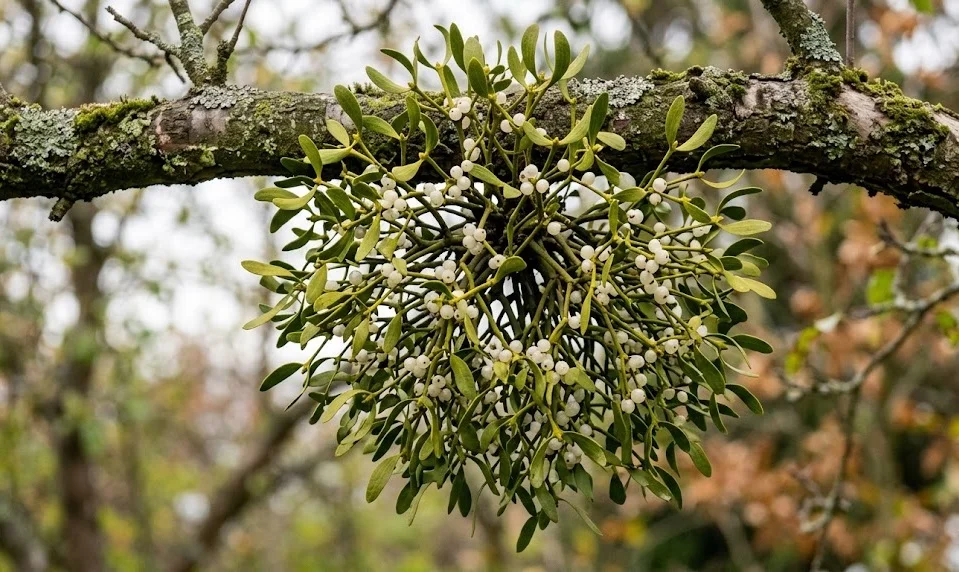

Overwintering white mistletoe is a natural process for this hardy evergreen, which is often at its most beautiful during the coldest months of the year. While many other plants enter a deep dormancy, mistletoe remains active, performing photosynthesis whenever the sun shines and temperatures are above freezing. However, the winter season also brings specific challenges, particularly regarding the health of the host tree and the physical stress of snow and ice. Professional overwintering care focuses on monitoring the structural stability and ensuring the parasitic connection remains intact through the frost.
Physiological adaptations to low temperatures
White mistletoe has evolved remarkable physiological mechanisms to survive the freezing temperatures of Northern and Central Europe. Its thick, leathery leaves are covered in a waxy cuticle that prevents excessive moisture loss when the ground is frozen and the host cannot supply water. Inside the cells, the plant accumulates sugars and sugar alcohols that act as a natural antifreeze, lowering the freezing point of the cellular fluids. This allows the mistletoe to stay green and vibrant even when the surrounding landscape is dormant and brown.
During the winter, the mistletoe’s metabolism slows down significantly, but it does not stop entirely. Because the host tree has dropped its leaves, the mistletoe suddenly finds itself in full, unobstructed sunlight, which it uses to its advantage. It continues to produce small amounts of energy, which helps maintain its tissues and support the ripening of its white berries. This winter activity is one reason why mistletoe is so vital for local wildlife that needs food during the lean months.
The parasitic connection, or haustorium, is also well-protected within the woody tissues of the host tree. The host’s bark acts as an insulator, shielding the delicate vascular bridge from the most extreme temperature fluctuations. As long as the host tree remains healthy and alive, the mistletoe is generally safe from the cold. However, exceptionally cold winters with temperatures dropping far below twenty degrees Celsius can sometimes cause damage to the outer stems of the mistletoe.
Interestingly, the mistletoe’s water management changes in the winter to reflect the host’s state. Since the host tree is no longer actively transpiring through its own leaves, the mistletoe becomes the primary driver of water movement in that specific branch. It must be careful not to draw too much water if the host’s vascular system is restricted by ice. This delicate biological balancing act is what allows the white mistletoe to thrive in a climate that would kill many other evergreen parasites.
More articles on this topic
Protecting the host-parasite union in frost
The point where the mistletoe attaches to the host tree is the most vulnerable part of the plant during a heavy frost. If water gets into the crevices of the swollen attachment point and freezes, it can cause small cracks in the bark. These “frost cracks” can weaken the mechanical bond between the two plants and provide entry points for disease in the spring. Ensuring that the host tree is healthy and has thick, intact bark before winter begins is the best natural protection.
In regions with extremely harsh winters, some gardeners choose to wrap the main trunk of young or sensitive host trees with burlap or frost blankets. While you don’t need to wrap the mistletoe itself, protecting the host ensures that the “life support system” for the parasite remains functional. A healthy host tree is much better at regulating its internal temperature and protecting its vascular tissues. This indirect protection is a key strategy for professional mistletoe management.
Ice accumulation can also be a significant threat to the structural integrity of the host-parasite union. Mistletoe clumps are often quite heavy and their dense structure provides a large surface area for freezing rain to build up. The added weight of ice can cause branches to snap, especially if they are already weakened by the parasitic infection. After an ice storm, it is wise to carefully inspect the clumps for any signs of sagging or structural failure.
Managing the host tree’s mulch layer is also part of winter protection. A fresh layer of mulch applied in late autumn helps keep the soil temperature more stable and prevents the deep freezing of the host tree’s roots. This ensures that whenever a winter thaw occurs, the host tree can immediately begin absorbing water to replenish the mistletoe. Keeping the roots “comfortable” is a fundamental aspect of caring for the entire parasitic system.
More articles on this topic
Winter monitoring for structural damage
One of the most important tasks during the winter is the regular monitoring of the mistletoe clumps for mechanical stress. Without the distraction of the host tree’s leaves, you can clearly see how the mistletoe is positioned and whether it is putting too much strain on the branch. Look for any new cracks or unusual leaning of the clump, which could indicate that the wood is becoming brittle. Winter winds can be particularly harsh, and a large mistletoe ball acts like a sail that catches every gust.
Snow loading is another factor that requires professional attention during the overwintering period. Heavy, wet snow can accumulate inside the mistletoe’s branching structure, adding many kilograms of weight in a short amount of time. If a heavy snowfall is predicted, it can be helpful to gently shake the accessible branches to dislodge the excess snow. This simple action can prevent the loss of both the mistletoe and the host limb it inhabits.
During your winter walks, pay close attention to the color of the mistletoe foliage. Healthy white mistletoe should maintain a consistent olive-green or yellowish-green hue throughout the season. If the leaves turn a dark brown or black, it is a sign of frost damage or a failure in the host’s water delivery system. Identifying these issues early in the winter can help you plan for necessary pruning or host care once the spring arrives.
The white berries are also a key indicator of the plant’s winter health. While birds will naturally eat some of them, a sudden and massive drop of unripened berries can signal stress. The berries should remain firm and translucent until they are either consumed by wildlife or the spring growth begins. Keeping a photographic record of the clumps during the winter can help you track their condition over the years and identify any recurring structural weaknesses.
Preparing the plant for the spring growth surge
As winter draws to a close, the mistletoe begins to prepare for its primary growth period in the spring. The berries that have survived the winter contain the seeds that will be dispersed by birds as the weather warms. Professional gardeners often use this time to plan any propagation efforts or to decide which clumps might need thinning. The transition from the dormant winter phase to the active spring phase is a critical time for the parasite.
During the late winter thaws, it is important to check the soil moisture around the host tree once again. As the sun gets stronger, the mistletoe’s transpiration rate increases, even before the host tree has put out its new leaves. If the winter has been particularly dry, providing some supplemental water to the host tree during a thaw can give the mistletoe a head start. This ensures that the plant has the hydraulic pressure it needs to begin its new branching cycle.
Late winter is also the ideal time for any necessary corrective pruning of the host tree. You can easily see which host branches are competing for light with the mistletoe and remove them without causing too much stress to the tree. Cleaning up the area around the mistletoe ensures it has the best possible start when the growing season officially begins. A professional touch during this transition period sets the stage for a successful year of growth.
Finally, take the time to appreciate the unique role mistletoe plays in the winter garden. It provides a touch of life and color when most of the landscape is asleep, reminding us of the complexity of nature. By providing the right overwintering care, you ensure that this ancient and symbolic plant continues to thrive. A well-managed mistletoe plant is a testament to the gardener’s skill in balancing the needs of two very different organisms.