
Preparing common rue for the winter months is a critical task for gardeners in temperate and northern climates. Although this plant is remarkably hardy, the combination of extreme cold and wet soil can be a lethal combination for its root system. Winter care is not about constant intervention, but about creating the right conditions for the plant to enter its natural state of dormancy. A well-prepared rue plant will survive the darkest months and emerge with vigorous new growth when the spring warmth arrives.
The process of wintering begins long before the first frost with a gradual reduction in maintenance and watering. You want the plant to naturally slow its metabolism and begin “hardening off” its stems in response to the shorter days and cooler nights. If you continue to water and fertilize late into the season, you will encourage soft growth that is highly vulnerable to freezing. Letting the plant follow the natural cues of the environment is the first step toward a successful winter survival strategy.
One of the greatest threats during winter is not the cold itself, but the cycle of freezing and thawing that can push the plant out of the ground. This phenomenon, known as frost heaving, can expose the delicate crown and upper roots to the elements, leading to rapid desiccation. Ensuring the soil is stable and perhaps applying a protective layer of mulch can help mitigate these temperature swings. The goal is to keep the root zone at a relatively consistent temperature, even if the air above is freezing.
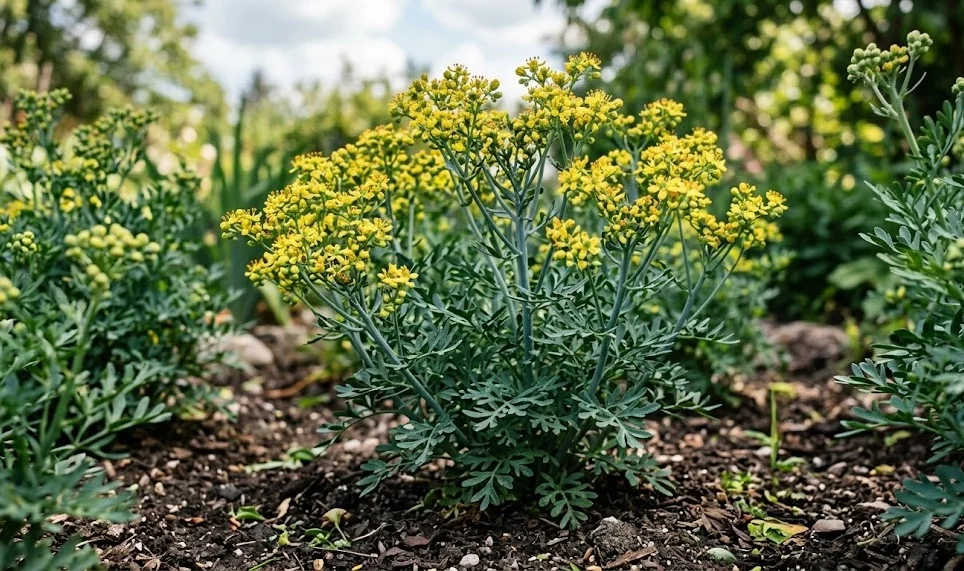
Common rue is a semi-evergreen shrub, meaning it often keeps its bluish-green leaves throughout the winter in milder regions. In colder areas, the foliage may take on a purplish or bronzed tint, which is a natural response to the cold and not a sign of disease. This winter color adds a unique structural element to the garden when most other plants have disappeared or turned brown. Understanding these visual changes helps you distinguish between healthy dormancy and genuine winter damage.
Dormancy and physiological changes
As the temperatures drop, common rue undergoes several internal changes to protect itself from the cold. The water content within its cells decreases, and the concentration of sugars and minerals increases, acting as a natural form of antifreeze. This process allows the plant to survive temperatures well below freezing without its cell walls rupturing. It is a fascinating biological adaptation that makes the rue such a reliable performer in many different garden settings.
More articles on this topic
During this dormant period, the plant’s need for nutrients and water is at its lowest point of the entire year. You should never apply fertilizer during the winter, as the plant is not in a state where it can process or use the extra minerals. Any attempt to “feed” the plant during dormancy will simply result in the nutrients leaching away into the groundwater or potentially damaging the inactive roots. Trust that the plant has stored enough energy in its woody stems and taproot to last until the spring.
The physical appearance of the plant will change as it enters deep winter, often becoming more compact and “tight” in its growth. The outer leaves may wither slightly to protect the inner core and the dormant buds located along the stems. If the winter is particularly harsh, the top few inches of the stems may die back completely, which is the plant’s way of sacrificing non-essential parts to save the root system. This is perfectly normal and should not be a cause for concern until you see how the plant responds in the spring.
Light remains important even in winter, as the evergreen leaves still perform a very low level of photosynthesis on sunny days. If the plant is covered by heavy snow for a long period, it is usually fine, as the snow acts as an excellent insulator. However, if the snow is followed by a period of ice and then intense sun, the foliage can sometimes suffer from “winter burn.” This is why a location that provides a bit of protection from the most intense winter sun and wind is so beneficial.
Root protection and soil management
The most important part of the rue plant to protect during the winter is the crown and the upper portion of the root system. This is the area where the stems meet the soil, and it is the most vulnerable point for rot and frost damage. A layer of inorganic mulch, such as gravel or small stones, can provide a buffer against the cold without trapping excessive moisture. Unlike wood chips, stone mulch allows the soil to breathe and ensures that the crown stays dry during winter rains or melting snow.
More articles on this topic
If your garden has heavy soil that doesn’t drain well, winter can be a particularly dangerous time for common rue. Saturated soil in the winter lacks oxygen and can lead to the rapid death of the roots, often before the gardener even notices a problem. If you cannot move the plant, you might consider digging small drainage channels away from the base to prevent water from pooling. This simple engineering task can be the difference between a thriving plant and a dead one come springtime.
In regions where temperatures regularly drop below minus fifteen degrees Celsius, a more substantial layer of protection may be necessary. You can use evergreen boughs or a light layer of straw to provide extra insulation for the base of the plant. However, you must be very careful not to use materials that will become matted and soggy, as this will cause the very rot you are trying to avoid. The insulation should be “breathable” and easy to remove as soon as the temperatures begin to stabilize in the spring.
Frost heaving is most common in soils that are rich in clay and experience frequent freeze-thaw cycles. If you notice your rue plant looks like it is being “lifted” out of the ground, you should gently firm the soil back around it during a thaw. Do not use excessive force, as you don’t want to snap the brittle, cold-stressed roots. Applying a heavier layer of stone or a few larger rocks around the base can help weigh the soil down and prevent this from happening again.
Managing frost and wind damage
Winter winds can be just as damaging as the cold itself, especially for a plant that keeps its leaves throughout the season. These winds act like a giant hairdryer, pulling moisture out of the foliage at a time when the roots cannot easily replace it from the frozen ground. If your rue is in a very exposed location, consider setting up a temporary burlap screen on the windward side. This reduces the wind speed around the plant and significantly lowers the risk of desiccation and leaf browning.
If you do see brown or blackened leaves on your rue during the winter, the best thing to do is absolutely nothing until the spring. These damaged parts actually provide a small amount of protection for the healthy tissue located further inside the plant. Pruning during the winter can “wake up” the plant or expose even more tender tissue to the cold. Wait until the new growth begins to show at the base before you take out your shears to clean up the winter damage.
Snow can be a gardener’s best friend during a cold winter because it is a fantastic insulator for the ground and the lower stems. However, heavy, wet snow can also be heavy enough to break the woody branches of a mature rue plant. If you notice a significant accumulation of heavy snow, you can gently brush it off using a broom or your hand. Always use an upward motion to lift the snow off the branches, as pushing down will only increase the stress on the wood.
Ice storms are particularly dangerous because the weight of the ice is immense and it is impossible to remove without damaging the plant. If your rue becomes encased in ice, the best professional advice is to leave it alone and let it melt naturally. Attempting to crack the ice off will almost certainly result in broken branches and wounded bark. Once the ice has melted, you can assess the damage and plan your spring pruning accordingly to restore the plant’s shape.
Transitioning into the spring season
The transition from winter to spring is a delicate time for common rue, as the plant begins to emerge from its long rest. You should avoid the temptation to remove winter protection too early, as late-season frosts can be particularly damaging to newly awakened buds. Wait until the ground has fully thawed and the nighttime temperatures are consistently staying above freezing. This gradual approach ensures that the plant is not shocked by a sudden change in its environment.
As the sun becomes stronger and the days grow longer, you will see the first signs of life at the base of the plant. This is the signal that it is time to perform your spring cleanup and remove any stems that didn’t survive the winter. Using sharp, clean shears, cut back the dead or damaged wood to a point where you see healthy green tissue. This not only improves the look of the plant but also encourages it to put its energy into new, vigorous growth.
Once the danger of frost has passed, you can also consider giving the plant a very light application of aged compost to help it kickstart the season. This is the only time of year when a little extra nutrition is beneficial for the rue. Be careful not to overdo it, as you want to maintain the plant’s hardy, compact nature. A small “thank you” to the soil for protecting the roots through the winter is all that is required for a healthy start.
Finally, take a moment to inspect the soil around the base and ensure that the drainage is still functioning correctly after the winter. If the ground has become compacted by heavy snow or rain, a light tilling with a hand fork can help re-oxygenate the roots. This simple maintenance task sets the stage for a successful growing season and ensures that your common rue remains a vibrant part of your garden. With the right winter care, this ancient herb will continue to grace your landscape for many years to come.