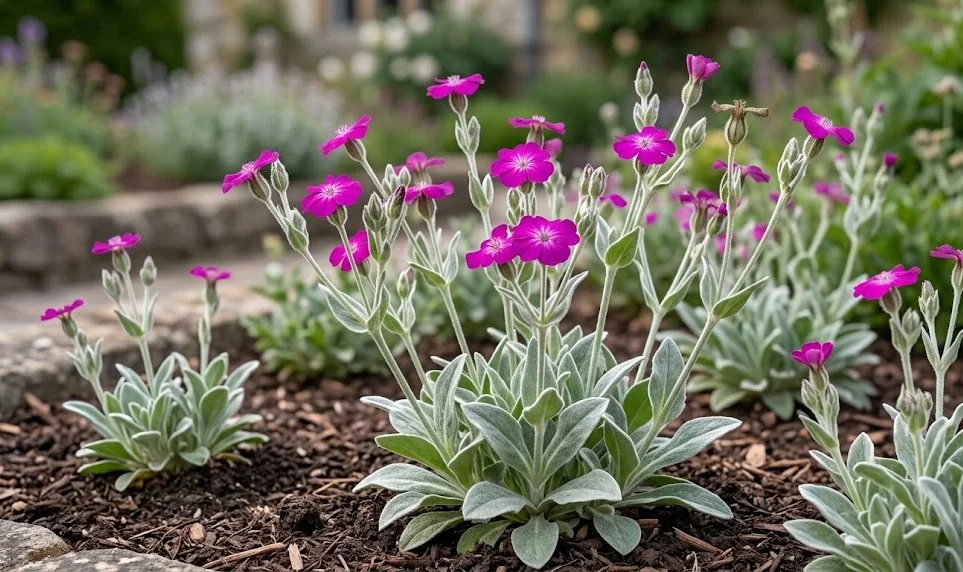

To see your rose campion at its most vibrant and healthy, you must prioritize providing it with as much direct sunlight as possible. This species has evolved to thrive in open, sun-drenched environments where its silver foliage can act as a natural reflector and shield. When the plant receives at least six to eight hours of full sun each day, it produces the sturdiest stems and the most intense magenta blooms. Understanding the relationship between light and growth is the first step in successful cultivation for any gardener.
If you plant it in a spot that is too shaded, you will quickly notice that the stems become “leggy” as they reach toward the available light. This weak growth often leads to the plant flopping over once the heavy flower heads begin to develop in the early summer. The silver color of the leaves may also fade to a duller green, as the plant produces more chlorophyll to compensate for the lower light levels. To maintain that signature frosted look, a bright and open location is absolutely essential for professional-looking results.
In very hot climates, the intense afternoon sun can sometimes be a bit much even for this sun-loving perennial. If you live in an area with scorching summer temperatures, a spot that provides full morning sun and a bit of filtered shade in the late afternoon might be ideal. This balance prevents the leaves from becoming scorched while still giving the plant enough energy to flower profusely. Observing how the light moves across your garden throughout the day will help you find this perfect middle ground.
The direction of the light also plays a role in how the plant is perceived and how it grows over the season. A south-facing border is usually the best choice for these plants, as it provides the most consistent and intense light levels throughout the year. If you have a north-facing garden, try to place your campion in the most open areas away from the shadow of the house or tall trees. Light is the primary engine of growth, and giving your plants plenty of it is the best gift you can provide.
Adjusting to partial shade conditions
While full sun is the preference, rose campion is adaptable enough to grow in locations that receive partial shade for part of the day. You might find that in these slightly dimmer spots, the plants grow a bit slower and the flowering period is not quite as long or intense. However, they can still be a valuable addition to a mixed border where the light levels vary between the front and the back. Just be prepared for a more relaxed and informal growth habit compared to plants in full sun.
More articles on this topic
In partial shade, it is even more important to ensure that the soil drainage is excellent to prevent any moisture-related issues. Plants in shadier spots take longer to dry out after rain or watering, which can increase the risk of fungal problems on the velvet-like leaves. You should also be more diligent about spacing to maximize the air circulation around each individual plant in these conditions. Managing the microclimate is a key skill for any gardener working with less-than-ideal light levels.
You might notice that the self-seeding habit of the plant is less aggressive in shaded areas compared to the sunny parts of your garden. This can actually be an advantage if you want a more controlled look and don’t want to spend time thinning out dozens of new seedlings each spring. The silver foliage can also be used to brighten up a darker corner of the garden, where it will catch and reflect whatever light is available. It is all about finding the right role for the plant within the specific constraints of your landscape.
If you find that your plants are truly struggling in a shaded spot, don’t be afraid to move them to a sunnier location in the early spring or autumn. Rose campion is quite resilient to being transplanted as long as you take a good-sized root ball with the plant. Once they are moved to a brighter home, they usually show a rapid improvement in color, strength, and flowering potential within a single season. Learning from these observations is what makes you a more skilled and intuitive horticulturist over time.
Light and the development of silver foliage
The fascinating silver-grey color of the leaves is a direct adaptation to high-light environments and serves several important functions for the plant. Those tiny, woolly hairs reflect a significant portion of the incoming solar radiation, which keeps the leaf surface much cooler than a standard green leaf. This reflection also protects the delicate internal structures of the plant from being damaged by intense ultraviolet rays during the height of summer. It is a brilliant natural design that allows the plant to thrive where others might wilt or burn.
More articles on this topic
The density and quality of this silver coating are directly influenced by the amount of light the plant receives as it grows. In full sun, the hairs are produced more thickly, resulting in a brighter and more “frosted” appearance that is highly sought after by designers. If you move a plant from the shade to the sun, you might see the new growth coming in much more silver than the older, greener leaves. This response to light is one of the most interesting aspects of growing this species in a dynamic garden environment.
Light also influences the thickness and sturdiness of the leaves themselves, making them more resilient to wind and physical damage. A plant grown in bright light will have shorter, tougher leaves that are better equipped to handle the stresses of an outdoor environment. This structural integrity is important not just for the health of the plant, but for the overall aesthetic of your garden beds. Strong, healthy plants look much more professional and require less maintenance over the long run.
Understanding these physiological processes helps you appreciate the plant on a deeper level and makes your care routines more effective. You can almost “see” the plant working to manage the energy from the sun as it develops its beautiful silver foliage throughout the spring. By providing the best possible light conditions, you are supporting these natural mechanisms and ensuring a spectacular display. Every hour of sunshine contributes to the strength and beauty of your garden’s most iconic perennials.