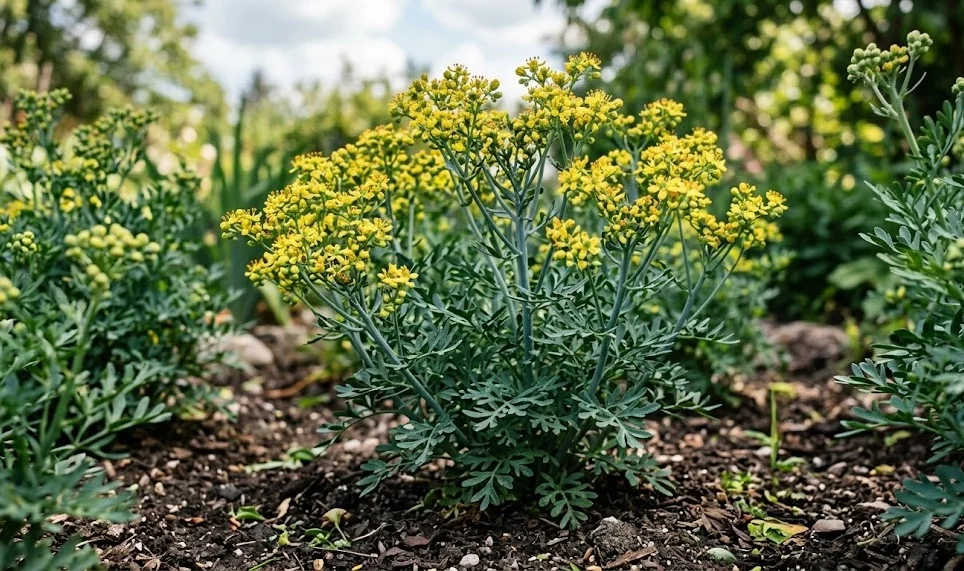

Pruning and cutting back common rue is an essential practice that ensures the plant remains vigorous, attractive, and healthy for many years. Because this is a woody subshrub, it has a tendency to become leggy and sparse at the base if left to its own devices. Regular intervention allows you to control its shape, stimulate new growth, and maintain the dense, mounded habit that is so prized by gardeners. Approaching this task with professional techniques will keep your rue looking its best throughout every season.
The primary rule of pruning common rue is to never cut into the very old, hard wood that lacks visible buds, as it may not regenerate from these areas. Instead, you should focus on the semi-woody stems and the soft, green growth of the current or previous season. This encourages the plant to produce a flush of fresh, vibrant foliage from the lower parts of the stem, preventing the plant from becoming “top-heavy.” Timing is also critical, as pruning at the wrong time can expose the plant to winter damage or reduce its flowering potential.
Always remember to wear protective gear when pruning rue, as the act of cutting the stems releases the oils that can cause skin irritation. Long sleeves and sturdy gloves are a must, even on a warm day when you might be tempted to work in lighter clothing. It is also a good idea to perform your pruning on a cloudy day or in the late afternoon to reduce the risk of the sun reacting with any sap that might get on your skin. Professional gardeners treat common rue with a high degree of respect to ensure the maintenance process is safe and enjoyable.
Using the right tools is the final piece of the puzzle for successful pruning and cutting back. A pair of sharp, bypass pruners is the best tool for the job, as they make clean cuts without crushing the stems. For larger, older specimens, you might occasionally need a small pruning saw for the thickest woody parts at the base. Keeping your tools clean and sharp not only makes the work easier but also prevents the spread of diseases and ensures the plant heals quickly after its “haircut.”
Seasonal timing and techniques
The most significant pruning of the year should take place in the early spring, just as the first signs of new growth begin to appear. This is the time to remove any winter-damaged stems and to cut back the previous year’s growth by about one-third to one-half. This “hard” pruning revitalizes the plant and ensures that the new growth starts from a sturdy, well-branched base. It also helps to keep the plant within its assigned space and prevents it from becoming an unruly mess in the middle of your garden bed.
More articles on this topic
During the spring pruning, you should also look for any stems that are growing inward toward the center of the shrub. Removing these helps to open up the plant, improving air circulation and light penetration into the core of the foliage. This simple act of “thinning” is a professional secret for preventing fungal diseases and ensuring the entire plant stays healthy and green. A well-pruned rue should have a balanced, airy structure that looks good even before the new leaves fully unfurl.
A second, much lighter pruning can be done in the midsummer, specifically focused on deadheading the spent flowers. If you don’t want the plant to self-seed, cutting off the flower stalks as they begin to fade is a very effective strategy. This also directs the plant’s energy away from seed production and back into the development of its attractive bluish foliage. Many gardeners find that a light “shaping” at this time helps maintain the neat, mounded look of the rue throughout the rest of the summer.
In the autumn, you should generally avoid any heavy pruning, as this can stimulate new growth that won’t have time to harden off before winter. The only thing you might want to do is remove any obviously diseased or broken branches to keep the plant tidy. Leaving the bulk of the foliage intact during the winter provides a bit of extra insulation for the crown and the inner stems. The rule of thumb is to “let it be” in the fall and save your serious pruning efforts for the following spring.
Tools and maintenance standards
The quality of your pruning work is directly related to the quality and condition of the tools you use in the garden. Bypass pruners are preferred over anvil types because they work like scissors, making a clean slice through the stem. Anvil pruners, which have a single blade that comes down on a flat surface, tend to crush the woody stems of the rue, which can lead to dieback or infection. Investing in a high-quality pair of pruners is one of the best things you can do for the long-term health of your plants.
More articles on this topic
Maintaining your tools is also a critical part of the process, especially when working with a plant as chemically active as common rue. The sap of the plant can be quite sticky and can gum up the mechanism of your shears over time. After each pruning session, wipe your blades with a cloth soaked in rubbing alcohol or a mild detergent to remove any residue. This keeps the tools working smoothly and ensures that you aren’t carrying pathogens from one plant to another as you move through your garden.
For older, more established rue shrubs, you might find that the base becomes very thick and woody, requiring a bit more force to cut. If you find yourself struggling with standard pruners, it is better to switch to a pair of loppers or a small hand saw rather than straining your hands and making a messy cut. A clean, smooth cut is much easier for the plant to seal over with its natural protective tissue. This “professional touch” ensures that the pruning process is a benefit to the plant rather than a source of stress.
Always make your cuts at a slight angle, about a quarter-inch above a healthy bud that is facing away from the center of the plant. This encourages the new stem to grow outward, maintaining the open structure of the shrub and preventing the center from becoming too crowded. Cutting at an angle also allows rainwater to run off the wound rather than pooling on top, which reduces the risk of rot. These small details are what separate a casual gardener from a true horticultural expert.
Regenerative and corrective pruning
Sometimes, a common rue plant may become so overgrown, leggy, or neglected that a standard light pruning is not enough to fix the problem. In such cases, you can perform what is known as “rejuvenation pruning,” which involves cutting the entire plant back significantly. This is a drastic measure that should only be done in the early spring on a healthy, well-established plant with a strong root system. You can cut the stems down to about six inches from the ground, leaving enough of the woody base for the plant to regenerate.
While this may look shocking at first, the rue will usually respond by sending out a flush of new, incredibly vibrant stems from the base. Within a single growing season, you will often have a much denser and more attractive plant than the one you started with. This is an excellent way to “reset” a plant that has become unsightly or has stopped producing its characteristic blue foliage. However, this should not be done every year; once every four or five years is usually more than enough for rejuvenation purposes.
Corrective pruning is also necessary if the plant has suffered damage from heavy snow, ice, or accidental physical impact. If a large branch has snapped, it is important to cut it back to a clean point as soon as possible to prevent further splitting or infection. Even if it leaves a bit of a “hole” in the plant’s shape, the surrounding stems will eventually grow into the space. The rue is a very resilient species and is quite forgiving of mistakes or accidents as long as you provide a clean start for the healing process.
Ultimately, the goal of pruning and cutting back common rue is to work with the plant’s natural tendencies rather than against them. By understanding its growth cycle and respecting its woody structure, you can maintain a specimen that is both a functional herb and a stunning ornamental feature. Pruning is not just a chore; it is a way to engage with the life of the plant and ensure its vitality for years to come. With a little bit of knowledge and the right tools, you can keep your common rue looking like a masterpiece of garden design.