
Understanding the light requirements of common rue is fundamental to achieving the vibrant, bluish-green foliage that makes this plant so distinctive. As a native of the sun-drenched hillsides of the Mediterranean, this herb has evolved to thrive under intense solar radiation. Light is not just a source of energy for the plant; it is the primary factor that dictates its growth habit, oil production, and overall health. Providing the correct amount of sun is the difference between a leggy, struggling plant and a robust, ornamental shrub.
In the world of gardening, common rue is classified as a “full sun” plant, which generally means it requires at least six to eight hours of direct sunlight daily. While it can survive in partial shade, the quality of the plant will suffer significantly if it is forced to grow in low-light conditions. In shade, the stems will stretch and become weak as the plant desperately searches for more light, leading to a floppy and unattractive appearance. Furthermore, the iconic blue tint of the leaves is often lost in the shade, turning into a more mundane and less striking green.
The intensity of the light also plays a crucial role in the development of the plant’s aromatic and medicinal properties. The essential oils that give rue its pungent scent are produced more abundantly when the plant is exposed to plenty of sun. These oils serve as a natural sunscreen for the leaves and also act as a powerful deterrent against pests and diseases. Therefore, a sun-grown rue is not only more beautiful but also much more resilient and self-protecting than one grown in the shadows.
When selecting a spot for your rue, you must also consider how the light changes throughout the seasons and the day. A spot that is sunny in the summer might be completely shaded by a nearby deciduous tree in the spring or autumn. Ideally, you want a location that remains bright and open for as much of the year as possible. Observing the movement of shadows in your garden across a full day will help you identify the “sweet spot” where your common rue will truly flourish.
Solar exposure and foliage color
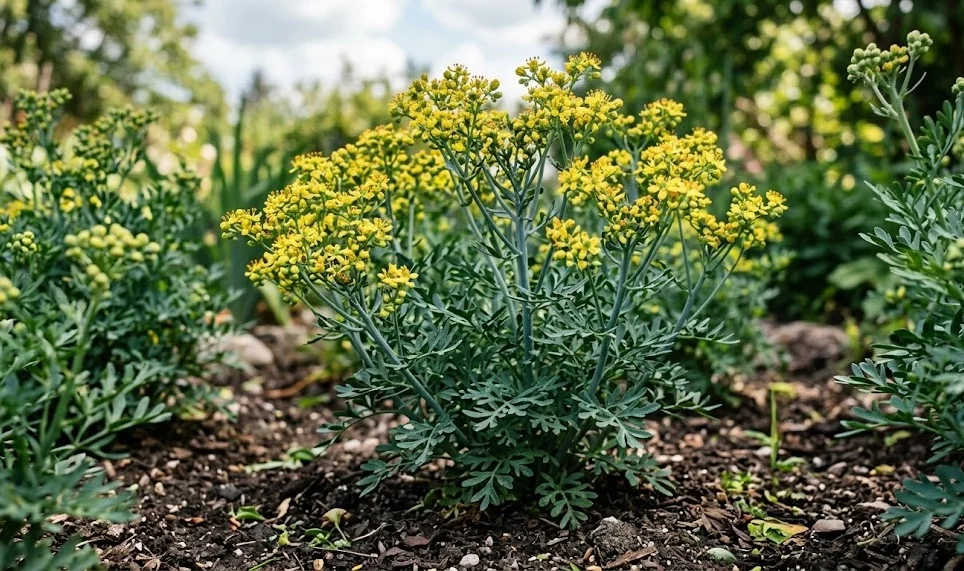
The most striking feature of common rue is undoubtedly its foliage, which possesses a unique glaucous or waxy coating that reflects light. This coating is the plant’s natural defense against the intense UV rays of its native habitat, and it is what gives the leaves their famous blue-silver hue. When the plant receives maximum sunlight, this protective layer becomes thicker and more pronounced, enhancing the ornamental value of the shrub. Without enough sun, the plant doesn’t need this level of protection, and the leaves will become thinner and greener.
More articles on this topic
Direct sunlight also influences the size and texture of the leaves, keeping them compact and densely packed along the stems. A rue plant grown in full sun will form a tight, rounded mound that looks intentional and well-maintained even without pruning. This density is visually appealing and also helps the plant retain moisture at its core by shading its own interior stems. It is a perfect example of how a plant’s form is directly sculpted by its relationship with the sun.
While rue loves the sun, extreme heat combined with very dry air can sometimes be a challenge even for this hardy species. In regions with exceptionally hot summers, the plant might appreciate a little bit of filtered light during the most intense part of the afternoon. However, this is a fine balance to strike, as too much shade will quickly lead to the growth problems mentioned earlier. For most temperate gardens, “more sun is better” remains the golden rule for this particular herb.
The interaction between light and water is another professional consideration when managing your rue’s environment. Plants in full sun will naturally transpire more moisture than those in the shade, meaning they might need a bit more attention during a severe heatwave. However, because the rue has a deep taproot, it is much better at finding water than many of its garden companions. The key is to ensure the soil stays cool through proper mulching while the foliage remains in the bright, open sun.
Effects of shade on growth and health
When common rue is planted in an area with insufficient light, its first reaction is to engage in a process called “etiolation.” This means the plant will put all its energy into growing its stems as fast as possible to try and reach a brighter layer of the garden. The result is long, spindly growth with large gaps between the leaves, which completely ruins the plant’s natural mounded shape. These weak stems are much more likely to break in the wind or collapse under the weight of rain or snow.
More articles on this topic
Shade also creates a microclimate around the plant that is much more conducive to the development of fungal diseases. Without the sun to quickly dry the leaves after a rain or a morning dew, moisture can linger on the foliage for hours. This is the perfect environment for powdery mildew and other pathogens to take hold and spread throughout the plant. A sun-grown rue stays drier and cleaner, naturally reducing the risk of disease without the need for chemical sprays.
The flowering process is also heavily dependent on light levels, as the plant needs a significant amount of energy to produce its bright yellow blooms. In the shade, common rue may fail to flower altogether or produce only a few sparse, stunted blossoms. While some gardeners grow rue primarily for its foliage, the flowers are a vital part of the plant’s life cycle and attract many beneficial pollinators. Missing out on the flowering phase also means missing out on the unique seed pods that add visual interest in the late summer.
Lastly, a plant grown in the shade is generally less “tough” and more prone to environmental shocks than its sun-drenched counterparts. Its internal structures are less robust, and its chemical defenses are not as well-developed, making it an easier target for pests. If you have a rue that is struggling in the shade, the best thing you can do for its long-term health is to move it to a sunnier location. It may take a season to recover its shape and color, but the difference in vitality will be unmistakable.
Optimal positioning and light management
Finding the perfect spot for common rue often means looking at the southern or western edges of your garden beds. These areas typically receive the most consistent and intense light throughout the day, providing the Mediterranean conditions the plant craves. Avoid planting rue directly under the canopy of large trees or on the north side of tall buildings or fences. These spots are simply too dark for the rue to maintain its high-quality appearance and health over several years.
If you are planting rue in a mixed border, be mindful of its neighbors and how they might grow to shade it out over time. Fast-growing perennials or tall shrubs can quickly overwhelm a young rue plant, cutting off its vital supply of sunlight. Give the rue plenty of “breathing room” so that it can receive light from all sides, ensuring that its growth remains symmetrical and full. This spatial planning is a hallmark of professional landscape design and leads to a much more harmonious garden.
For those with limited space, common rue can also be grown very successfully in large containers placed on a sunny patio or balcony. This allows you to move the plant around to follow the sun as the seasons change, ensuring it always gets the maximum possible exposure. Containers also provide the excellent drainage that the plant needs, making them a great option for gardeners with heavy soil. Just remember that a potted rue will be more dependent on you for its water and nutrient needs than one in the ground.
In summary, light is the most important “food” you can give to your common rue. By respecting its evolutionary need for full sun, you enable the plant to display its full range of colors, textures, and aromas. A well-lit rue is a resilient, beautiful, and fascinating addition to any garden, requiring very little from the gardener once its primary need for solar energy is met. Investing the time to find the sunniest spot in your garden is the best way to ensure the success of this classic herb.