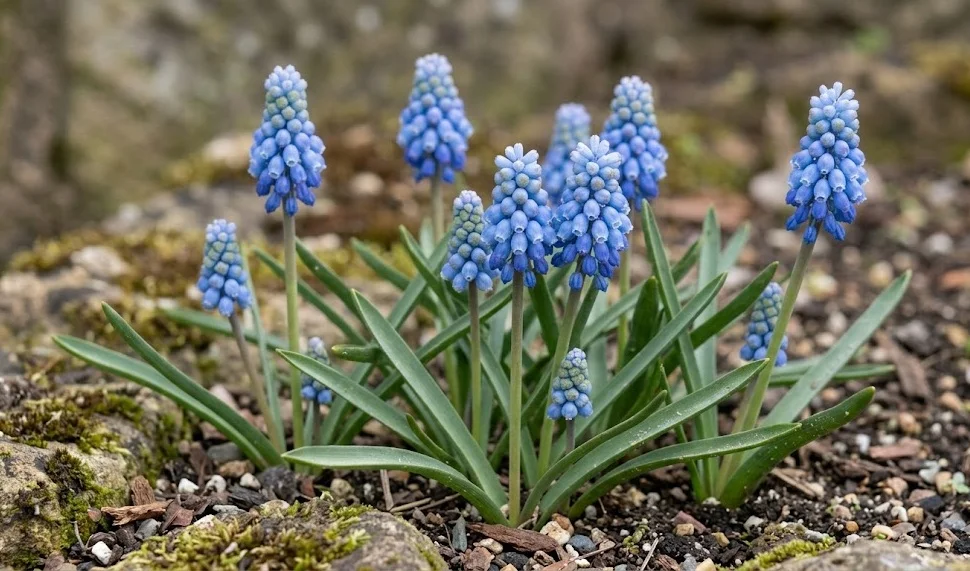

Mastering the light requirements of the azure grape hyacinth is essential for achieving the most vivid colors and healthiest growth patterns. This species is remarkably flexible, yet its performance varies significantly depending on the quantity and quality of sunlight it receives. Professional cultivation involves placing these bulbs where they can maximize their short growing season while avoiding the stress of excessive heat. By understanding the nuances of light exposure, you can ensure your azure bells are the highlight of the spring landscape.
Optimal sun exposure for color and strength
The azure grape hyacinth performs best when it receives full sun for at least six to eight hours during its active growth and blooming phase. In the early spring, the sun’s rays are less intense, and the plants need this energy to produce strong, upright flower stalks. Without sufficient light, the stems may become “leggy” or weak, causing the flowers to flop over toward the ground. Providing an open, sunny location ensures a compact and robust appearance.
Sunlight is also the primary factor that influences the intensity of the blue pigmentation in the petals. Plants grown in bright light typically exhibit a deeper, more saturated azure color compared to those in deep shade. The ultraviolet rays trigger the production of anthocyanins, the pigments responsible for the plant’s stunning hues. For the most professional-looking display, aim for a spot that is bathed in morning and midday sun.
However, the “full sun” requirement is most critical during the spring, not necessarily the entire year. Because these bulbs bloom early, they can be successfully planted beneath deciduous trees that have not yet grown their leaves. This allows the hyacinths to soak up the spring sun and complete their growth cycle before the canopy closes over. This ecological strategy is a perfect example of “working with nature” in a professional garden design.
If you find that your plants are leaning heavily in one direction, it is a clear sign that they are searching for more light. This “phototropism” can detract from the uniform look of a garden bed. To correct this, consider thinning out overhanging branches or moving the colony to a more open area in the autumn. A well-lit plant is a balanced plant, both structurally and aesthetically.
More articles on this topic
Managing partial shade and heat
While full sun is ideal in cooler climates, the azure grape hyacinth can benefit from some light afternoon shade in warmer regions. Intense heat in the late afternoon can cause the flowers to fade more quickly or even scorch the delicate petals. Providing a bit of protection from the hottest part of the day can actually extend the blooming period by several days. This subtle adjustment to the light regime shows a high level of professional attention to detail.
Partial shade can also be useful in dry springs, as it helps to keep the soil moisture from evaporating too quickly. In these conditions, the plants can maintain their turgidity and stay vibrant for a longer duration. The key is to ensure they still get plenty of bright, indirect light even if they are not in the direct path of the sun. Avoid “deep” shade, such as against the north side of a tall building, where the plants will likely struggle to thrive.
The transition from spring sun to summer shade is a natural part of the plant’s life cycle. As the leaves begin to yellow and the bulb enters dormancy, the decreasing light under a leafy canopy is perfectly fine. The bulb is safe underground and does not require light during its resting phase. This makes them excellent candidates for “layering” with other shade-loving perennials like hostas or ferns.
When planting in containers, the ability to move the pots allows for perfect light management. You can start them in the sunniest spot to encourage bloom development and then move them to a cooler, slightly shaded area to preserve the flowers. This mobility is a great advantage for those who want to curate the perfect garden experience. Professional container gardening is all about this kind of active environmental management.
More articles on this topic
Assessing light quality and garden placement
Evaluating the light quality in your garden requires observation at different times of the day and throughout the spring season. What looks like a sunny spot in mid-summer might be quite shaded in March when the sun is lower in the sky. Taking the time to map out the light patterns in early spring will lead to much better planting decisions. This professional approach prevents the frustration of bulbs failing to bloom because they were placed in a “sun trap” that doesn’t exist yet.
Consider the reflective surfaces in your garden, such as white walls or fences, which can increase the light intensity. These micro-environments can be beneficial for early blooming, as they also tend to stay a bit warmer. However, be cautious of excessive heat buildup in these spots as the spring progresses. Balancing direct, indirect, and reflected light is part of the art of professional horticulture.
The density of your planting can also affect how much light reaches the lower leaves of each individual plant. If the bulbs are packed too tightly, they may shade each other, leading to premature yellowing of the lower foliage. Providing adequate spacing ensures that every leaf can photosynthesize efficiently, maximizing the energy stored in the bulb. Good light management starts with the physical layout of the garden bed.
Finally, remember that light and water are closely linked in the plant’s metabolism. A plant in full sun will naturally use more water and may need more frequent checks than one in a cooler, shaded spot. By matching your watering routine to the light exposure of each colony, you provide a consistent and professional level of care. Understanding the light needs of the azure grape hyacinth is the first step toward a successful and glowing spring display.