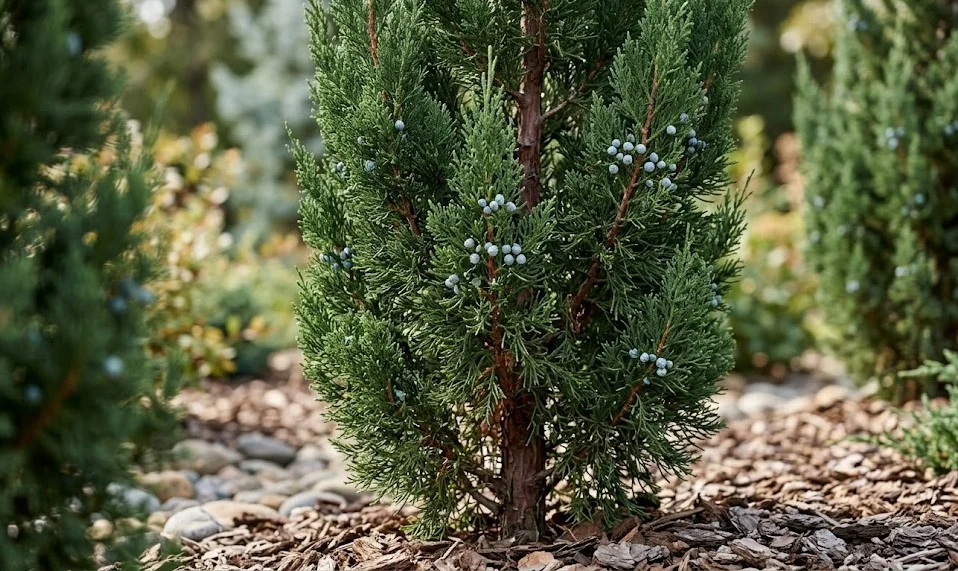

Eastern red cedar is naturally cold-hardy and well adapted to winter conditions across a wide range of climates. Most established plants do not need elaborate protection, but young specimens, container plants, and exposed landscape plantings benefit from thoughtful preparation. Winter care focuses on moisture balance, wind protection, root insulation, and avoiding late-season stress. The goal is not to shield the plant from winter completely, but to help it enter dormancy strong and hydrated.
Preparing the plant before winter
Late summer and autumn care strongly influence winter performance. Eastern red cedar should not be pushed with heavy nitrogen fertilizer late in the growing season. Soft late growth is more vulnerable to cold, wind, and desiccation. Feeding, if needed, is best done earlier in spring.
Watering before winter is important, especially after a dry autumn. Evergreens continue to lose moisture from their foliage during winter, even when growth has slowed. If the soil freezes while already dry, roots cannot replace lost moisture effectively. A deep watering before the ground freezes can reduce winter browning.
Mulching helps stabilize root-zone temperatures. A layer of bark mulch, wood chips, or shredded leaves protects roots from rapid freeze-thaw cycles. The mulch should be spread broadly rather than piled deeply. It must be kept away from direct contact with the trunk.
Weed and grass competition should be reduced before winter. Turf around young plants can compete for moisture during autumn. It can also harbor rodents that may damage bark under snow cover. A clean, mulched root zone is safer and easier to manage.
More articles on this topic
Managing winter wind and sun
Winter injury often results from drying winds and bright sun rather than cold alone. Foliage can lose moisture on sunny or windy days while roots remain limited by cold soil. This is especially common on exposed ridges, open fields, and south- or west-facing sites. Young plants are more vulnerable because their root systems are still limited.
Temporary wind protection can help during the first winters after planting. Burlap screens may be placed on the windward side, but the plant should not be wrapped tightly in plastic. Air movement is still necessary to prevent trapped moisture and disease. The protection should reduce harsh exposure without smothering the foliage.
Anti-desiccant sprays are sometimes used on broadleaf evergreens, but they should be approached cautiously with conifers. Results vary, and product suitability depends on timing and plant type. They are not a substitute for proper watering and site selection. Good moisture management is usually more reliable.
Reflected winter sun from walls, pavement, or snow can intensify drying. Plants near hard surfaces may warm during the day and cool rapidly at night. This fluctuation can contribute to stress. Choosing the right planting site from the beginning is better than correcting exposure problems later.
More articles on this topic
Caring for container-grown plants
Container-grown Eastern red cedar faces greater winter risk than plants in the ground. Roots in containers are exposed to colder temperatures because they lack the insulation of surrounding soil. Even hardy species can suffer root damage in pots. The smaller the container, the greater the risk.
Containers should be placed in a sheltered location before severe winter weather arrives. A spot protected from strong wind and direct afternoon sun is usually best. Grouping containers together can moderate temperature swings. Insulating the pot with burlap, straw, or other breathable material can also help.
Watering containers during winter is often overlooked. The root ball should not remain waterlogged, but it should not dry out completely. On mild days when the soil is not frozen, check moisture and water if needed. Dry winter container soil can cause serious browning by spring.
Drainage holes must remain open. A container sitting in frozen water or saturated media can damage roots. Elevating pots slightly can prevent blocked drainage. Heavy decorative containers should be checked before winter because moving them later may be difficult.
Spring recovery and winter damage assessment
Winter damage may not be fully visible until spring. Brown tips, bronzed foliage, or dead branch sections can appear after cold, wind, or drought stress. Some discoloration may improve as new growth begins. Patience is important before making heavy pruning cuts.
In early spring, inspect the plant carefully. Flexible twigs with green inner tissue may still be alive. Brittle, dry branches that show no green under the bark are likely dead. Prune only confirmed dead tissue at first, especially on plants with uncertain recovery.
Spring watering can support recovery if the soil is dry. Evergreens often need moisture as temperatures rise and transpiration increases. However, wet spring soil should not be overwatered. The same balance applies in every season: moist enough for roots, never saturated for long.
Fertilizer should not be used to force recovery from winter injury. A stressed plant needs stable conditions more than rapid growth. Light feeding may be considered later if the plant resumes normal growth and soil fertility is low. The best recovery strategy is careful watering, modest pruning, and time.