
Eastern red cedar should be pruned with restraint because it does not regenerate well from old, leafless wood. The best pruning preserves the plant’s natural form while removing dead, damaged, crossing, or poorly placed growth. Heavy cutting can permanently disfigure the plant, especially when cuts are made into bare interior branches. A skilled approach relies on timing, selective cuts, and a clear purpose before any branch is removed.
Understanding how it responds to pruning
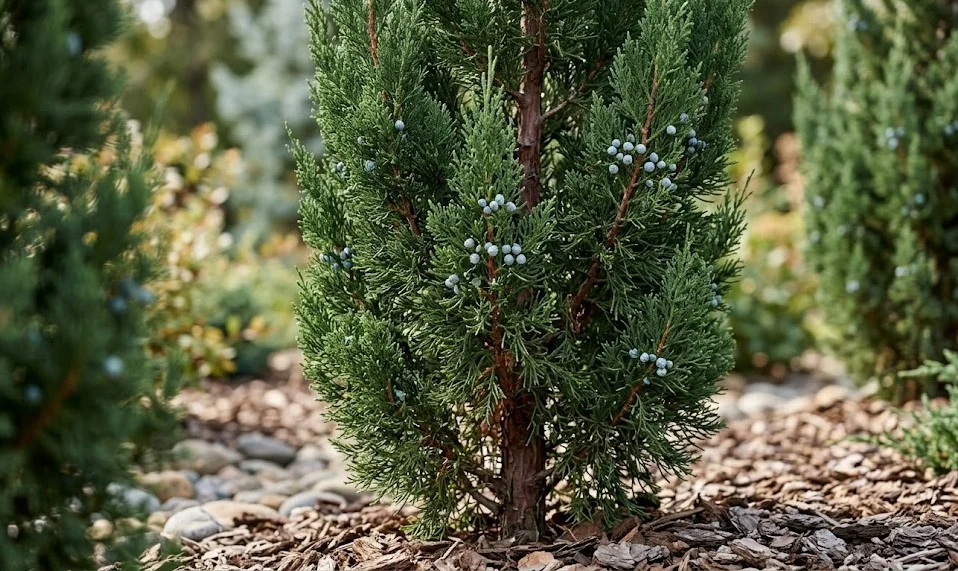
Eastern red cedar carries active foliage mostly on the outer parts of its branches. The shaded interior often becomes bare as the plant matures. Unlike some broadleaf shrubs, it has limited ability to produce new shoots from old wood. This means a hard cut into a brown, leafless section may leave a permanent hole.
The plant’s natural habit may be pyramidal, columnar, oval, or irregular depending on genetics and age. Pruning should enhance that habit rather than fight it. A specimen tree often looks best with minimal interference. Over-pruning can remove the texture and character that make mature plants attractive.
Light pruning is useful when the plant is young. Early correction of competing leaders, broken branches, or awkward growth prevents larger problems later. Small cuts heal more easily and are less visually obvious. Waiting until a branch is large often makes correction more stressful for the plant.
Before pruning, decide whether the goal is structure, clearance, health, or shaping. Each goal requires a different type of cut. Random trimming often creates uneven growth and exposed interior wood. Intentional pruning keeps the plant both healthier and better looking.
More articles on this topic
Timing and pruning techniques
Late winter to early spring is often the best time for structural pruning. The plant is not actively pushing soft new growth, and the branch framework is easier to see. Dead or storm-damaged branches can be removed whenever necessary. Avoid major pruning during extreme heat or drought.
Selective thinning cuts are generally better than indiscriminate shearing. Remove a branch back to a side branch or the trunk without leaving long stubs. Cuts should be clean and made with sharp tools. Ragged cuts heal poorly and may invite secondary problems.
If shaping a hedge or screen, trim lightly and regularly. The top should remain slightly narrower than the base so lower foliage receives sunlight. A hedge that is wider at the top shades itself and becomes bare at the bottom. Once the base is lost, recovery is difficult.
Never cut all green growth from a branch unless removing the branch completely. Green foliage is the branch’s source of energy and regrowth potential. If only bare wood remains after pruning, new shoots may not appear. This is the central rule for pruning Eastern red cedar.
More articles on this topic
Restoring neglected plants
Neglected Eastern red cedar plants require realistic expectations. If they have become too large, severely bare, or misshapen, they may not be suitable for hard renovation. Unlike some shrubs, they cannot be cut to the ground and expected to regrow. Severe reduction often leaves dead-looking stubs and open gaps.
Gradual correction is safer than drastic cutting. Over several seasons, remove dead wood, improve structure, and lightly reduce selected branches where green growth remains. This slow approach preserves plant health and appearance. It also allows the gardener to judge how the plant responds.
For oversized screens, selective removal of entire plants may be better than harsh pruning of every plant. Thinning a crowded row improves light and airflow for the remaining specimens. Replacement with better-spaced young plants can sometimes create a more attractive long-term result. A design solution may outperform a pruning solution.
Professional assessment is worthwhile for large or valuable trees. Arborists can identify structural risks, safe clearance options, and realistic pruning limits. They can also distinguish normal interior browning from decline. Good pruning respects both the biology of the plant and the purpose of the landscape.