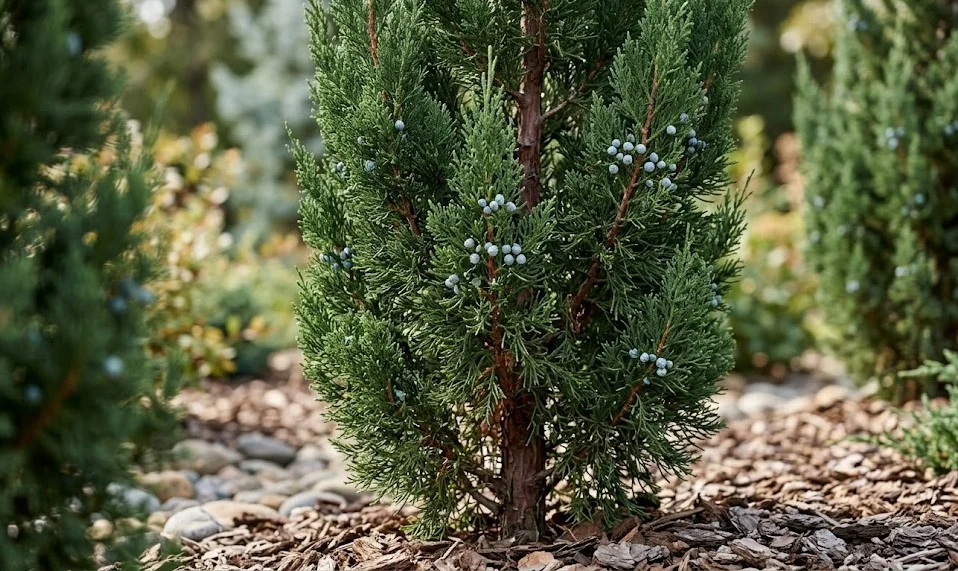

Eastern red cedar is a tough evergreen, but it is not completely free from diseases and pests. Most problems become serious only when plants are stressed by poor drainage, crowding, shade, drought, or improper pruning. Correct diagnosis is important because browning foliage can have many causes. A professional management plan combines prevention, monitoring, sanitation, and targeted intervention when needed.
Common disease pressures
Cedar-apple rust is one of the best-known diseases associated with Eastern red cedar. The fungus requires both juniper hosts and plants in the apple family to complete its life cycle. On Eastern red cedar, it often forms brownish galls that produce orange, gelatinous horns in wet spring weather. These structures are striking and may alarm gardeners, but the greater economic damage is often seen on apples and related fruit trees.
Twig blights can also affect Eastern red cedar, especially in crowded or humid sites. Infected shoot tips may turn brown, die back, and remain attached to the plant. The symptoms may appear scattered at first and then become more noticeable as conditions favor disease. Dense canopies with poor airflow are more vulnerable.
Root rot diseases are associated with poorly drained soil and overwatering. They may cause gradual decline, dull foliage, branch dieback, and eventual plant death. Because root symptoms are hidden, the problem may be advanced before the canopy shows obvious signs. Prevention through proper site selection is far more effective than treatment after decline begins.
Foliage discoloration is not always disease. Winter injury, drought stress, salt exposure, herbicide drift, and normal seasonal shedding can all cause browning. Misdiagnosis can lead to unnecessary chemical treatment. A careful review of site conditions and symptom patterns should come before any control measure.
More articles on this topic
Cedar-apple rust and related rusts
Rust diseases are especially important where Eastern red cedar grows near apples, crabapples, hawthorns, or serviceberries. The juniper host develops galls or swollen areas, while the broadleaf host may show leaf spots, fruit spots, or defoliation. Spring moisture plays a major role in disease spread. Wet, mild weather can intensify infection cycles.
On Eastern red cedar, rust galls may persist for more than one season. They become most visible when orange spore-producing structures expand after rain. These structures eventually dry and shrink, but the disease cycle may already have continued. Removing galls before they release spores can reduce pressure in small gardens.
In orchards and edible landscapes, resistant apple and crabapple cultivars are often the best defense. Distance between hosts can help, but spores can travel farther than many gardeners expect. Removing every juniper from a neighborhood is usually unrealistic. Integrated management focuses on resistance, sanitation, airflow, and timely monitoring.
Fungicides may be used in high-value fruit plantings, but timing matters. They are generally aimed at protecting susceptible apple-family hosts during infection periods. Treating Eastern red cedar is rarely the most efficient strategy in home landscapes. Local extension guidance should be followed where fruit production is important.
More articles on this topic
Insect and mite pests
Bagworms are among the most damaging pests of Eastern red cedar in many regions. The larvae build camouflaged bags from plant material and feed on the foliage. Heavy infestations can defoliate branches and cause permanent brown areas. Early detection is critical because young larvae are easier to control than mature ones.
Scale insects may also infest stems and foliage. They feed by sucking plant sap and can weaken growth over time. Some scales produce honeydew, while others are more inconspicuous. Infested branches may look dull, yellowed, or thin.
Spider mites can become troublesome during hot, dry weather. They cause stippling, bronzing, and general loss of foliage quality. Mite damage can be mistaken for drought stress because both occur under dry conditions. A simple white paper tap test can help reveal moving mites dislodged from the foliage.
Juniper webworms and other minor pests may occasionally appear. Their importance varies by region and growing conditions. Healthy plants usually tolerate low pest levels without serious harm. Repeated or heavy infestations require closer inspection and a targeted response.
Prevention through cultural care
The strongest defense against disease and pests is proper site selection. Eastern red cedar should be planted in full sun with good drainage and adequate spacing. Crowded, shaded, and damp plantings are more likely to develop fungal issues. Good air circulation dries foliage faster after rain and reduces disease pressure.
Water management is equally important. Overhead irrigation should be avoided where dense foliage remains wet for long periods. Drip irrigation or soil-level watering is usually better. Established plants should not be kept constantly moist.
Pruning should improve structure and airflow without cutting into bare old wood. Dead and diseased branches should be removed with clean tools. Pruned material showing disease or pests should be taken away from the planting area. Leaving infected debris nearby can maintain local pressure.
Plant diversity also reduces risk. Large monoculture rows can allow pests or diseases to move rapidly from plant to plant. Mixed shelterbelts and layered plantings are often more resilient. Diversity also improves habitat value for beneficial insects and birds.
Treatment and professional decision-making
Treatment should begin with accurate identification. Browning alone is not enough to determine whether the cause is fungal, insect-related, environmental, or physiological. A hand lens, branch inspection, and review of recent weather often provide important clues. When valuable plants are involved, laboratory diagnosis or extension support may be worthwhile.
Mechanical control is effective for some problems. Bagworm cases can be handpicked during winter or early spring before larvae hatch. Rust galls can be pruned out when practical. Dead branches should be removed to improve appearance and reduce secondary issues.
Chemical controls should be used carefully and only when justified. The product must match the pest or disease, the timing, and the plant species. Broad, repeated spraying without diagnosis can harm beneficial organisms and still fail to solve the problem. Professional applicators should follow regional regulations and label instructions.
Sometimes removal is the best management choice. A severely declining plant in wet soil may not recover, even with treatments. Replacing it with a species better suited to the site can be more sustainable. Good horticulture includes knowing when to treat and when to redesign.