
Weeping hornbeam thrives when moisture and nutrition are supplied in a measured, consistent way. It does not need aggressive feeding, but it does need a living, moisture-retentive soil that supports root activity. The tree responds poorly to extremes, especially repeated drought followed by sudden overwatering. A balanced program of deep irrigation, organic mulching, and restrained feeding produces the strongest long-term results.
Moisture needs after planting
During the first growing season, watering is the most important maintenance task. The root system is still limited to the original root ball and nearby loosened soil. Even a tree that appears established can dry out quickly in warm weather. Regular checking prevents hidden stress.
Water deeply rather than briefly. A slow soak allows moisture to reach the deeper roots. Light surface watering encourages shallow rooting and dries out quickly. The soil should be damp below the surface but not saturated.
Frequency depends on soil type, rainfall, temperature, and wind. Sandy soils require more frequent watering because they drain rapidly. Clay soils hold water longer but can become airless if overwatered. Loamy soils are the easiest to manage.
The crown gives useful signals. Wilting, dull leaves, browning edges, and premature leaf fall may indicate drought stress. However, yellowing leaves can also indicate excessive wetness. Always check the soil before changing the watering routine.
More articles on this topic
Watering established trees
Once established, weeping hornbeam becomes more tolerant of ordinary weather changes. It can handle moderate dry periods better than many ornamental trees. Still, drought during summer can reduce leaf quality and weaken fine roots. Occasional deep watering remains useful in dry seasons.
An established tree should be watered around the wider root zone, not only at the trunk. Active roots extend outward beneath and beyond the canopy. Applying water too close to the stem wastes effort and may keep the trunk base too wet. A broad soaking pattern is more effective.
Morning watering is generally preferable. It reduces evaporation and allows foliage or soil surfaces to dry during the day. Evening watering can be useful in heat, but avoid wetting leaves repeatedly at night. Damp foliage in still weather may encourage disease.
Autumn watering is often overlooked. If the season is dry, a thorough soak before winter helps roots remain functional. This is especially important for recently planted trees. Moist soil also buffers temperature changes better than dry soil.
More articles on this topic
Fertilizing without overfeeding
Weeping hornbeam is not a heavy feeder. In average garden soil, annual compost and mulch may provide enough nutrition. Strong synthetic nitrogen applications are rarely needed. Excessive nitrogen can create soft growth that is more prone to stress.
If fertilizer is used, choose a balanced, slow-release product. Apply it in spring when root activity and shoot growth begin. Keep fertilizer away from the trunk and spread it over the root zone. Follow label rates carefully.
Soil testing is valuable when growth is persistently weak. Poor growth may result from compaction, drought, poor drainage, or incorrect planting depth rather than nutrient shortage. Adding fertilizer without solving these problems rarely works. Diagnosis should come before treatment.
Organic matter supports long-term fertility better than repeated high-dose feeding. Compost improves microbial life and soil structure. It also helps nutrients become available gradually. This suits the slow, steady nature of hornbeam growth.
Mulch as a moisture and fertility tool
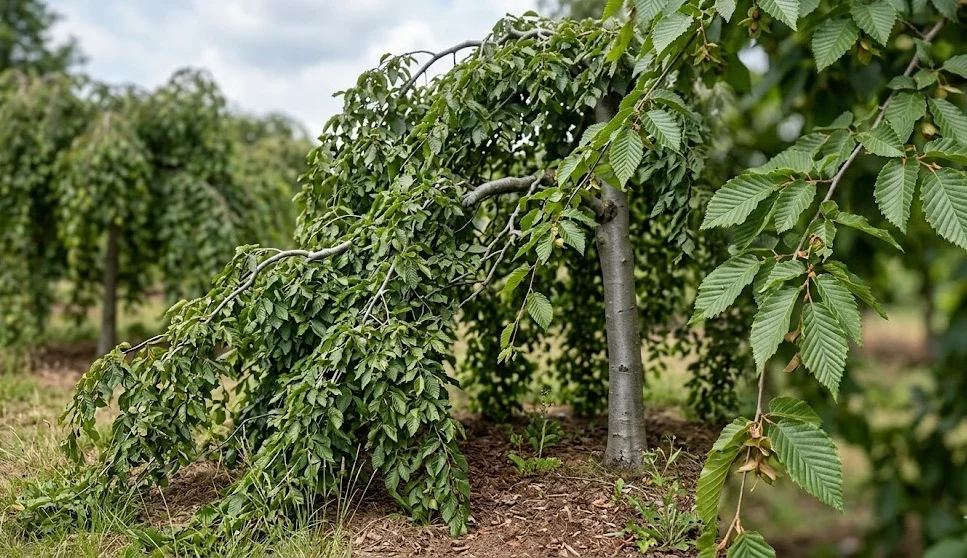
Mulch is especially useful for weeping hornbeam because it protects the shallow active root zone. It moderates soil temperature in both summer and winter. It reduces evaporation and suppresses grass competition. These benefits are often more important than fertilizer.
Use organic materials such as shredded bark, leaf mold, composted wood chips, or mature garden compost. A layer of several centimeters is usually enough. Too thick a layer can hold excess moisture or prevent air exchange. The mulch should be renewed as it breaks down.
Never pile mulch against the trunk. Bark kept constantly damp may crack, decay, or attract pests. Leave a clear space around the base. The mulch should look like a broad, flat blanket rather than a volcano.
Mulch also protects the tree from lawn equipment. Trimmer and mower wounds are common causes of long-term decline in young trees. A mulched ring keeps machines away from the bark. This simple practice prevents damage that cannot easily be repaired.
Adjusting care to soil and climate
In heavy clay soil, watering should be cautious and less frequent. Clay holds moisture but may lack oxygen when saturated. Improving surface structure with compost and mulch is safer than deep digging around established roots. Avoid working clay when it is wet because compaction becomes worse.
In sandy soil, water drains quickly and nutrients leach more easily. Organic matter is essential for improving moisture retention. Smaller but regular compost additions help build soil gradually. Mulch should be maintained consistently.
Hot urban gardens create extra stress. Reflected heat from paving and walls increases water demand. Trees in these sites may need summer irrigation even after establishment. A larger mulch area can reduce heat and drought pressure.
Cool, shaded gardens require less water but need careful drainage management. Soil may stay damp longer after rain. Fertilizer should be used sparingly because growth is naturally slower. The aim is steady vitality, not forced expansion.