
Weeping hornbeam is naturally hardy in many temperate gardens, yet winter preparation still matters, especially during the establishment years. Cold alone is rarely the main problem; winter drying, frost heave, bark injury, waterlogged soil, and late-season stress are often more damaging. A tree that enters winter with healthy roots and balanced growth will withstand harsh conditions more reliably. Practical overwintering begins in late summer and continues through careful observation until spring.
Preparing the tree before winter
Stop encouraging strong new growth late in the season. High nitrogen feeding in late summer can produce soft shoots that harden poorly. Mature wood tolerates winter better than lush late growth. Fertility should therefore be modest and timed mainly for spring.
Watering remains important during dry autumn weather. Roots continue functioning while soil temperatures remain mild. A deep watering before the ground freezes helps prevent winter desiccation. This is especially useful for recently planted trees.
Inspect the tree for broken, diseased, or rubbing branches before winter storms. Remove clearly damaged wood with clean cuts. Avoid heavy shaping late in autumn because large fresh wounds are not ideal before cold weather. Save major structure work for late winter if needed.
Clear weeds and grass from the root zone. Competition for moisture can weaken young trees before dormancy. A tidy mulched area also makes winter inspection easier. It reduces the risk of hidden trunk damage.
More articles on this topic
Mulching and root protection
Apply or renew organic mulch in autumn. Mulch buffers soil temperature and reduces freeze-thaw stress. It also helps retain moisture during dry winter winds. A stable root environment supports winter survival.
The mulch layer should be broad but not piled against the trunk. Contact with bark can keep the base too damp. This may encourage decay or provide shelter for pests. Leave a clean ring around the stem.
Young trees in exposed sites may benefit from extra root-zone protection. A slightly wider mulch circle is often enough. Avoid plastic sheets because they trap moisture and restrict air exchange. Breathable organic materials are safer.
Frost heave can lift newly planted trees in loose soil. Check the tree after repeated freeze-thaw cycles. If the root ball has shifted, firm it gently when conditions allow. Do not compact wet soil aggressively.
More articles on this topic
Protecting trunk and crown
The trunk of a young grafted tree should be protected from mechanical damage and animal browsing. Rabbits, deer, and rodents can injure bark during winter. A breathable tree guard or wire mesh can prevent serious damage. The guard should not constrict the trunk.
Sunscald may occur when winter sun warms bark during the day and temperatures drop sharply at night. This is more common on exposed trunks. Light-colored, breathable trunk protection can help young trees in risky sites. Good placement also reduces the problem.
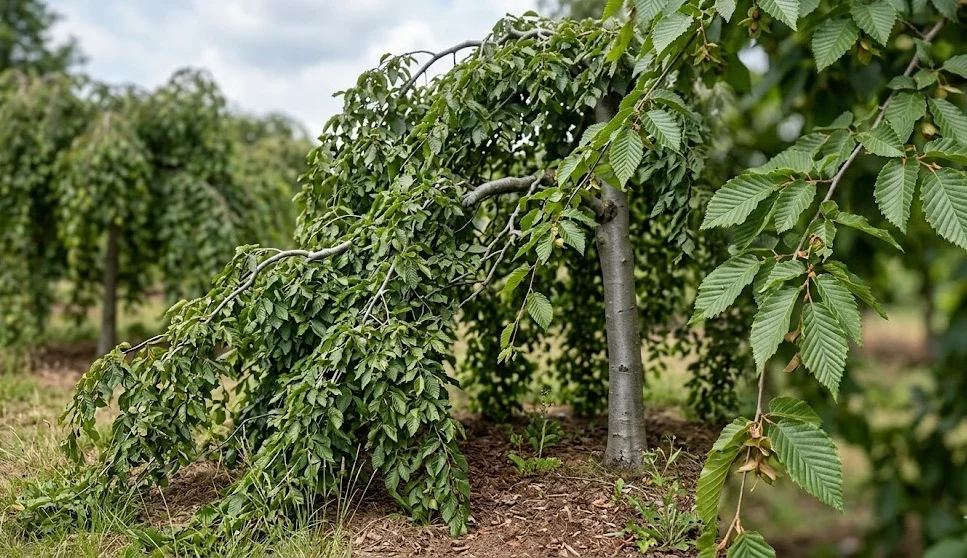
Heavy snow can weigh down the pendulous crown. The flexible branches usually tolerate light snow, but wet snow may bend or break them. If safe, gently lift off heavy accumulation rather than shaking branches violently. Frozen wood can snap when handled roughly.
Avoid tying the whole crown tightly for winter unless there is a clear need. Tight binding can damage shoots and reduce air circulation. If branches must be supported, use soft ties and minimal pressure. Remove supports when the danger has passed.
Spring recovery after winter
Inspect the tree as growth begins. Look for cracked bark, broken shoots, dead branch tips, and lifted roots. Minor winter damage can usually be corrected with light pruning. Severe trunk damage should be assessed carefully.
Do not rush to remove branches that appear lifeless in early spring. Hornbeam can leaf out unevenly after a stressful winter. Wait until buds clearly fail before cutting questionable wood. Premature pruning may remove living tissue.
Resume watering when the soil begins to dry and root activity returns. Spring drought can be surprisingly damaging after a dry winter. A slow soak helps the tree rebuild energy. Mulch should be adjusted if it has shifted.
Fertilize lightly only after the tree shows active growth. Feeding a stressed tree before roots are functioning well is not useful. Compost and careful watering are often enough. The best spring recovery program is gentle and patient.