
Weeping hornbeam is a refined, slow-developing ornamental tree valued for its sculptural crown, dense foliage, and calm architectural presence in the garden. It suits formal courtyards, naturalistic borders, shaded lawns, and small spaces where a dramatic but manageable tree is needed. Its care is not difficult, yet it rewards steady observation and thoughtful seasonal work. The best results come from balancing moisture, structure, soil health, and light rather than relying on occasional heavy intervention.
Understanding the growth habit
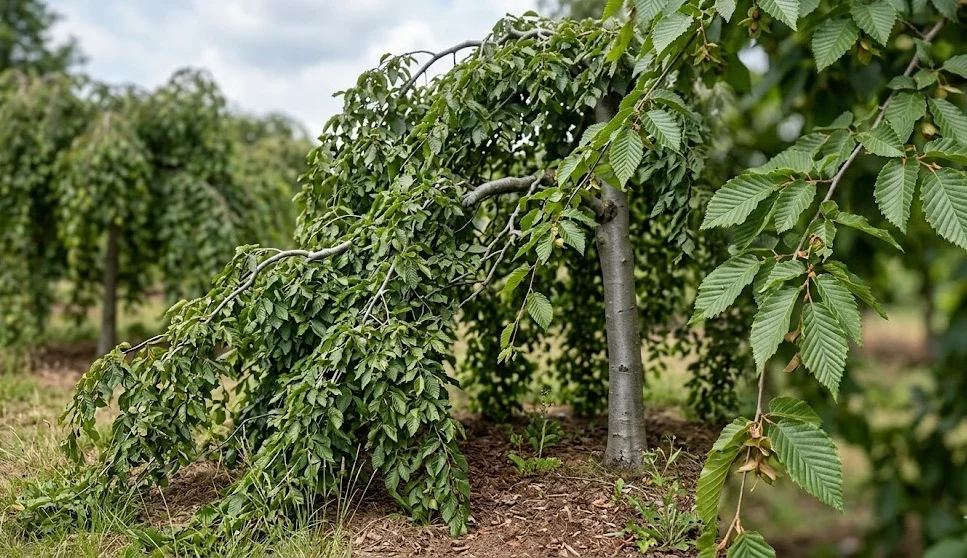
Weeping hornbeam forms a naturally pendulous crown that can look either umbrella-like or softly cascading, depending on how it is trained. Young trees often need time before their final character becomes visible. The branches may first appear sparse, then gradually thicken into a layered canopy. This slow transformation is normal and should not be mistaken for poor growth.
The tree is usually grafted, so its mature shape depends partly on the height and quality of the graft. Shoots growing below the graft point should be removed because they belong to the rootstock. These shoots can grow more vigorously than the ornamental crown. If left in place, they may weaken the desired form over time.
The crown becomes denser with age, especially when the tree receives adequate moisture and moderate fertility. Its leaves create a fine-textured shade that feels cooler than many open-canopied ornamental trees. In autumn, the foliage often turns yellow to brownish gold before falling. Even in winter, the bare branching structure remains visually valuable.
Because growth is measured rather than aggressive, patience is essential. Strong annual forcing with excessive fertilizer is rarely beneficial. A steady care routine produces better wood, more balanced shoots, and fewer stress problems. The goal is not rapid size but durable, elegant structure.
More articles on this topic
Choosing the right position
Weeping hornbeam performs best in a position with full sun to partial shade. In cooler climates, more sun usually improves crown density and autumn color. In hot or dry regions, light afternoon shade can reduce leaf scorch. The site should feel bright but not harshly exposed for long periods.
Wind exposure matters because the hanging branches can dry out quickly in open locations. A sheltered garden corner, courtyard, or protected lawn position is often ideal. The tree should not be squeezed between aggressive shrubs or large-rooted trees. It needs enough air movement to remain healthy but not constant drying wind.
Avoid planting it where water stands for days after rain. Hornbeam tolerates moderately heavy soil better than many ornamental trees, but poor drainage still harms roots. Compacted ground can also restrict establishment. Before planting, observe the site after rain and during dry spells.
The tree deserves a location where its shape can be appreciated from several angles. It works beautifully as a specimen near a path, bench, entrance, or quiet lawn area. Give the crown enough space to spread naturally. Crowding it too closely reduces both beauty and health.
More articles on this topic
Soil preparation and root care
Weeping hornbeam prefers fertile, humus-rich soil that holds moisture without becoming waterlogged. A loamy soil is ideal, but the tree can adapt to clay or sandy ground if improved carefully. Compost can enhance structure and biological activity. The improvement should be moderate rather than excessive.
Before planting, loosen a broad area rather than digging only a narrow hole. Roots establish more readily when surrounding soil is not compacted. The planting hole should be wide and shallow enough to allow natural root spread. Deep planting is one of the most common mistakes with grafted ornamental trees.
The root flare should remain visible at soil level. If the tree is planted too deeply, the trunk base may stay damp and vulnerable. Mulch helps protect the root zone but must not be piled against the bark. A small clear ring around the trunk prevents moisture-related bark damage.
During the first two to three years, root care is more important than crown shaping. Consistent watering encourages roots to move into the surrounding soil. Competing grass should be kept away from the base. A generous mulched circle reduces stress and improves establishment.
Watering throughout the seasons
Newly planted weeping hornbeam needs regular watering during dry periods. Deep watering is better than frequent light sprinkling. The aim is to moisten the root zone thoroughly, then allow the surface to breathe. This encourages deeper roots and improves drought resilience.
Established trees tolerate short dry periods, but prolonged drought can cause leaf edge browning. This is especially likely on sandy soil or in reflected heat near walls and paving. During summer drought, one slow watering every week or two is often more valuable than daily surface wetting. Soil moisture should guide the schedule.
Spring watering supports leaf expansion and new shoot growth. Summer watering protects the canopy during heat stress. Autumn watering is useful when the season is dry because roots remain active after shoot growth slows. Going into winter with moderately moist soil helps the tree resist cold drying.
Overwatering is also harmful, especially in heavy soil. Roots need oxygen as well as moisture. If leaves yellow while the soil remains constantly wet, drainage may be the problem. In such cases, reduce irrigation and improve soil aeration around the root zone.
Feeding and mulching for balanced vigor
Weeping hornbeam usually needs only modest feeding. A spring layer of compost is often enough for garden-grown specimens. Rich but gentle nutrition supports leaves, roots, and beneficial soil organisms. It also avoids the weak, overextended growth caused by too much nitrogen.
If growth is very poor, a balanced slow-release fertilizer may help. Apply it according to soil condition, not habit. Excess feeding can make the crown untidy and more vulnerable to drought stress. The healthiest trees grow steadily, not excessively.
Mulch is one of the most effective care tools for this tree. Organic mulch stabilizes soil temperature, conserves water, and reduces weed competition. Shredded bark, leaf mold, or mature composted wood chips are suitable options. The layer should be renewed as it decomposes.
Keep mulch several centimeters away from the trunk. A mulch mound against bark can encourage rot and pests. Spread it broadly over the root area instead. The wider the protected root zone, the more stable the tree becomes.
Pruning and crown maintenance
Pruning should respect the natural weeping form. Heavy cutting can destroy the layered character that makes the tree special. The best approach is selective removal of dead, damaged, crossing, or awkward branches. Small corrections made regularly are better than drastic reshaping.
Late winter is a suitable time for structural pruning because the branch framework is visible. Light summer pruning can also be used to refine the outline after the spring growth flush. Avoid removing too much leaf area during hot weather. Leaves feed the tree and protect branches from sun stress.
Branches touching the ground can be shortened if they interfere with paths or mowing. Some gardeners prefer a skirted canopy, while others enjoy branches cascading to the soil. Both styles are acceptable if the cuts are clean and restrained. The important point is to maintain balance and airflow.
Always remove shoots that emerge from below the graft union. These shoots are not part of the ornamental crown. They may have a different growth habit and can dominate the tree if ignored. Cut them cleanly at their origin as soon as they appear.
Long-term health and seasonal observation
A healthy weeping hornbeam changes subtly through the year. Spring brings fresh green leaves and flexible shoots. Summer shows the density and shade quality of the crown. Autumn and winter reveal color, texture, and branch architecture.
Regular inspection helps catch problems early. Look for dry branch tips, unusual leaf spotting, trunk damage, and signs of pests. Most issues are easier to manage when found at the beginning. Good observation often prevents the need for aggressive treatment.
The tree benefits from calm, consistent care rather than constant interference. Maintain soil moisture, renew mulch, prune lightly, and protect the trunk from mechanical damage. Avoid frequent digging in the root zone. Hornbeam roots appreciate stable soil conditions.
With proper care, weeping hornbeam can become a long-lived focal point. Its beauty grows stronger as the crown gains depth and maturity. It suits gardeners who value patience, structure, and seasonal character. Few small ornamental trees combine elegance and toughness so effectively.