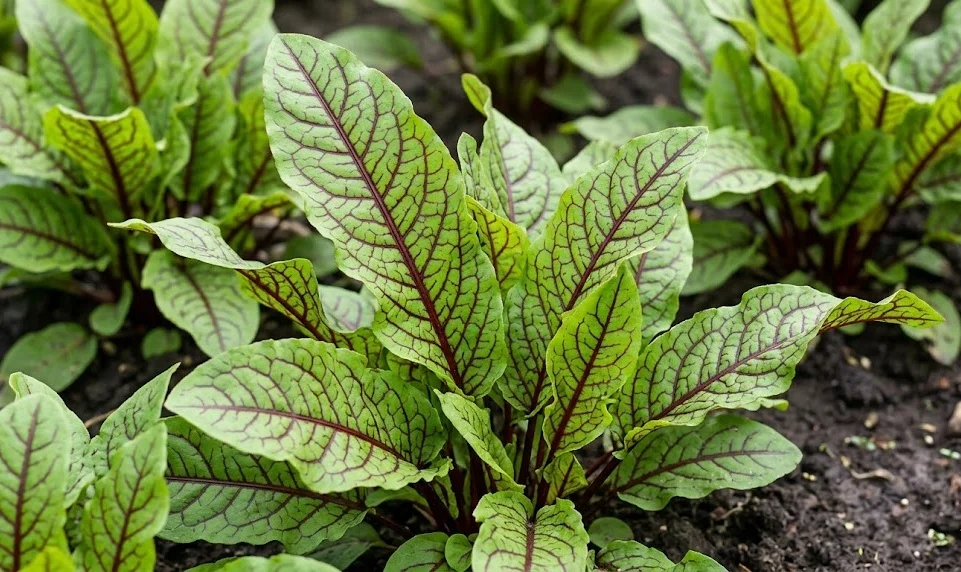

Watering and fertilizing red-veined sorrel should support steady, moderate growth rather than force lush foliage. The plant produces its best leaves when the root zone stays evenly moist and the soil contains enough organic matter. Sudden drought, excessive nitrogen, or poor drainage can quickly reduce leaf quality. A balanced approach keeps the foliage tender, colorful, and useful for repeated harvests.
Red-veined sorrel has a natural preference for cool, moist conditions. That does not mean it must grow in wet mud, but it should not be treated like a drought-tolerant Mediterranean herb. Moisture stress is one of the quickest routes to bitter, leathery leaves. It also encourages premature flowering, especially during warm weather.
Fertility should be steady rather than aggressive. The plant needs enough nutrients to replace harvested leaves, but it does not require heavy feeding. Compost, light organic fertilizer, and healthy soil biology usually provide a better foundation than frequent high-nitrogen liquid feeds. This is especially true for gardeners who value both flavor and ornamental leaf quality.
The best program changes with the season. Spring growth benefits from compost and reliable moisture. Summer care focuses on preventing drought stress and heat-triggered bolting. Autumn care supports a final flush of leaves while allowing the plant to prepare for winter.
Understanding moisture needs
Red-veined sorrel prefers soil that feels consistently fresh. The upper surface can dry slightly, but the root zone should not become bone dry. When water supply fluctuates sharply, leaves often become less tender. This is why deep, regular watering is more useful than occasional emergency soaking.
More articles on this topic
The plant gives clear signals when moisture is wrong. Wilting in the heat of the day can be temporary, but wilting in the morning usually means the root zone is too dry. Yellowing lower leaves may indicate waterlogging, nutrient shortage, or natural aging. Crisp brown margins often point to drought, heat, or salt buildup in containers.
In open ground, water deeply enough to moisten the full root zone. A quick splash may darken the surface while leaving deeper roots dry. After watering, check the soil with a finger or trowel to see how far moisture has moved. This simple habit prevents both under-watering and over-watering.
Moisture-retentive soil preparation reduces watering work later. Compost increases the soil’s ability to hold water while still allowing drainage. Mulch slows evaporation and keeps soil temperature more stable. These practices are especially valuable in raised beds, containers, and windy gardens.
Seasonal watering strategy
In spring, natural rainfall may provide much of the plant’s water. However, newly planted sorrel still needs attention because its roots have not spread widely. Water transplants regularly until new growth confirms establishment. Seedlings need even finer care because their shallow roots dry quickly.
More articles on this topic
During summer, watering should be adjusted to heat, wind, soil type, and plant size. Plants in sandy soil may need water more often than those in loam. Containers can dry very quickly, even when the surrounding garden soil remains damp. A shaded pot may still need regular watering if wind pulls moisture from the leaves.
Autumn watering is often overlooked, but it supports a valuable second flush of tender leaves. Cooler weather reduces evaporation, so the plant can produce high-quality foliage again. Keep watering during dry autumn spells, especially after cutting back flower stems or old leaves. Strong autumn growth also helps the crown store energy before dormancy.
In winter, established ground-grown plants usually need little active watering. The greater danger is often waterlogging rather than drought. Container plants under roof overhangs may still dry out, so they should be checked occasionally. Water sparingly in cold weather, aiming to prevent complete desiccation without saturating the compost.
Fertilizing for leaf quality
Fertilizing red-veined sorrel begins with soil improvement. Compost is the safest and most reliable amendment because it feeds gradually and improves structure. Apply it in spring around established plants and before planting new ones. This supports steady growth without creating overly soft foliage.
A balanced organic fertilizer can be added when soil is poor or harvests are frequent. Choose a moderate formulation rather than a lawn-style nitrogen-heavy product. Excess nitrogen can push rapid, pale growth that lacks substance. It can also make foliage more attractive to sap-feeding pests.
Liquid feeds can be useful in containers, but they should be applied lightly. Container nutrients wash out faster than bed nutrients, especially with frequent watering. A diluted balanced feed every few weeks during active growth is usually enough. Stop or reduce feeding when growth naturally slows.
Leaf color is not always a simple fertilizer indicator. Red veining is influenced by genetics, light, temperature, and overall plant health. A plant with dull color may be hungry, but it may also be shaded too heavily or stressed by heat. Diagnose the whole growing environment before adding more fertilizer.
Organic matter, mulch, and soil biology
Organic matter is central to long-term sorrel care. It supports moisture retention, nutrient cycling, and a crumbly root environment. Compost, leaf mold, and well-rotted manure can all be useful when applied appropriately. Fresh manure should be avoided around harvestable leaves because it can be too strong and unhygienic.
Mulch should be thin enough to breathe. A heavy, wet layer pressed against the crown can encourage rot and shelter slugs. Keep a small open ring around the base of each plant. This allows airflow while still protecting the surrounding soil.
Living soil also helps buffer small mistakes. Soil rich in organic matter holds nutrients in more plant-available forms. It drains more gracefully after rain and dries more slowly in warm weather. These qualities are especially valuable for leafy crops harvested over a long season.
Avoid repeated cultivation close to established crowns. Deep hoeing can damage roots and disturb the plant’s recovery after harvest. Hand weeding and surface mulching are safer. Over time, this quieter approach builds a stable, productive planting area.
Common mistakes with water and fertilizer
The most common watering mistake is allowing the plant to swing between drought and saturation. Red-veined sorrel can survive these swings, but leaf quality suffers. Consistency matters more than dramatic rescue watering. Regular observation prevents most problems before they become visible.
Another mistake is feeding heavily to correct stress caused by heat or dryness. Fertilizer cannot compensate for an unsuitable environment. If the plant is bolting because it is hot and dry, nitrogen may worsen the problem by forcing weak growth. Shade, mulch, and moisture correction should come first.
Waterlogging is just as damaging as drought. In dense soil, roots may be unable to breathe, even when the foliage appears wilted. Adding more water in that situation makes the problem worse. Improve drainage, loosen compacted soil before planting, and use raised beds where winter wetness is persistent.
The best watering and feeding routine is modest, regular, and responsive. Keep the soil evenly moist, refresh fertility with compost, and use fertilizer only when growth demands it. Red-veined sorrel is forgiving, but it produces its finest leaves when it never has to struggle. That steady care is what separates a merely surviving plant from a truly productive one.