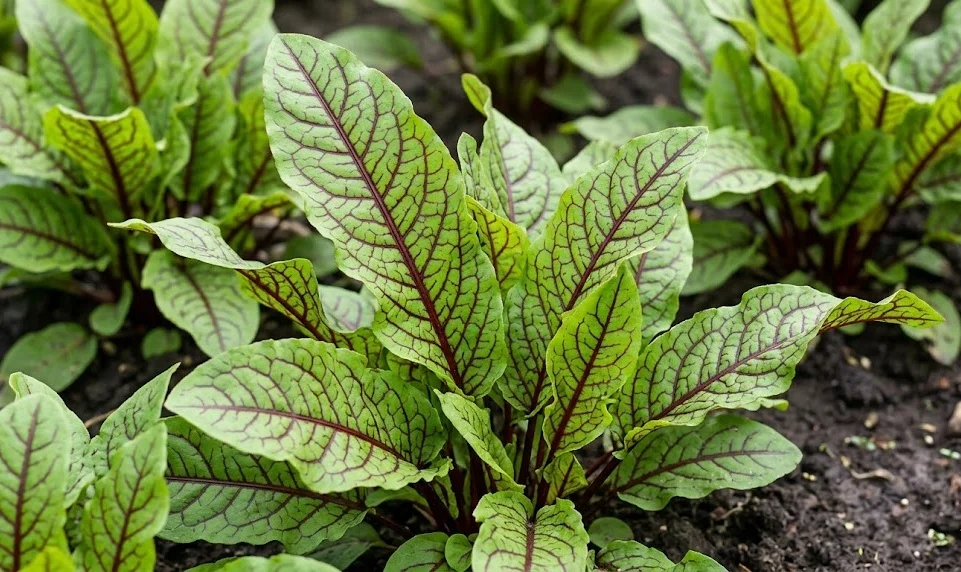

Red-veined sorrel performs best in bright conditions that support steady leaf growth without excessive heat stress. It can grow in full sun or partial shade, but the ideal balance depends on climate, season, and soil moisture. In cool regions, more sun usually improves density and color. In hot regions, afternoon shade often produces better eating quality and reduces bolting.
Light affects more than growth rate. It influences leaf color, texture, water demand, and flowering behavior. Strong light with adequate moisture can create compact, richly marked foliage. Strong light combined with drought can produce tough leaves and premature flower stems.
The plant is adaptable because it evolved as a woodland-edge and damp-ground type of perennial rather than a desert herb. This explains why it can handle partial shade better than many sun-loving culinary herbs. RHS guidance for sorrel describes it as happy in sun or partial shade, while red-veined sorrel plant advice also recommends a sunny or part-shaded position with moist, fertile soil. RHS+1
The best light position is therefore not a fixed rule. It should be chosen in relation to temperature and moisture. A cool, cloudy garden and a hot, exposed courtyard require different decisions. Successful growers adjust the plant’s exposure instead of assuming full sun is always best.
Full sun conditions
Full sun can be excellent in mild climates. It encourages strong leaf production, compact growth, and vivid contrast between the green blade and red veins. Spring-grown plants in full sun often look especially clean and colorful. The cool air helps them use the light without overheating.
More articles on this topic
Soil moisture must support full-sun planting. If the root zone dries repeatedly, the advantage of light is lost. Leaves may become smaller, sharper, and less tender. Mulch and compost are especially important in sunny beds.
Full sun is also suitable for early and late-season crops. In spring and autumn, sunlight is less intense and temperatures are friendlier to leafy growth. Plants can photosynthesize efficiently without suffering severe water stress. This is why autumn regrowth is often high quality after summer heat passes.
In hot summer regions, full sun may be too much. The plant may wilt at midday, bolt early, or lose culinary quality. In those conditions, full sun is best limited to morning exposure. Protection from harsh afternoon light can make a dramatic difference.
Partial shade and heat protection
Partial shade is often the safest choice in warm climates. Morning sun with afternoon shade gives enough light for growth while reducing heat stress. This arrangement protects leaves during the most damaging part of the day. It also helps the soil stay moist for longer.
More articles on this topic
Shade should be bright rather than gloomy. Deep shade produces thin, stretched growth and weaker red coloration. The plant may survive, but it will not form the same dense, harvestable rosette. A position under open shrubs or beside taller seasonal crops can work well.
Partial shade is especially useful for container plants. Pots heat quickly on paving, balconies, and patios. Even if the air temperature is moderate, the root zone can become hot. Moving containers out of afternoon sun helps protect both roots and leaves.
The best shade is seasonal and flexible. A deciduous shrub may provide summer cooling while allowing more spring light. Taller vegetables can cast temporary shade during hot months. This kind of living shade can integrate red-veined sorrel naturally into mixed plantings.
Diagnosing light-related problems
Poor light usually appears as weak, elongated growth. Leaves may stretch upward, stems may become soft, and the plant may produce fewer harvestable leaves. Red veins can look less intense when the plant lacks enough brightness. Moving the plant to brighter shade or morning sun often improves quality.
Excessive light stress looks different. Leaves may wilt, toughen, scorch at the margins, or become unpleasantly bitter. Flower stems may appear earlier than expected. These symptoms are worse when full sun is combined with dry soil.
Light problems should not be diagnosed alone. Water, fertility, pot size, and temperature all interact with exposure. A plant in full sun with perfect moisture may thrive, while a plant in the same light with dry roots may decline. Always check the soil before blaming the sun.
The ideal light level is the one that keeps growth steady. Leaves should be firm but tender, colorful but not scorched, and abundant without constant bolting. For most gardens, that means full sun in cool seasons and partial shade during hot periods. This flexible approach gives the best balance between beauty and harvest.