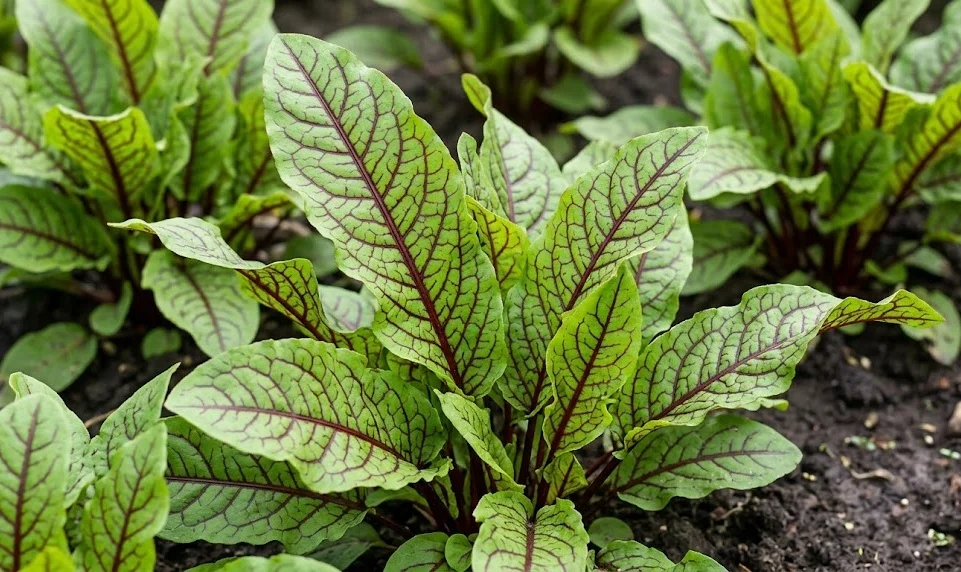

Red-veined sorrel is generally a resilient plant, but it is not immune to pests, diseases, and stress-related disorders. Most problems begin when plants are crowded, drought-stressed, waterlogged, or left with aging foliage around the crown. Healthy plants in good air movement usually recover quickly from minor damage. The best protection is prevention through spacing, hygiene, balanced watering, and regular harvesting.
The plant is often described as low maintenance, and serious pest outbreaks are uncommon in many gardens. That does not mean it should be ignored. Tender leaves can attract slugs, aphids, flea beetles, and leaf-chewing larvae. Damp, stagnant conditions can also encourage fungal spotting or mildew.
Good diagnosis starts with looking at the pattern of damage. Holes suggest chewing pests, sticky distorted growth suggests sap-feeders, and powdery or spotted leaves suggest disease. Yellowing may come from roots, nutrition, old age, or water stress. Avoid treating every symptom as a pest problem, because environmental causes are just as common.
Edible leaves require careful management. Any control method should be appropriate for crops that may be harvested soon. Physical removal, hygiene, barriers, biological balance, and cultural correction are usually better first steps than strong chemical intervention. This approach protects pollinators, soil life, and the safety of the harvest.
Slugs, snails, and chewing damage
Slugs and snails are among the most common pests on red-veined sorrel. They are especially troublesome in damp beds, mulched areas, and shaded corners. Their feeding creates ragged holes, often with slime trails nearby. Young leaves and seedlings are most vulnerable.
More articles on this topic
Control begins with habitat management. Remove boards, dense weeds, old pots, and debris where slugs hide during the day. Keep mulch loose and avoid piling it against the crown. Water in the morning when possible so the surface is less inviting overnight.
Hand-picking can be effective in small gardens. Evening inspections after rain often reveal the culprits quickly. Barriers around containers and raised beds can also reduce damage. Wildlife-friendly gardens may gain help from ground beetles, birds, frogs, and hedgehogs.
Leaf-chewing larvae and beetles may also mark the foliage. Their damage is usually more scattered or patterned than slug feeding. Remove affected leaves if damage is light, and inspect the undersides for eggs or larvae. Strong, regularly harvested plants can tolerate minor chewing without losing their ornamental value.
Aphids and sap-feeding insects
Aphids prefer soft, fresh growth, especially when plants are lush from excess nitrogen. They cluster on young leaves, stems, and flowering shoots. Their feeding can distort growth and leave sticky honeydew on foliage. Ant activity may increase because ants feed on the honeydew and protect aphids from predators.
More articles on this topic
Small aphid colonies can often be washed off with a firm stream of water. This is safest early in the day so leaves dry quickly. Pinching out heavily infested flower stems also reduces the population. Avoid overfeeding, because very soft growth is more attractive to aphids.
Beneficial insects are important allies. Lady beetles, lacewings, hoverfly larvae, and parasitic wasps can reduce aphid numbers naturally. Planting nectar-rich flowers nearby helps support these predators and parasitoids. A garden with biological diversity usually experiences fewer severe outbreaks.
If a treatment is needed, choose one labeled for edible crops and follow harvest intervals carefully. In many cases, insecticidal soap can help when applied correctly. Coverage matters because aphids hide in curled leaves and stem joints. Repeated observation is more useful than one dramatic spray.
Fungal leaf spots and mildew
Fungal issues usually appear when foliage remains damp and air movement is poor. Leaf spots may develop as small brown, purple, or dark lesions. Powdery mildew can appear as pale, dusty growth on leaf surfaces. These problems are often worse on crowded plants or during humid weather.
Prevention is more effective than cure. Space plants so leaves dry after rain, and harvest regularly to open the clump. Remove old, yellowing, or diseased foliage promptly. Do not leave infected leaves on the soil surface where spores can persist.
Watering technique also matters. Aim water at the soil rather than constantly wetting the foliage. Morning watering allows accidental splashes to dry during the day. In containers, avoid grouping plants so tightly that air cannot circulate between them.
If disease becomes persistent, review the whole site. Too much shade, excessive nitrogen, poor drainage, and dense planting can all contribute. Removing the worst affected leaves may be enough when the plant is otherwise healthy. If the crown is weak and repeatedly diseased, replacing the plant may be more practical than nursing it indefinitely.
Root and crown problems
Root and crown problems are usually linked to waterlogged soil or deep planting. The plant may wilt even when the soil is wet, because damaged roots cannot supply water properly. Lower leaves may yellow, and the crown may feel soft or unstable. A sour smell from the soil is a serious warning sign.
Prevention starts at planting. Set the crown at the correct depth and avoid burying it under mulch. Improve heavy soil before planting, or use raised beds where drainage is unreliable. Containers must have clear drainage holes and a compost that does not collapse into sludge.
Once crown rot has developed, recovery can be difficult. Remove affected foliage and check whether any firm, healthy crown sections remain. If the plant is valuable, a healthy division may be saved and replanted in fresh soil. Severely rotted plants should be discarded rather than composted casually near other crops.
Winter wetness can be especially damaging. The plant is hardy, but hardy roots still suffer in stagnant soil. Cold and wet together slow recovery and favor decay. Keeping the crown clean and the soil open before winter reduces this risk.
Integrated prevention in edible gardens
Integrated pest and disease management suits red-veined sorrel very well. The plant is harvested often, so small problems are noticed early. Regular picking removes pest habitat and encourages fresh growth. Clean cultivation also keeps the planting attractive.
Crop hygiene should become routine. Remove yellow leaves, cut flower stems, and clear fallen debris. Wash tools if pruning diseased plants. These small habits reduce the background level of pests and pathogens.
Plant diversity is another important tool. Mixed plantings confuse pests and support beneficial insects. Avoid creating a large, stressed monoculture of soft leafy growth. A small patch of vigorous plants is usually more productive than a large patch that is neglected.
The most reliable disease and pest strategy is to grow the plant well. Give it moist but drained soil, moderate fertility, good spacing, and relief from extreme heat. Red-veined sorrel is naturally resilient when its basic needs are met. Most issues remain minor when the plant grows steadily and is kept clean.