
Red-veined sorrel is one of those leafy perennials that earns its place twice in the garden. It brings sharp, lemony foliage to the kitchen and striking red-veined leaves to ornamental borders. Although it is often treated as a gourmet salad crop, its needs are closer to a hardy, moisture-loving perennial than a delicate herb. Good care is mostly about steady moisture, fertile soil, regular harvesting, and preventing stress before the leaves become tough or bitter.
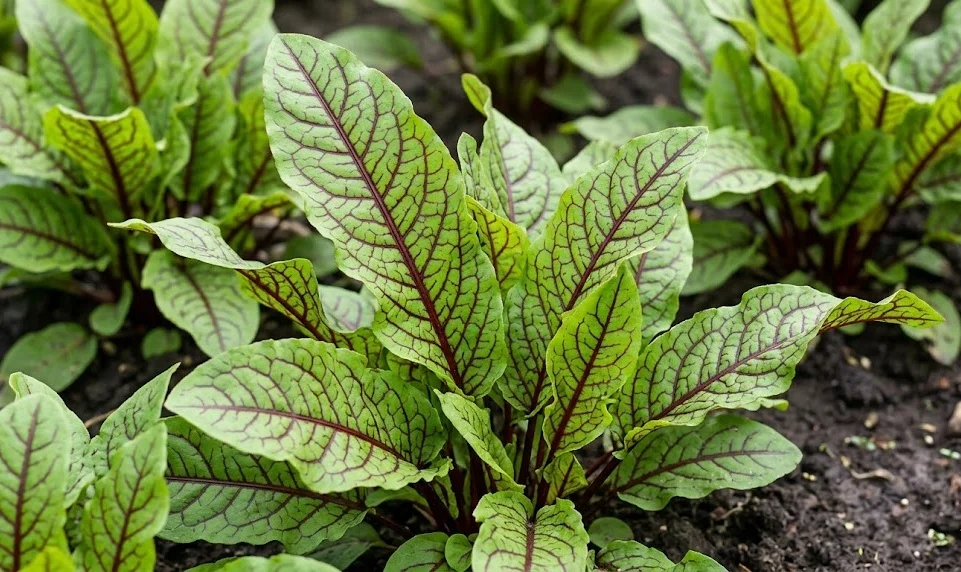
The plant forms a basal rosette of elongated green leaves marked by deep red to burgundy veins. This color contrast is strongest when the plant grows steadily rather than struggling through drought or heat. In productive gardens, it can sit comfortably beside lettuce, spinach, chard, parsley, and other cool-season crops. In ornamental schemes, it works well along path edges, in herb beds, and near damp garden zones where many Mediterranean herbs would decline.
Red-veined sorrel is best understood as a cool-season leafy crop with perennial roots. It produces its finest leaves in spring and again in autumn, while hot summer weather can push it toward flowering and bitterness. The roots are persistent, but the foliage may die back during winter before regrowing from the crown in spring. This seasonal rhythm is normal and should not be mistaken for plant failure. RHS+1
The most successful care routine is gentle but consistent. Avoid extremes, because the plant dislikes both parched soil and stagnant, airless compost. Harvest young outer leaves often, remove tired foliage promptly, and cut flower stems before they drain energy from leaf production. With that simple rhythm, a red-veined sorrel clump can stay attractive, productive, and easy to manage for several seasons.
Soil structure and planting position
Red-veined sorrel grows best in soil that stays evenly moist without becoming sour or compacted. A fertile loam is ideal, especially when enriched with compost or well-rotted organic matter before planting. The organic matter improves water retention while keeping the root zone open enough for oxygen. This balance is important because the plant likes moisture, but roots still need air.
More articles on this topic
In heavy clay soils, the priority is structure rather than heavy feeding. Compost, leaf mold, and fine bark can help loosen the top layer and reduce surface sealing after rain. Raised beds are useful where winter wetness sits for long periods. If the soil remains sticky and waterlogged for days, the crown becomes more vulnerable to rot and fungal stress.
In sandy soils, the challenge is the opposite. Water drains quickly, nutrients leach easily, and young leaves can become coarse during dry spells. Adding compost before planting gives the root zone more resilience. A thin organic mulch can also reduce evaporation and keep the leaf quality more consistent.
The planting position should reflect the local climate. In cool regions, full sun usually produces strong growth and good leaf color. In hot regions, morning sun with afternoon shade is often better, because it protects the plant from heat stress. Authoritative growing guides consistently describe sorrel and red-veined sorrel as suitable for sun or partial shade, with moist, fertile soil giving the best results. RHS+2rhsplants.co.uk+2
Watering for tender leaves
Watering is central to good red-veined sorrel care because leaf texture depends strongly on steady growth. The plant does not need swampy conditions in ordinary beds, but it does appreciate reliable moisture around the roots. If drought interrupts growth, the leaves can become smaller, sharper, and less pleasant to eat. This is especially noticeable when plants are harvested regularly.
More articles on this topic
A practical watering routine begins with observation rather than a rigid calendar. Check the upper few centimeters of soil, and water when that layer begins to dry while the deeper root zone still feels slightly cool. Deep watering is better than frequent splashing, because it encourages roots to explore the soil. Shallow watering can leave the plant dependent on a fragile surface moisture layer.
Mulching is helpful, but it should be applied carefully. A loose mulch of compost, shredded leaves, or fine straw can stabilize soil moisture and reduce temperature swings. Keep the mulch slightly away from the crown so that the base of the plant does not remain constantly wet. This small gap improves air movement and reduces the risk of crown problems.
Container-grown plants need closer attention than those in open ground. Pots dry faster, especially on windy balconies, warm patios, and greenhouse benches. Use a moisture-retentive but free-draining compost, and avoid letting the pot stand permanently in water. In summer, a container may need watering much more often than a bed-grown plant, even when the foliage looks similar at first glance.
Feeding and soil fertility
Red-veined sorrel is not a heavy feeder like sweet corn or cabbage, but it does respond well to moderate fertility. The goal is steady leaf production, not lush, weak growth. Too much nitrogen can create soft foliage that attracts aphids and collapses quickly after harvest. Too little nutrition leads to small leaves, pale growth, and a tired crown.
A spring dressing of compost is usually enough for established plants in good garden soil. Spread it around the plant when new shoots begin to appear, then water it in gently. This feeds the soil biology as well as the plant. It also refreshes the surface layer after winter rain has compacted it.
Where soil is poor, a balanced organic fertilizer can be useful in early spring. Apply it lightly, following label rates rather than guessing generously. Leaf crops often respond quickly to excess nitrogen, but that response is not always good quality. Flavor, leaf thickness, and pest resistance are usually better when feeding is measured.
Avoid late-season overfeeding in cold climates. Strong flushes of soft autumn growth can be damaged by early frost and may overwinter poorly. By late summer, focus more on moisture, hygiene, and removing flowering stems. This helps the crown mature naturally before winter dormancy.
Harvesting as routine maintenance
Harvesting is not only a kitchen task; it is also plant care. Regular picking encourages fresh leaves and prevents the clump from becoming congested. The best method is to remove outer leaves individually while leaving the inner growing point intact. This allows the plant to keep producing without the shock of full defoliation.
Young leaves have the cleanest texture and the most balanced acidity. Older leaves can become tougher and more intense, especially during dry or hot conditions. In salads, small leaves are usually preferred, while larger leaves are better used sparingly or cooked. Frequent harvesting keeps the plant in the tender stage for longer.
Use clean scissors or pinch leaves carefully at the base. Tearing leaves roughly can damage the crown and leave ragged tissue that dries poorly. After harvesting, remove any broken stems, yellow leaves, or diseased fragments from around the plant. Clean plants recover faster and are less inviting to slugs.
Flower stems should be removed unless seed is wanted. Once flowering begins, the plant diverts energy away from leaf production. The leaves may become smaller and more bitter as the stem elongates. RHS plant advice for red-veined sorrel recommends picking young outer leaves regularly and cutting back flower stems as they appear to extend the harvest. rhsplants.co.uk
Heat, bolting, and summer stress
Red-veined sorrel performs best in mild conditions and often slows down in hot weather. Heat stress is most visible through wilting, tougher leaves, faster flowering, and reduced color intensity. The plant may survive the stress, but the edible quality can decline sharply. That is why summer management is about protection rather than pushing growth.
Partial shade is valuable in warm climates or exposed gardens. Afternoon shade reduces leaf temperature and helps the plant conserve moisture. Even a taller neighboring crop can provide enough shelter during the hottest part of the day. This approach is especially useful in kitchen gardens where permanent shade structures are not desirable.
Watering during heat should be deep and early in the day. Morning watering gives the plant time to hydrate before temperatures rise. Evening watering can work in dry climates, but in humid areas it may leave foliage damp overnight. Damp leaves combined with warm air can increase disease pressure.
If the plant bolts repeatedly, cut flowering stems promptly and improve the growing conditions. Add mulch, check soil moisture, and consider whether the site receives too much afternoon sun. In very hot regions, red-veined sorrel may be managed as a spring and autumn crop rather than a midsummer staple. This realistic approach gives better leaves and less frustration.
Container and raised-bed care
Red-veined sorrel grows well in containers if the pot is deep enough and watering is consistent. A container of at least medium depth gives the roots room to anchor and buffer against drying. Shallow decorative bowls may look attractive at first, but they often dry too quickly for reliable leaf quality. A wider pot also allows several plants to form a productive display.
The compost should combine fertility, moisture retention, and drainage. A peat-free multipurpose mix amended with compost and a little loam-based material can work well. Avoid very light mixes that shrink away from the pot edge when dry. Once that happens, water may run down the sides without wetting the root ball.
Raised beds are excellent where the native soil is poor or compacted. They warm earlier in spring, drain better in winter, and allow close control over organic matter. However, raised beds can also dry faster than ground-level beds. Mulching and regular moisture checks remain important.
Container plants should be refreshed periodically. If growth weakens after a season or two, lift the clump, divide vigorous sections, and replant them into fresh compost. Discard woody, exhausted, or diseased portions. This renewal keeps the plant productive and prevents a pot from becoming a tight mass of aging roots.
Long-term care and renewal
Red-veined sorrel can be perennial, but it is not always at its best forever. Many clumps become woody, crowded, or less productive after a few seasons. Rather than forcing an old plant to perform, it is better to renew it through division or replacement. This keeps both ornamental quality and harvest quality high.
Spring is the best time to assess established plants. Remove dead winter foliage before new leaves expand fully. Check whether the crown is firm, whether new shoots are evenly distributed, and whether the center has begun to decline. A healthy clump should push fresh leaves strongly from multiple points.
Division is useful when the plant has become congested. Lift the clump, separate vigorous rooted sections, and replant them into prepared soil. Water thoroughly after replanting and shade the divisions lightly if the weather turns warm. Avoid dividing during severe heat, because recovery will be slower and leaf quality will suffer.
A simple annual rhythm works best. Feed lightly in spring, harvest regularly, water during dry spells, cut flower stems, clean old foliage, and renew tired plants. This care pattern respects the plant’s natural growth cycle instead of fighting it. The result is a resilient perennial leaf crop that looks polished in the border and remains useful in the kitchen.