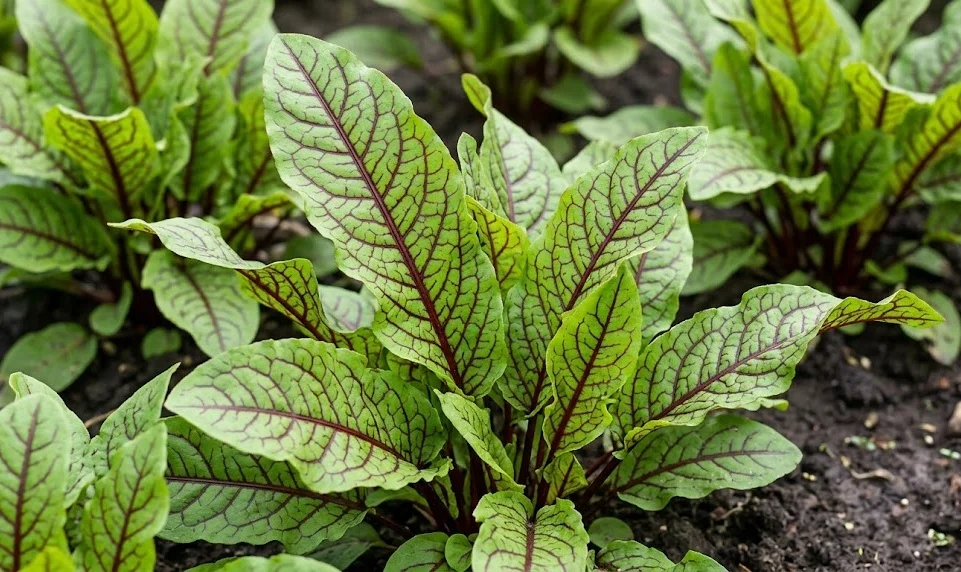

Planting red-veined sorrel successfully begins with choosing a cool, fertile, moisture-retentive position. The plant is adaptable, but it rewards careful site preparation with brighter foliage, faster establishment, and more tender leaves. It can be started from seed, transplanted as young plants, or divided from established clumps. Each method works well when timing, soil contact, and aftercare are handled with patience.
Red-veined sorrel is often planted in herb gardens, vegetable beds, edible borders, and containers. Its ornamental foliage means it does not need to be hidden in a purely productive plot. The red venation gives contrast among green salad crops and can soften the edge of formal beds. Because the leaves are harvested repeatedly, it should be placed where access is easy.
The plant prefers a position that provides sun or partial shade and enough moisture to sustain leafy growth. In cool climates, more sun helps produce dense growth and good color. In hot climates, partial shade protects the crop from bolting and leaf toughness. Wisconsin Horticulture describes bloody dock as suitable for full sun to partial shade in average to moist soil, even noting its tolerance of damp margins and water-garden settings. Wisconsin Horticulture
Before planting, clear perennial weeds thoroughly. Red-veined sorrel forms a persistent crown, and weeds around that crown are awkward to remove later. Improve the soil with compost, especially where the ground is sandy, compacted, or low in organic matter. Good preparation reduces stress during the first growing season.
Sowing from seed
Seed sowing is the most economical propagation method. It is useful when several plants are needed for a salad bed, market-garden row, or ornamental edging scheme. Seeds can be sown directly outdoors in spring once the soil is workable. They can also be started in modules under protection for more controlled establishment.
More articles on this topic
Direct sowing works best in a finely prepared seedbed. Rake the soil level, remove stones and clods, and water before sowing if the ground is dry. Sow thinly, because crowded seedlings compete quickly and stretch toward light. Cover lightly, firm gently, and keep the surface consistently moist until germination.
Module sowing gives more control over spacing and early growth. Fill trays with a fine seed compost, sow lightly, and keep the compost damp but not saturated. Once seedlings have true leaves, thin or transplant them so each module holds a strong plant. This reduces root disturbance at planting time.
Young seedlings should be hardened off before outdoor planting. Move them gradually from protected conditions to outdoor exposure over several days. This helps them adjust to wind, light, and temperature changes. Planting soft indoor seedlings directly into harsh weather can slow growth and scorch tender leaves.
Transplanting young plants
Transplants establish fastest when the soil is already moist and the weather is mild. Early spring and early autumn are usually the best windows. Summer planting can work, but only if shade and watering are reliable. Avoid planting during heat waves or into dry, powdery soil.
More articles on this topic
Spacing depends on the intended use. For individual ornamental clumps, allow enough room for a mature rosette to expand without crowding neighbors. For leaf production, closer spacing can create a dense harvest area, but air movement should still be maintained. Crowded plants stay damp longer and are more prone to slug damage and fungal marks.
Set each plant at the same depth it occupied in its pot. Planting too deeply can bury the crown, while planting too shallowly exposes roots to drying. Firm the soil gently around the root ball to remove air pockets. Water thoroughly after planting, even if rain is expected later.
Aftercare matters more than many gardeners expect. For the first few weeks, the goal is root establishment rather than heavy harvesting. Remove only damaged leaves and allow the plant to build strength. Once new leaves appear steadily, light harvesting can begin.
Propagation by division
Division is the best method for preserving a strong existing plant. It produces harvestable plants faster than seed and is useful when an older clump becomes congested. Early spring is the preferred time because new growth is beginning and temperatures are still moderate. Division can also be done in early autumn where winters are not severe.
Start by watering the plant the day before lifting if the soil is dry. This reduces root breakage and makes the clump easier to handle. Lift the plant with a fork, keeping as much root as practical. Shake or wash away loose soil so the growing points can be seen clearly.
Separate the clump into vigorous pieces with roots and healthy buds. Discard old woody centers, rotted portions, and weak fragments. A sharp knife may be needed if the crown is dense. Clean cuts heal better than torn, crushed tissue.
Replant divisions promptly into prepared soil. Water them deeply and keep the soil evenly moist while roots re-establish. Remove large damaged leaves if they wilt badly, because they can drain energy from recovery. Seed and division are both recognized propagation routes for red-veined sorrel and related sorrels in horticultural references. Wisconsin Horticulture+1
Planting in containers and productive beds
Containers should be chosen for function as well as appearance. Red-veined sorrel needs enough root volume to support repeated leaf harvests. A pot that is too small dries quickly and encourages stress flowering. Drainage holes are essential, even though the plant likes moisture.
Use a compost that holds moisture without becoming stagnant. A good mix should feel open, crumbly, and resilient after watering. Adding compost improves nutrient supply, while a small amount of loam can help stabilize moisture. Avoid dense garden soil alone in pots because it can compact and drain poorly.
In productive beds, plan access before planting. Red-veined sorrel is harvested leaf by leaf, so it should not be trapped behind tall crops. Plant it along edges, in short rows, or in blocks that can be reached from both sides. This reduces trampling and makes regular picking easier.
Companion planting should focus on shared growing needs. Leafy greens that enjoy cool, moist soil are more compatible than drought-loving herbs. Lettuce, spinach, parsley, and chives often sit comfortably nearby. Avoid placing it where aggressive plants will shade it completely or compete heavily for water.