
The relationship between the Wintergreen barberry and the sun is a fundamental aspect of its successful cultivation in any garden setting. As an evergreen shrub with a dense growth habit, its ability to photosynthesize efficiently depends heavily on the quality and duration of light it receives. While this species is celebrated for its adaptability, understanding its specific preferences will allow you to position it where it can truly thrive. This guide explores how different light conditions affect the growth, color, and overall health of this versatile landscape plant.
Ideally, the Wintergreen barberry prefers a location that offers full sun to partial shade, which translates to at least four to six hours of direct sunlight each day. In full sun, the plant tends to grow more densely and produces a higher volume of the small yellow flowers that are a hallmark of its spring display. The waxy coating on the leaves is specifically designed to handle the intensity of direct light, preventing the foliage from scorching during the peak of summer. A sun-drenched position ensures that the shrub maintains its vigorous growth rate and strong structural integrity over the years.
However, one of the greatest strengths of this barberry is its remarkable tolerance for shaded environments where other evergreens might struggle. In partial shade, the plant may grow a bit more slowly and have a slightly more open or “airy” habit, which some gardeners actually prefer for a more natural look. While it can survive in deep shade, you may notice that the foliage becomes less dense and the vibrant green color might lose some of its intensity. Finding the right balance of light is the key to achieving the specific aesthetic and functional goals you have for your landscape.
Environmental factors such as latitude, altitude, and the surrounding structures also play a role in how the barberry experiences light. In hotter southern climates, a bit of afternoon shade can actually be beneficial, protecting the plant from the most extreme heat and preventing moisture stress. In cooler northern regions, maximizing sun exposure is usually the goal to help the plant stay warm and encourage a longer growing season. By observing how light moves across your garden throughout the day, you can make an informed decision about the best permanent home for your barberry.
Maximizing health in full sun
When planted in full sun, the Wintergreen barberry is at its most productive, using the abundant energy to build strong woody stems and lush foliage. The intense light encourages the development of a thick cuticle on the leaves, which not only gives them a beautiful shine but also makes them more resistant to pests and diseases. You will find that sun-grown specimens are much better at forming the impenetrable barrier that makes this species such a popular choice for security hedging. The thorns also tend to be more numerous and robust when the plant has plenty of light to fuel its defensive systems.
More articles on this topic
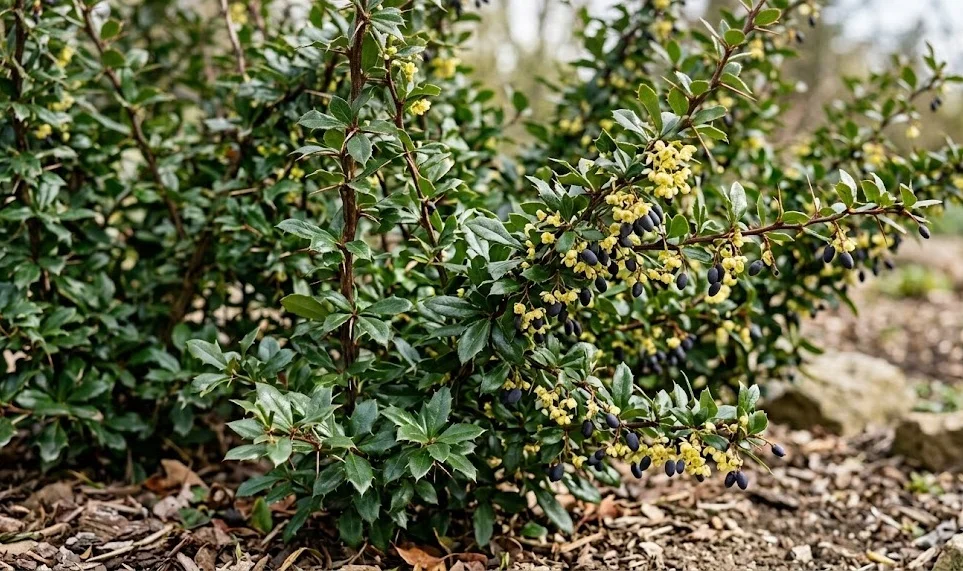
The flowering and fruiting cycles of the barberry are also heavily influenced by the amount of direct sunlight it receives. In the spring, a sun-exposed plant will be covered in a profusion of tiny, pale yellow blossoms that are a magnet for early-season pollinators like bees. These flowers eventually give way to small, dark berries that persist into the autumn and winter, providing a subtle but attractive visual detail. If your goal is to maximize the ornamental features of the plant, a sunny location is undoubtedly the best choice for your garden.
Despite its love for the sun, a barberry in a full-exposure site will have higher water requirements, especially during the hottest weeks of the year. The increased rate of transpiration means that the plant loses moisture more quickly through its leaves, so you must stay vigilant with your irrigation routine. Mulching becomes even more critical in sunny spots to keep the root zone cool and prevent the soil from drying out too fast. Providing a deep watering in the early morning allows the plant to hydrate before the sun reaches its peak intensity, ensuring it stays vibrant all day long.
If you are planting a long hedge in full sun, be mindful of the potential for “heat islands” created by nearby paved surfaces like driveways or stone walls. These structures can radiate heat long after the sun has set, potentially stressing the plants if they are too close. Ensuring there is enough space for air to circulate between the shrubs and any solid structures will help mitigate this extra heat. With the right support, a Wintergreen barberry in full sun will become a shining centerpiece of your garden, radiating health and vitality through every season.
Adaptability to partial shade
The ability of the Wintergreen barberry to adapt to partial shade makes it an invaluable tool for designers working with complex, multi-layered gardens. It can be successfully planted under the canopy of large deciduous trees, where it receives dappled sunlight for much of the day. In these conditions, the plant may take on a more graceful, arching form as it reaches toward the available light sources. This flexibility allows you to maintain a consistent evergreen presence even in the more shadowed corners of your property where other shrubs might fail.
More articles on this topic
One of the subtle benefits of partial shade is that it can help preserve the moisture levels in the soil, reducing the need for frequent irrigation. The lower intensity of the light means the plant doesn’t work as hard to stay cool, which can be a significant advantage during periods of drought. You may also find that the leaves maintain a deeper, darker green color in the shade, as they don’t produce the same level of protective pigments required in full sun. This lush, forest-green appearance can create a beautiful sense of depth and tranquility in a shaded border or woodland garden.
However, there are trade-offs to consider when planting in the shade, most notably a potential reduction in the density of the foliage. A barberry that receives too little light may become “leggy,” with longer distances between the leaves and a less compact overall shape. To counter this, you may need to perform more frequent light pruning to encourage branching and maintain the thickness of the shrub. It is also important to monitor for fungal issues like powdery mildew, which are more common in shaded, humid areas with limited air movement.
When selecting a shaded spot, try to ensure the plant still gets some direct light during the morning hours, which helps to dry off the overnight dew and prevent disease. Morning sun is generally less intense than afternoon sun, providing the plant with the energy it needs without the stress of extreme heat. If the shade is caused by overhanging branches from other trees, periodic thinning of those branches can let in just enough light to keep your barberry healthy. With a thoughtful approach, you can turn a shaded area into a thriving evergreen sanctuary using this remarkably resilient species.
Light and the seasonal color shift
The interaction between light and temperature is what drives the beautiful seasonal color shifts that many barberries are known for. During the autumn, as the days grow shorter and the light becomes more slanted, the Wintergreen barberry often transitions from its summer green to deep bronze or reddish-purple tones. This change is most pronounced in plants that are located in sunny positions, where the light triggers the production of anthocyanins. These pigments act as a kind of “sunscreen” for the plant as it prepares for the winter, while also providing a stunning visual display for the gardener.
In the winter, the quality of light remains important for maintaining the health of the evergreen leaves. Even though the plant is largely dormant, it still performs low levels of photosynthesis on sunny winter days to maintain its metabolic balance. This is why “winter burn” is so common on the sunny side of the plant; the leaves are trying to work but the frozen roots cannot provide the necessary water. Providing a bit of shade during the winter months, or using an anti-desiccant, can help the plant navigate this challenging balance between light and hydration.
As spring returns and the intensity of the light increases, you will see a corresponding surge in activity within the plant. The new growth that emerges is often a brighter, more vibrant green than the older foliage, creating a beautiful two-tone effect for several weeks. This is the time when the plant is most sensitive to changes in light, and ensuring it has a clear path to the sun will result in the most vigorous growth. The way the light catches the waxy surface of the new leaves is one of the simple joys of the spring garden.
Understanding the light requirements of the Wintergreen barberry is not about following a set of rigid rules, but about observing and responding to the unique conditions of your own site. Whether you have a sun-baked hillside or a quiet, shaded corner, there is a place for this hardy shrub in your landscape. By paying attention to how light influences its growth, color, and resilience, you can ensure that your barberry remains a healthy and beautiful part of your garden for decades to come. Professional landscaping is, after all, the art of placing the right plant in the right light.