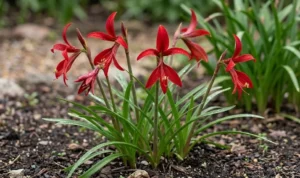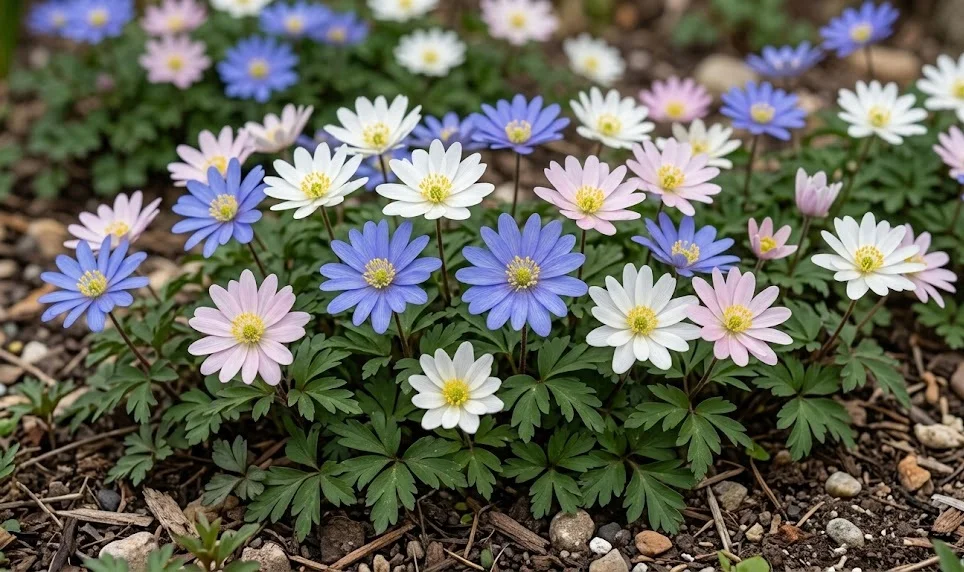

Grecian windflower needs a careful balance of moisture and nutrition, especially because its active season is short. The plant grows, flowers, and stores energy during the cool months of late winter and spring. Water and nutrients must therefore be available at the right time, not applied heavily after the foliage has disappeared. Understanding this seasonal pattern prevents weak flowering, tuber rot, and unnecessary fertiliser use.
Understanding its moisture cycle
Grecian windflower begins active growth when soil temperatures are cool and moisture is usually available. At this stage, the tubers produce roots, leaves, and flower stems within a relatively short window. If the soil dries severely during this period, flowers may be smaller and the foliage may fade too soon. Consistent light moisture is therefore more valuable than occasional heavy soaking.
The plant does not enjoy permanently wet soil. Its tubers are adapted to rest during the drier part of the year. When they sit in stagnant moisture, especially in cold conditions, oxygen levels around the tuber decline. This creates the right environment for decay and fungal damage.
A good watering routine begins with observing the soil. The surface may look dry while the root zone remains moist, especially under mulch. Checking a few centimetres below the surface gives a better guide. Watering should be adjusted to the actual condition of the soil rather than to a fixed calendar.
Climate strongly affects watering needs. In regions with reliable winter and spring rain, open-ground plants may need little extra water. In dry continental springs, irrigation can be important during bud formation and flowering. In mild wet climates, drainage is often more important than watering.
More articles on this topic
Watering newly planted tubers
Newly planted tubers need enough moisture to begin rooting. After autumn planting, a gentle watering helps settle soil into contact with the tubers. This reduces air gaps and supports early root growth. However, the bed should never be soaked repeatedly if rain is already frequent.
If autumn remains dry for several weeks, occasional watering is beneficial. Deep, infrequent watering encourages roots to explore the surrounding soil. Light daily watering is less effective and may keep the surface damp while the lower layer remains dry. It can also encourage weed seedlings.
Soaked tubers usually establish more quickly than completely dry tubers placed into dry soil. Pre-soaking is especially useful when autumn rainfall is uncertain. Once planted, the tubers should not be allowed to shrivel again. Even so, excess water is more dangerous than moderate dryness in heavy soil.
Container plantings need particular care after planting. Potting mixes can dry out at the edges while appearing moist on top. Containers should be watered thoroughly, then allowed to drain freely. Standing saucers full of water should be emptied to protect the tubers from rot.
More articles on this topic
Watering established plants
Established plants are more resilient than newly planted tubers. Their roots are already positioned to use seasonal moisture efficiently. In normal spring weather, they often need no irrigation at all. The gardener’s main role is to intervene only when dry conditions threaten active growth.
The most important watering period is from shoot emergence to the end of leaf activity. Water stress during this period can reduce both current flowering and next year’s display. The leaves must remain healthy long enough to feed the tubers. If they collapse early from drought, the plant stores less energy.
Water should be applied slowly and close to the soil. Overhead watering is not usually harmful, but wet flowers and leaves are more prone to spotting in cool weather. Soil-level watering is cleaner and more efficient. It also reduces water loss from evaporation.
Once foliage begins to yellow naturally, irrigation should be reduced. The plant is completing its active season and preparing for dormancy. Continued heavy watering after this point offers little benefit. In fact, it can increase the risk of tuber decay during the resting period.
Fertilising without overfeeding
Grecian windflower benefits from gentle feeding, not aggressive fertilisation. In fertile garden soil, it may flower well for years with no added fertiliser beyond organic mulch. The plant’s small size means its nutrient demand is modest. Overfeeding can create soft growth that is less resistant to weather and disease.
A slow-release fertiliser for bulbs or flowering perennials can be used in early spring. It should be applied lightly around the plants, not directly in concentrated contact with the crowns. Watering after application helps move nutrients into the soil. Products with balanced nutrients are safer than high-nitrogen feeds.
Organic matter is often the best long-term fertiliser. Leaf mould, compost, and well-rotted garden material improve soil structure while releasing nutrients gradually. They also support beneficial fungi and microorganisms. This kind of feeding suits woodland-edge plants particularly well.
Avoid feeding once the plant is fully dormant. Without active leaves, the plant cannot make much use of soluble nutrients. Fertiliser applied at the wrong time may wash away or encourage weeds instead. Timed correctly, small amounts are more effective than large late applications.
Mulching and soil improvement as nutrition
Mulching is one of the most reliable ways to support Grecian windflower. A light layer of leaf mould in autumn recreates the natural leaf-litter conditions of woodland habitats. It protects the soil surface and adds humus as it breaks down. The mulch should be loose, airy, and not excessively deep.
Compost can also be useful, but it must be mature and crumbly. Fresh manure or very rich compost is unsuitable because it may be too strong and wet. The aim is to improve the soil, not to force rapid growth. A thin annual dressing is usually enough.
In sandy soils, mulch reduces moisture loss during spring growth. In clay soils, organic matter improves structure over time and helps prevent surface sealing. Both effects support healthier roots. Better roots lead to stronger foliage and more reliable flowering.
Mulch should not bury emerging shoots. If applied too thickly, it can delay growth or trap dampness around the crowns. A depth of two to three centimetres is often sufficient. Keeping mulch slightly away from visible growth reduces the risk of rot.