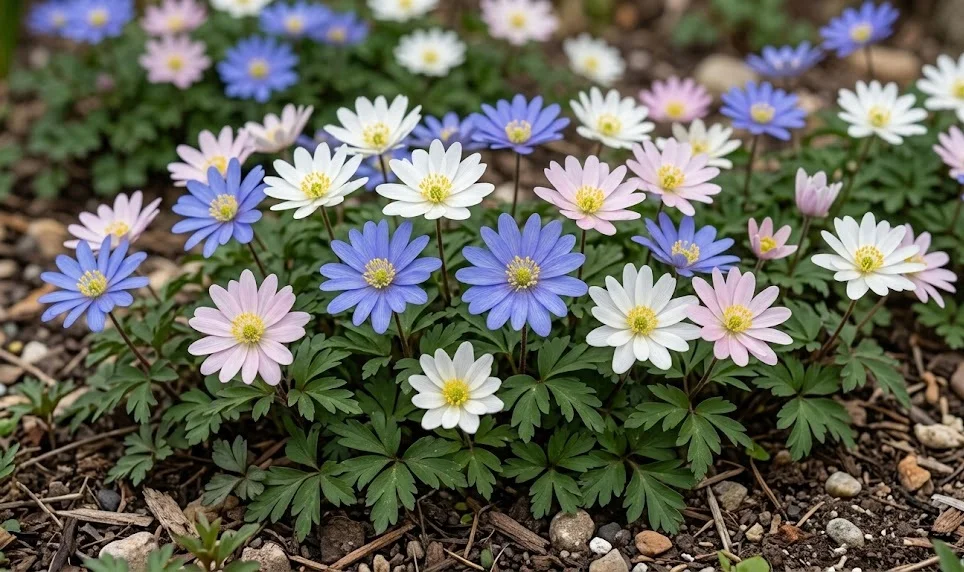

Grecian windflower is a classic spring ephemeral, meaning it uses the bright window of early spring before taller plants and trees cast deeper shade. Its light requirement is therefore seasonal rather than simple. It needs enough sun while the leaves are active, but it does not need intense summer exposure after dormancy begins. The best garden position provides early light, later coolness, and protection from harsh drying conditions.
Spring light and flowering quality
Flowering is strongest where plants receive bright light in late winter and early spring. This light powers leaf growth and supports the formation of strong flower stems. In too much shade, plants may produce leaves but few flowers. Over several years, poor light can gradually weaken the colony.
Deciduous woodland conditions are ideal. Before trees leaf out, sunlight reaches the soil and warms the planting area. Grecian windflower uses this period efficiently, flowering before the canopy becomes dense. Once the tree leaves expand, the windflowers are already moving toward the end of their active cycle.
Morning sun is especially valuable. It dries dew, warms the soil gently, and encourages flowers to open fully. Afternoon shade protects the plant from stronger heat in mild or southern climates. This combination often produces the longest-lasting blooms.
Deep shade should be avoided. Areas beneath dense evergreens, dark walls, or thick shrubs may not provide enough spring light. Even if the plants survive, the display may become sparse. Moving tubers to a brighter seasonal position can restore flowering.
More articles on this topic
Managing sun in different climates
In cool climates, Grecian windflower can tolerate more direct sun. Full spring sun may improve flowering if the soil remains moist. The plant’s active season often ends before summer heat becomes severe. In these regions, open borders can be very successful.
In warmer climates, afternoon sun can shorten the flowering period. The flowers may fade more quickly, and the leaves may yellow earlier if the soil dries. Light shade from shrubs or small trees gives better protection. Mulching also helps moderate soil temperature.
Urban gardens need special attention. Walls, paving, and gravel can reflect heat and dry the soil quickly. A position that looks mild in February may become stressful by April. Observing the site through the season helps identify the best planting pockets.
Containers also change the light equation. A pot in full sun warms faster than garden soil, which can push growth too quickly. Moving containers into bright but lightly shaded conditions can extend the display. Good light is still needed, but overheating should be avoided.
More articles on this topic
Correcting light problems in established plantings
Poor flowering often indicates inadequate light during the active season. If leaves are healthy but flowers are scarce, shade may be the main cause. Nearby shrubs may have grown larger over time, changing the original conditions. Thinning overhanging growth can improve spring light without moving the tubers.
If the site has become permanently shaded, lifting and relocating may be necessary. This should be done during dormancy, after the leaves have died back. The new position should offer early brightness and well-drained soil. Moving while plants are in active growth is more stressful.
Too much sun can also cause problems. In hot springs, leaves may yellow quickly and flowers may last only a short time. Improving soil moisture and adding light mulch can help. If stress repeats each year, partial shade is the better solution.
Companion planting can manage light naturally. Deciduous perennials and shrubs allow spring light but provide later cover. Avoid evergreen groundcovers that shade the soil all year. The aim is to match the plant’s seasonal rhythm rather than force it into constant exposure.