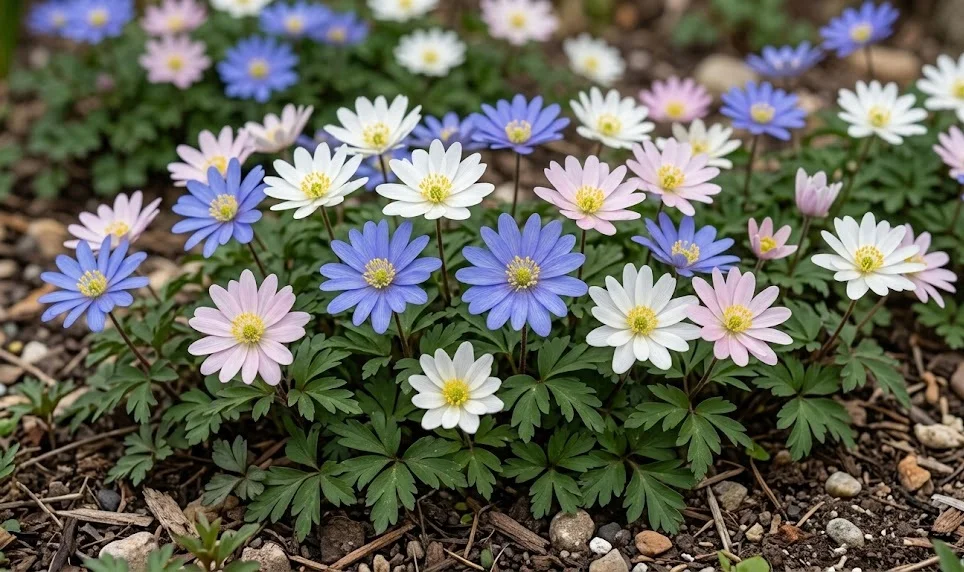

Grecian windflower is naturally suited to cold-season growth, but successful overwintering depends on drainage, planting depth, and protection from unstable conditions. The plant survives winter as a tuber, forming roots before its spring flowers appear. Cold itself is usually less dangerous than waterlogged soil, repeated freeze-thaw cycles, or exposed containers. A well-prepared planting site allows the tubers to rest and root safely until the new season begins.
Winter hardiness and dormancy
Grecian windflower is considered hardy in many temperate gardens. Its growth cycle allows it to use cool weather and flower early, often before many perennials have awakened. The underground tubers are protected by soil, mulch, and natural dormancy. When planted correctly, they do not usually need lifting for winter.
Dormancy begins after the foliage dies back in late spring or early summer. During summer, the tubers rest quietly in the soil. In autumn, moisture and cooler temperatures encourage new root development. This means winter is not a completely inactive period below ground.
Because the plant starts rooting before spring, autumn conditions matter greatly. Tubers planted too late may have less time to establish before hard frost. They can still survive, but flowering may be weaker in the first year. Earlier autumn planting usually produces stronger spring results.
Hardiness also depends on soil texture. A tuber in free-draining soil can tolerate cold better than one sitting in wet clay. Waterlogged soil conducts cold and deprives roots of oxygen. This combination is far more damaging than ordinary frost.
More articles on this topic
Preparing beds before winter
Good winter preparation starts before planting. The bed should be loosened deeply enough to allow water to move through the soil. In compacted areas, organic matter and mineral drainage material may be needed. The planting zone should feel crumbly rather than sticky or dense.
A light mulch can be applied after planting or in late autumn. Leaf mould is especially suitable because it resembles natural woodland litter. It insulates the soil gently and reduces surface erosion from winter rain. The layer should not be heavy enough to smother emerging shoots.
Avoid thick, wet mulches that remain cold and saturated. Heavy bark, fresh manure, or compacted compost can trap moisture around the tubers. This increases the risk of rot during the coldest months. Airy, partially decomposed material is safer.
Beds should not be cultivated during winter. Digging around dormant tubers can break roots that have already begun forming. It can also expose tubers to frost or birds. If maintenance is needed, remove weeds carefully by hand.
More articles on this topic
Overwintering in containers
Container-grown Grecian windflowers need more protection than plants in open ground. Pots freeze and thaw more quickly because the root zone is exposed on all sides. The compost can also become saturated during winter rain. Good drainage is therefore essential.
Use pots with generous drainage holes and a free-draining mix. Adding grit to the compost helps prevent water from collecting around the tubers. Containers should be raised on feet, bricks, or pot stands so water can escape freely. A pot sitting directly on cold wet ground is more likely to cause losses.
In colder regions, containers can be moved to a sheltered position. A cold frame, unheated greenhouse, porch, or wall-protected area may be enough. The aim is not to keep the pots warm, but to prevent extreme wetness and repeated freezing. Completely indoor warmth is unsuitable because it disrupts the natural cycle.
Water container plantings sparingly through winter. The compost should not become dust dry, but it should never remain soggy. Check occasionally during dry cold spells, especially under cover. Once shoots appear, watering can gradually increase.
Late winter emergence and protection
Shoots may emerge in late winter when the weather is still unsettled. This is normal and does not usually require intervention. The leaves are adapted to cool conditions, although severe late frosts can mark the tips. Light protection may be useful during unusual cold snaps.
A loose layer of dry leaves or horticultural fleece can protect emerging shoots temporarily. It should be removed once temperatures rise, so light and air can reach the plants. Permanent heavy covering is not recommended. Grecian windflower needs light early in the season to flower well.
Avoid stepping on planting areas during winter and early spring. Shoots can be hidden just below the soil surface before they are visible. Compacted soil also drains less effectively, increasing winter risk. Clear markers or natural edging can help guide foot traffic away.
After winter, assess the planting calmly. Some tubers may emerge later than others, especially after a cold season. Do not dig too early to check them. Give the plants time to respond to warming soil and increasing light.