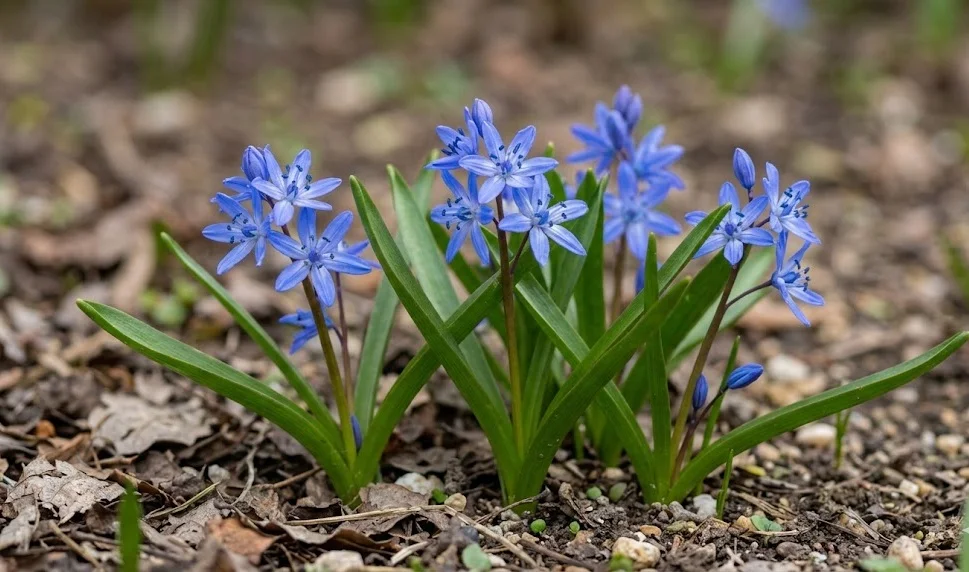

Establishing a thriving colony of these blue-flowering bulbs starts with meticulous planting techniques and a strategic approach to long-term propagation. These early-season gems are most successful when their specific needs for depth, spacing, and soil preparation are met with professional precision. Whether you are starting a new garden bed or expanding an existing collection, understanding the biological mechanics of bulb growth is crucial. Success in planting ensures that the flowers will not only bloom brilliantly in their first year but also continue to multiply naturally over time.
Site selection and preparation
Choosing the right location is the most important decision you will make when introducing these bulbs to your landscape. They prefer a spot that receives full sun to partial shade during the early spring months when they are actively growing. Areas under deciduous trees are ideal, as they provide plenty of light before the leaves emerge and shade during the hot summer. The site should also be protected from heavy foot traffic to prevent soil compaction around the delicate bulbs.
Before the bulbs even arrive, the soil must be prepared to create a welcoming environment for root development. You should clear the area of all perennial weeds and large stones that could interfere with planting depth or drainage. Digging the soil to a depth of at least eight inches helps loosen the structure and allows for easier root penetration. Mixing in organic matter like leaf mold or aged compost at this stage will provide a long-lasting nutrient base.
Drainage must be evaluated carefully, as these bulbs will quickly rot if they sit in waterlogged soil during the winter. If you notice water pooling in your chosen spot after a heavy rain, consider choosing a different location or creating a raised bed. Adding coarse sand or perlite can also help improve the drainage of heavier soils if no other site is available. A well-prepared site is a professional investment that pays off in plant health and longevity.
Final soil preparation involves leveling the surface and ensuring the texture is fine enough to allow for easy planting. You should avoid working the soil when it is overly wet, as this can destroy the soil structure and lead to compaction. A light raking to smooth out the area will make the layout process much simpler and more accurate. By taking the time to prepare the site properly, you set the stage for a successful and beautiful spring display.
More articles on this topic
Proper bulb placement techniques
The timing of planting is critical, with the best window being in the early to mid-autumn before the first hard frost. This allows the bulbs enough time to establish a root system in the cooling soil before they enter their winter dormancy. If planted too late, the bulbs may not have enough energy to produce strong flowers in the coming spring. Professional gardeners often aim for late September or October to ensure the perfect balance of soil temperature and moisture.
Depth and orientation are the next factors to consider for a professional planting result. As a general rule, bulbs should be planted at a depth that is roughly three times their own height, which is usually about three to four inches deep. The pointed end of the bulb should always face upward, as this is where the shoot will emerge from the ground. If you are unsure which end is which, planting the bulb on its side is a safe alternative that allows the plant to correct itself.
Spacing is equally important to prevent immediate overcrowding and allow room for future naturalization. Aim for a distance of about two to three inches between each bulb to create a dense but healthy floral carpet. Planting in irregular groups or “drifts” creates a more natural appearance than stiff, straight lines. You can achieve this by gently tossing the bulbs onto the prepared soil and planting them exactly where they land for a random effect.
Once the bulbs are in their holes, backfill the area with the amended soil and firm it down gently with your hands. Avoid stepping on the newly planted area, as excessive pressure can damage the bulbs or compact the soil too much. Water the area thoroughly immediately after planting to settle the soil and trigger the initial root growth phase. This final step ensures that the bulbs have the contact with the soil they need to begin their life cycle.
More articles on this topic
Naturalizing and division
Over time, a healthy population of these bulbs will naturally multiply and form dense clumps that may eventually require division. This process of naturalization is highly desirable for creating a lush, established look in the garden with minimal effort. The bulbs produce small “offsets” or daughter bulbs around the base of the parent bulb each year. As these offsets grow to maturity, they will begin to produce their own flowers, expanding the colony.
If you notice that the center of a large patch is producing fewer flowers, it is a clear sign that the bulbs are too crowded. Professional rejuvenation involves lifting the entire clump carefully with a garden fork after the foliage has died back in early summer. Gently pull the individual bulbs apart, taking care not to damage their delicate outer skins or root plates. This is the perfect opportunity to spread the plants to new areas of your garden or share them with friends.
Replanting the divided bulbs should follow the same rules for depth and soil preparation as the original planting. Because these bulbs are often still in their dormant state, they can be kept in a cool, dry place for a short time if needed. However, it is generally best to get them back into the ground as soon as possible to prevent excessive drying. Moving them while they are dormant reduces the stress on the plant and ensures a smooth transition to their new home.
Naturalizing in a lawn requires a slightly different approach to ensure the bulbs can survive the competition of the grass. You should use a bulb planter or a small trowel to tuck individual bulbs under the turf in the autumn. It is essential to choose a low-maintenance grass variety that does not require early spring mowing. This allows the bulb foliage enough time to mature and feed the bulb for the following year’s growth.
Growing from seeds
While bulb division is the most common method of propagation, growing these plants from seed can be a rewarding, though slower, process. Many species will self-seed in the garden if the conditions are right and the flower heads are not removed. The seeds are typically dispersed in early summer and will germinate during the following autumn or spring. If you wish to control the process, you can collect the ripe seed pods and sow them manually.
Sowing seeds requires a dedicated nursery bed or containers filled with a light, well-draining seed-starting mix. The seeds should be covered with only a thin layer of soil and kept consistently moist but not waterlogged. Patience is required, as it can take several years for a seedling to develop into a flowering-sized bulb. However, this method allows for the production of a large number of plants at a very low cost for the patient gardener.
During the first year of growth, the seedlings will appear as tiny, grass-like leaves that are easily mistaken for weeds. It is vital to mark the area clearly and avoid any disturbance that could uproot the fragile young plants. Providing a light liquid fertilizer during the growing season can help accelerate the development of the small bulbs. Once they reach a manageable size, they can be transplanted into their permanent positions in the garden borders.
Growing from seed also offers the exciting possibility of natural variation in flower color or size. While most will resemble the parent plant, you may occasionally find a unique specimen that stands out in the colony. This genetic diversity can lead to a more resilient population that is better adapted to your specific garden conditions. For the dedicated horticulturalist, seed propagation is the ultimate way to truly understand and expand a collection of these lovely spring flowers.