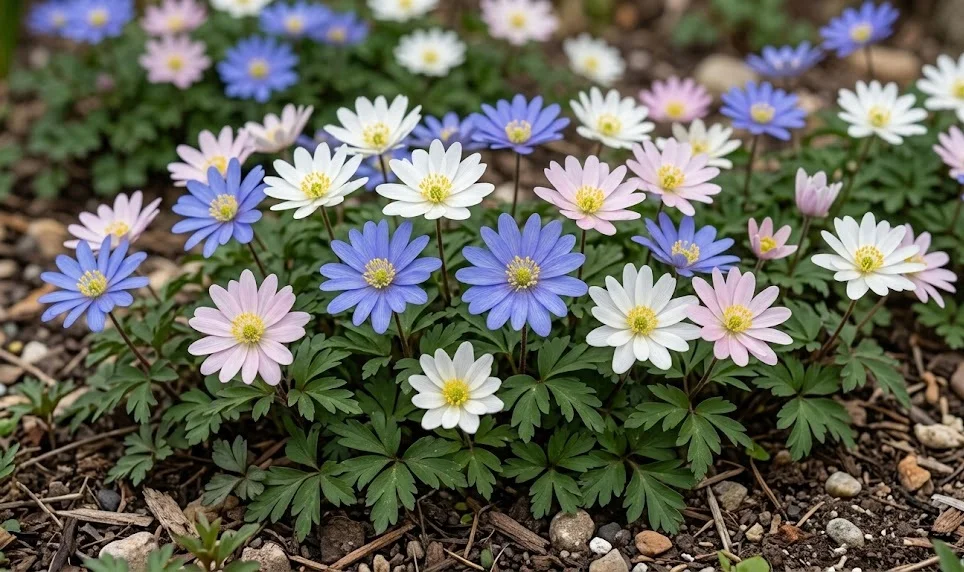

Grecian windflower is generally a dependable and low-maintenance plant, but it is not completely free from health problems. Most issues appear when the soil is too wet, the planting is overcrowded, or the plants are weakened by poor growing conditions. Pests usually cause only local damage, yet young shoots and tubers can be vulnerable at certain stages. Prevention is the most effective strategy, because healthy plants in suitable soil rarely suffer serious losses.
Common causes of poor plant health
The most frequent problem is unsuitable soil drainage. When tubers remain in cold, wet ground for long periods, they may soften and decay before flowering. This is often mistaken for winter kill, although the real cause is usually rot. Improving drainage before planting is the best protection.
Premature foliage removal is another common reason for weak plants. If leaves are cut back while still green, the tubers cannot store enough energy. The following year, growth may be sparse and flowering may be poor. Allowing the foliage to yellow naturally is a simple but important health measure.
Competition from weeds and dense groundcovers can also weaken Grecian windflower. Small spring plants need access to light, moisture, and nutrients during their brief active season. Stronger plants may shade them or take moisture from the root zone. Careful companion planting helps avoid this pressure.
Weather stress can intensify other problems. A very wet winter followed by a cold spring may encourage fungal disease. A dry spring can weaken foliage and reduce energy storage. Plants in balanced conditions recover more easily from these seasonal challenges.
More articles on this topic
Tuber rot and fungal decay
Tuber rot is the most serious disease-related issue. Affected tubers become soft, dark, and sometimes unpleasant-smelling. Shoots may fail to emerge, or they may appear weak and collapse quickly. Once rot has advanced, the individual tuber cannot usually be saved.
The main prevention is drainage. Raised beds, gritty soil amendments, and avoiding low wet pockets all reduce the risk. Tubers should also be planted at a suitable depth, not buried too deeply in heavy soil. Excessive summer watering should be avoided during dormancy.
When lifting old clumps, inspect the tubers carefully. Firm tubers are worth keeping, while soft or damaged ones should be removed. Replanting unhealthy material spreads problems into fresh areas. Tools used in diseased soil should be cleaned before being used elsewhere.
Fungal decay is more likely where air circulation is poor. Dense, wet mulch can hold moisture around crowns and young shoots. A light mulch is beneficial, but a heavy wet layer can become harmful. Keeping the planting open and free of rotting debris helps maintain balance.
More articles on this topic
Leaf spots, mildew, and weather damage
Leaf spots may appear during damp, cool weather. Small brown or grey marks can develop on leaves, especially in crowded plantings. Mild spotting rarely threatens the plant, because the growing season is short. Severe spotting, however, can reduce the leaf area available for energy storage.
Good spacing helps prevent foliar disease. Although the plants look best in groups, they should not be packed into airless masses. Companion plants should also allow airflow near the ground. Watering at soil level instead of over the foliage further reduces risk.
Mildew is less common than rot, but it can occur when plants are stressed. Dry roots combined with humid air can encourage powdery growth on leaves. Improving soil moisture during active growth may be more useful than applying sprays. Healthy, unstressed foliage is naturally more resistant.
Some leaf damage is not disease at all. Late frost, hail, wind, or heavy rain can mark the leaves and flowers. The plant often continues growing normally after cosmetic damage. Unless the tissue becomes soft and rotten, intervention is usually unnecessary.
Slugs, snails, and soil pests
Slugs and snails may feed on young shoots, buds, and tender leaves. Damage is most visible in wet spring weather when new growth is soft. Ragged holes, missing buds, and slime trails are typical signs. Small plants can be badly affected if feeding occurs just as they emerge.
Cultural control is usually enough in mixed borders. Removing hiding places such as boards, dense weeds, and piles of wet debris reduces pest pressure. Evening inspection can help identify active feeding. Barriers or wildlife-friendly traps may be used in vulnerable areas.
Rodents can occasionally disturb or eat tubers. This is more likely in loose soil, containers, or newly planted beds. If tubers disappear repeatedly, planting in wire baskets may help. Firming the soil gently after planting also makes the area less inviting.
Vine weevil larvae may damage container-grown plants in some regions. The larvae feed on roots and underground tissues, causing sudden wilting or weak growth. Checking container compost during dormancy can reveal the problem. Biological controls may be appropriate where vine weevil is persistent.
Integrated prevention and safe treatment
The best plant protection plan begins with site selection. Well-drained soil, seasonal light, and moderate moisture create strong plants. Strong plants tolerate minor pest feeding and recover from weather damage more easily. Weak plants invite repeated problems.
Chemical treatments are rarely necessary for Grecian windflower. Because the plant is active for a short period, broad spraying may do more harm than good to beneficial insects and soil life. Removing affected material and improving conditions usually gives better long-term results. Targeted action is preferable to routine treatment.
Infected or rotting tubers should not be composted if disease is suspected. Disposal away from the garden reduces the chance of spreading pathogens. Healthy leaf litter and ordinary faded foliage can remain or be composted. Distinguishing between natural dormancy and disease prevents unnecessary removal.
Regular observation is the gardener’s strongest tool. Checking plants during emergence, flowering, and post-flowering growth reveals problems early. Small corrections, such as thinning mulch or removing weeds, often prevent larger failures. With thoughtful care, Grecian windflower remains a resilient and beautiful spring plant.