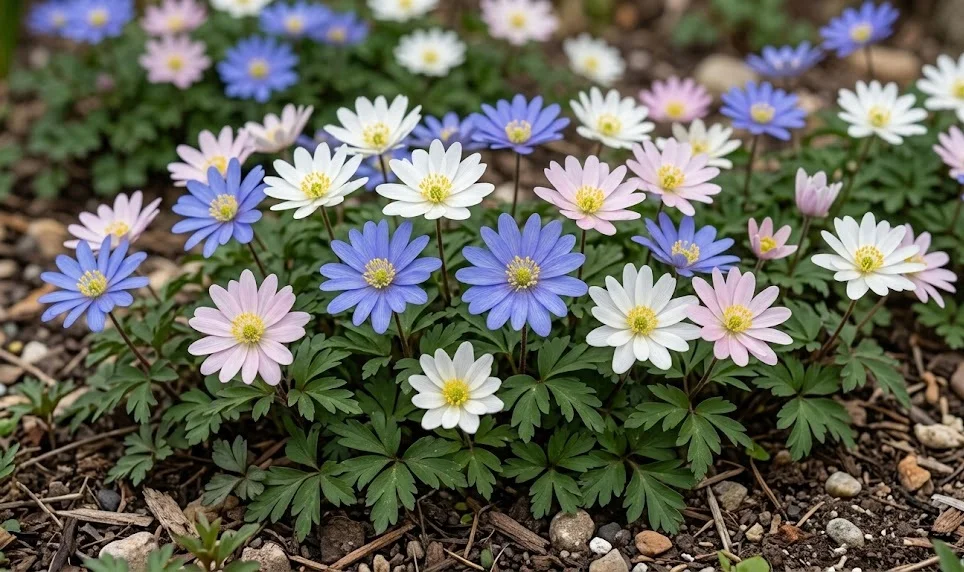

Grecian windflower is one of the most rewarding early-season perennials for gardeners who want a natural, woodland-like carpet of colour before the main spring display begins. Its daisy-like flowers appear low to the ground, often in blue, violet, pink, or white shades, and they look especially graceful beneath shrubs, deciduous trees, and loose spring borders. The plant grows from small tubers rather than true bulbs, so its seasonal rhythm is slightly different from tulips or daffodils. Good care depends on understanding this rhythm: active growth in cool spring weather, quiet dormancy in summer, and renewed root activity when autumn moisture returns.
Choosing the right garden position
Grecian windflower performs best in places that imitate open woodland edges. It enjoys bright light in early spring, when deciduous trees are still bare and sunlight reaches the soil easily. Later, as the tree canopy closes, the plant benefits from cooler shade during its dormant period. This balance helps the foliage feed the tubers without exposing them to harsh summer stress.
A border with morning sun and light afternoon shade is often ideal. Full shade can reduce flowering, especially if the soil is also cold and heavy. Full sun may work in cooler climates, provided the soil does not dry too abruptly in spring. The most reliable position is one where the plant receives enough light while in leaf but is protected from extreme heat after flowering.
The site should also be sheltered from strong, drying winds. Although the plant is hardy, its short stems and delicate petals look better when they are not constantly battered by gusts. A position near low shrubs, hedging, stone edging, or an open woodland planting can give just enough protection. Good air movement is still important, because stagnant dampness encourages fungal problems.
Avoid sites where water stands after rain. Grecian windflower dislikes compacted ground, winter waterlogging, and dense clay that stays wet for long periods. The tubers need moisture while growing, but they also need oxygen around the roots. A slightly raised bed, a gentle slope, or soil improved with grit and compost can make a major difference.
More articles on this topic
Preparing healthy soil
The best soil is humus-rich, loose, and well drained. In nature, Grecian windflower thrives where fallen leaves break down gradually and create a crumbly surface layer. Gardeners can copy this by adding leaf mould, mature compost, or well-rotted garden organic matter before planting. These materials improve structure without making the soil overly rich.
Heavy clay should be opened carefully before tubers are planted. Coarse sand, fine grit, composted bark, or leaf mould can help create drainage channels. The goal is not to turn clay into sandy soil, but to reduce compaction and prevent wet pockets around the tubers. Working the soil when it is too wet should be avoided, because that can make clay even denser.
Very sandy soil needs a different approach. It usually drains well, but it may dry too quickly during the important spring growth period. Adding compost and leaf mould increases moisture retention while still allowing excess water to pass through. A light organic mulch can also protect the surface from drying winds.
Soil fertility should be moderate rather than excessive. Too much nitrogen may produce lush foliage at the expense of flowers and can make soft growth more vulnerable to disease. A balanced, slow-release organic feed is enough in poor soils. In reasonably fertile garden soil, annual mulching is usually more useful than repeated feeding.
More articles on this topic
Seasonal care through the year
In early spring, the first leaves often appear before many gardeners expect them. At this stage, the plant needs steady moisture and minimal disturbance. Walking over the planting area, raking too aggressively, or digging nearby can damage young shoots. A light tidy-up by hand is safer than heavy cultivation.
During flowering, spent blooms do not need to be removed unless the planting is small and highly visible. In naturalized areas, leaving the flowers alone creates a softer, more relaxed effect. The plant may set seed in favourable conditions, though tuber expansion is usually the main way it increases. Pollinators also benefit when flowers remain undisturbed.
After flowering, the leaves continue working for several weeks. This is one of the most important stages in the plant’s care. The foliage gathers energy and sends it back into the tubers for the next season. Cutting it down too early weakens future flowering and can reduce the size of the colony.
By early summer, the foliage yellows and disappears naturally. This is not a sign of failure, disease, or drought stress if it happens after the normal growth period. The plant is entering dormancy and should be left in place. Marking the area with companion plants or discreet labels helps prevent accidental digging later in the season.
Watering without causing rot
Grecian windflower appreciates moisture while it is actively growing. In most gardens, winter and early spring rainfall provide enough water. However, dry springs can reduce flowering and shorten the display. In such conditions, occasional deep watering is better than frequent light sprinkling.
The soil should feel lightly moist, not saturated. Tubers sitting in cold, wet soil are more likely to rot, especially before strong growth begins. Watering should be directed to the soil rather than over the flowers. This keeps petals cleaner and reduces the risk of fungal spotting.
Container-grown plants need closer attention than those in the ground. Pots dry faster during windy spring weather, but they can also become waterlogged if drainage holes are poor. A free-draining potting mix and a container raised slightly off the ground help prevent problems. Water only when the upper layer begins to lose moisture.
Once the foliage has died back, watering should be reduced. Dormant tubers do not use much water and can suffer if the soil remains wet through summer. In open ground, normal rainfall is usually acceptable if drainage is good. In containers, sheltering pots from prolonged summer rain may be helpful in wet climates.
Feeding for reliable flowering
Grecian windflower is not a heavy feeder. It grows best when nutrients are available gradually and naturally. A yearly mulch of leaf mould or compost often supplies enough nutrition. This also supports soil organisms, which help maintain a healthy root environment.
If the soil is poor, a balanced organic fertiliser can be applied in early spring. It should be used lightly, because concentrated feeding can push soft leaf growth. A formula designed for bulbs or flowering perennials is usually suitable. Avoid high-nitrogen lawn fertilisers near the planting area.
Feeding after flowering can be useful if the plant has produced a good leaf canopy. At this point, the foliage is still active and can direct nutrients back to the tubers. A very light application of liquid seaweed or balanced feed may help in thin soils. Heavy feeding after the leaves begin yellowing is unnecessary.
Mulching in autumn is also beneficial. It protects the soil surface, adds organic matter, and encourages root activity as cooler weather returns. The mulch should be shallow and loose, not packed thickly over the planting area. Excessive mulch can trap too much moisture and delay emergence.
Combining with companion plants
Grecian windflower looks best when planted in generous groups. Small numbers can appear scattered and weak, while larger drifts create a natural spring carpet. It pairs beautifully with snowdrops, early narcissi, primroses, hellebores, and small species tulips. These companions share a similar preference for spring light and well-drained soil.
Deciduous shrubs provide an excellent seasonal framework. Plants such as hydrangea, dogwood, viburnum, or shrub roses allow spring light through before their leaves expand. Later in the season, their foliage covers the bare ground left by dormant windflowers. This makes the planting attractive even after the flowers have vanished.
Low groundcovers can also be useful, but they must not be too aggressive. Slow-growing geraniums, epimediums, and woodland grasses can share space if they do not smother the young shoots. Dense evergreen mats may compete too strongly for water and light. The best companions leave openings for spring emergence.
In formal gardens, Grecian windflower can soften the edges of paths and beds. Its low habit makes it suitable for the front of borders, under fruit trees, or around spring-flowering shrubs. The plant’s fine foliage and clear flowers add movement without looking untidy. Repetition in several areas creates visual rhythm across the garden.
Long-term maintenance and renewal
Once established, Grecian windflower can remain in the same place for many years. The colony usually expands slowly and naturally when conditions are suitable. Disturbance should be kept to a minimum, because tubers are small and easy to miss. Gentle care produces better results than frequent lifting.
If flowering declines, the cause is often shade, competition, poor drainage, or premature foliage removal. Overcrowding is less common than with many true bulbs, but it can occur in very old clumps. Lifting and replanting during dormancy may refresh the display. Any tubers that are soft, shrivelled, or damaged should be discarded.
Weeding is most important in autumn and early spring. Small weeds can compete strongly with emerging shoots and may hide the flowers. Hand weeding is safer than hoeing, because the tubers sit close enough to the surface to be damaged. A thin mulch helps reduce weed germination without burying the plants too deeply.
The best care is consistent but restrained. Grecian windflower does not need intensive management, complicated feeding, or constant watering. It rewards gardeners who provide good drainage, spring moisture, light shade, and patience after flowering. When these needs are met, it becomes one of the most charming early perennials in the garden.