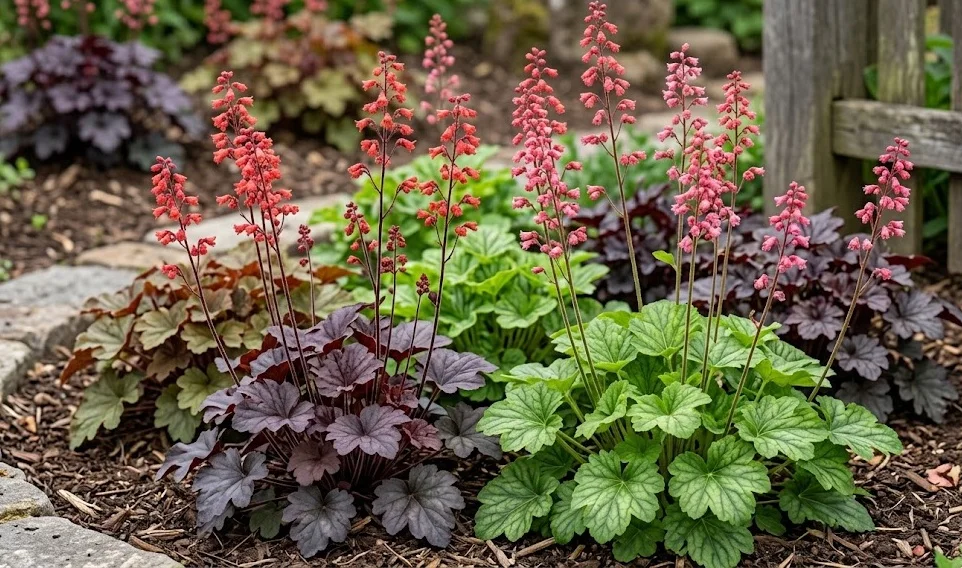

Coral bells are hardy perennials in many gardens, but winter success depends strongly on drainage, crown protection, and stable soil conditions. Cold alone is often less damaging than wet soil, exposed crowns, and repeated freeze-thaw cycles. Plants in containers need extra attention because their roots are more exposed to temperature swings. With sensible preparation, coral bells can enter spring with healthy crowns and attractive new growth.
Preparing plants before winter
Autumn care should focus on strengthening the plant rather than forcing new growth. Avoid heavy fertilization late in the season, because soft leaves are more vulnerable to frost. The plant should gradually slow down as temperatures fall. Balanced moisture and clean surroundings are more useful than late feeding.
Remove dead, diseased, or badly damaged foliage before winter. This reduces hiding places for pests and lowers the amount of decaying material around the crown. However, healthy leaves do not need to be cut away completely. Remaining foliage can offer some natural protection.
Check that the crown is not buried under soil or mulch. Coral bells are sensitive to moisture collecting at the growing point. If soil has washed over the crown, gently clear it away. If roots are exposed, add soil around the root zone without covering the center.
Autumn is also a good time to inspect older plants that have lifted from the ground. If the crown sits high, the plant may be vulnerable to drying and frost damage. In mild conditions, it can be replanted at the correct depth. In colder areas, major division is usually safer in spring.
More articles on this topic
Managing winter moisture
Good drainage is the most important winter protection for coral bells. Wet, heavy soil can damage roots even when temperatures are not extremely low. Before winter, compacted soil around the plant should be loosened carefully where possible. Organic matter can improve structure, but it should not be packed against the crown.
Mulch can help moderate soil temperature, but it must be used correctly. A light layer around the plant protects shallow roots from rapid freezing and thawing. The mulch should stay away from the crown itself. Too much mulch over the center creates damp conditions and increases rot risk.
In rainy climates, raised beds or sloped planting areas can be very beneficial. Water should move away from the crown rather than collect around it. Plants growing in low pockets are more likely to fail over winter. Relocation may be worthwhile if losses repeat year after year.
Winter watering is rarely needed for plants in open ground unless the season is unusually dry and mild. Evergreen or semi-evergreen foliage can still lose moisture during dry winds. If the soil is unfrozen and very dry, occasional watering may help. Water should be applied during mild daylight hours so excess moisture drains before night.
More articles on this topic
Protecting container-grown plants
Coral bells in containers are more exposed than those planted in beds. Their roots experience sharper temperature changes because the pot is surrounded by air. Freezing, thawing, and drying can all occur more rapidly. Containers should be moved to a sheltered position before severe winter weather.
A protected wall, cold frame, unheated porch, or sheltered balcony can reduce stress. The location should be cool rather than warm, because coral bells need seasonal rest. Indoor heated rooms are unsuitable for overwintering garden plants. Warmth combined with low light weakens the foliage and encourages pests.
Pots should be raised slightly so water can drain freely. Standing on wet paving or sitting in saucers filled with water increases root problems. Pot feet, bricks, or a gravel surface can improve drainage. The aim is to keep the root ball lightly moist, not saturated.
Insulating the pot can protect roots in colder regions. Bubble wrap, jute, straw, or grouping pots together can reduce temperature extremes. The insulation should protect the container sides rather than smother the plant crown. Even hardy plants benefit from this buffer when grown above ground.
Spring recovery after winter
In early spring, coral bells may look tired, flattened, or partly discolored. This is normal in many climates and does not necessarily mean the plant is damaged. The crown should be checked for firmness and signs of new growth. Healthy crowns usually produce fresh leaves as temperatures rise.
Old winter-burned leaves can be removed once new growth appears. Cutting too early in very cold areas may expose the crown to late frost. A gradual cleanup is safer than stripping the plant bare. Fresh foliage soon restores the plant’s ornamental value.
If frost has lifted the plant, press it gently back into place or replant it properly. Exposed roots dry quickly in spring winds. Adding a little soil around the root zone can stabilize the plant. Watering afterward helps settle the soil around the roots.
Spring is also the best time to divide or rejuvenate plants weakened by age. If the center is woody but outer shoots are healthy, the plant can be renewed. Strong divisions should be replanted in improved soil at the correct depth. This turns winter inspection into an opportunity for long-term improvement.