
Water hyacinth lives in water, yet its care still involves careful water management. The plant does not need conventional watering, but it depends completely on stable water levels, clean aquatic conditions, and dissolved nutrients. Fertilising must be handled with precision because the same nutrients that feed the plant can also feed algae or drive excessive growth. Good practice means supporting vigorous foliage while protecting pond balance and preventing uncontrolled spread.
What watering means for a floating aquatic plant
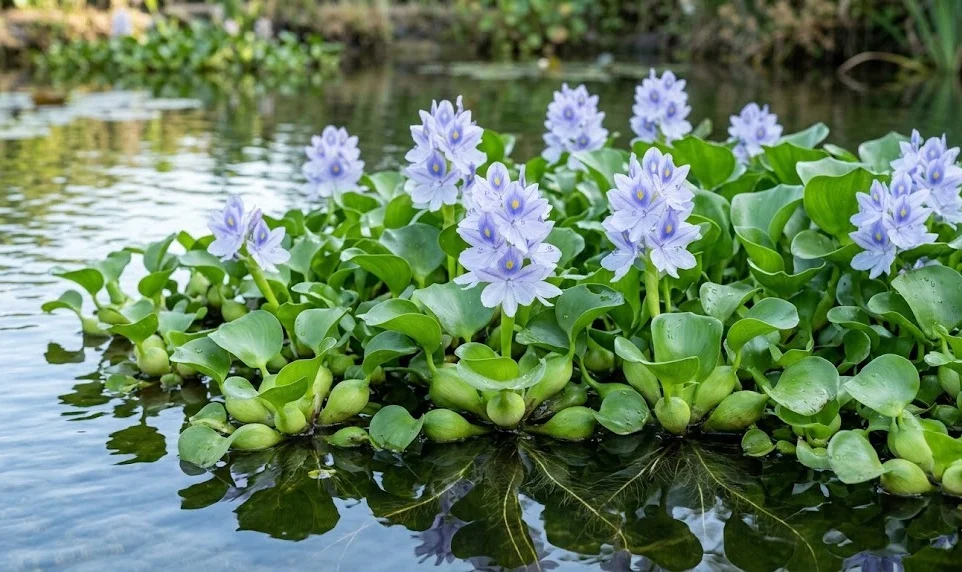
For water hyacinth, watering means maintaining the aquatic environment rather than applying water to soil. The plant floats with its roots submerged, so it absorbs moisture and nutrients directly from the water. The crown and leaves should remain above the surface, while the root system hangs freely below. If the crown is submerged for long periods, rot can develop.
Water level stability is important in both ponds and containers. In hot weather, evaporation can lower water levels quickly, especially in shallow tubs. If plants become stranded on a ledge or dry pond margin, roots can desiccate and leaves may collapse. Topping up with suitable water prevents this type of stress.
Rain can be beneficial, but heavy storms can also create problems. Overflow may carry plants into unwanted areas if containers or ponds are not secure. Sudden dilution can reduce nutrient concentration in small containers. After heavy rain, inspect the planting area and remove any displaced plant material.
Water temperature also influences the plant’s ability to use moisture and nutrients. Warm water encourages active absorption and rapid growth. Cool water slows root function, even if the plant is fully floating. This is why fertilising cold-stressed plants often produces little improvement until temperatures rise.
More articles on this topic
Managing water quality
Water hyacinth prefers water that is biologically active but not polluted with toxic substances. A mature ornamental pond often supplies enough nutrients through fish waste, decomposing organic matter, and microbial activity. In very sterile water, the plant may grow slowly and show pale leaves. In dirty or stagnant water, roots may decay and the display can become unattractive.
Oxygen balance is an important part of water quality. Although water hyacinth can help shade water, dense surface coverage can reduce oxygen exchange. This is especially risky in warm weather and in ponds with fish. Keeping part of the water surface open helps maintain a healthier aquatic system.
Organic debris should be removed before it creates water-quality problems. Dead leaves, old roots, and decaying flowers can sink and contribute to sludge. In small containers, even a modest amount of decay can change water conditions quickly. Regular cleaning is therefore more important in tubs than in large ponds.
Water source matters when topping up containers. Chlorinated tap water may be tolerated after standing, but sudden large additions can stress aquatic life. Rainwater is often useful, though it may be low in minerals and nutrients. The best approach is to make gradual adjustments rather than replacing large volumes without need.
More articles on this topic
Recognising nutrient needs
The leaves of water hyacinth often reveal nutrient status. Healthy plants usually produce rich green foliage, firm petioles, and active new growth. Pale leaves, small rosettes, and slow runner production can indicate nutrient deficiency. However, similar symptoms can also result from cold water or insufficient light, so diagnosis should consider the whole growing environment.
Nitrogen is important for leaf growth and overall vigor. When nitrogen is limited, foliage may become pale green or yellowish, especially on older leaves. Growth can slow, and the plant may produce fewer offsets. Adding a suitable aquatic fertiliser can help if temperature and light are already adequate.
Phosphorus supports root function, energy transfer, and flowering. In a heavily planted or very clean water feature, phosphorus may become limited. Deficiency can contribute to poor overall development, although symptoms are not always visually specific. Balanced fertilisation is usually safer than applying single nutrients without a clear reason.
Trace elements also matter. Iron deficiency, for example, can contribute to yellowing between leaf veins in some aquatic plants. Micronutrients are needed only in small amounts, but their absence can reduce quality. A fertiliser formulated for aquatic plants is usually more appropriate than a general garden product.
Fertilising without damaging pond balance
Fertiliser should be used conservatively. Water hyacinth can grow very quickly when nutrients are abundant, and excessive feeding may create more plants than the pond can support. High nutrient levels can also promote algae, especially in sunny containers. The goal is steady ornamental growth, not maximum biomass production.
In fish ponds, fertilisation requires extra caution. Fish waste often supplies significant nitrogen and phosphorus already. Adding more nutrients can upset the balance and reduce water clarity. If plants look deficient in a fish pond, first check overcrowding, light, water temperature, and root health before fertilising.
Container-grown plants may need supplemental feeding more often. A small tub without fish or organic input may become nutrient-poor. In this setting, small, diluted applications of aquatic plant fertiliser can keep foliage healthy. It is better to feed lightly and observe the response than to make one heavy application.
Never use fertilisers that are unsafe for aquatic life in ponds containing fish, amphibians, or beneficial invertebrates. Lawn fertilisers, manure teas, and strong agricultural products can be inappropriate for ornamental water systems. They may alter water chemistry too quickly or introduce contaminants. Use products intended for aquatic plants and follow label directions carefully.
Seasonal watering and feeding strategy
In spring, wait for stable warmth before expecting strong growth. Plants placed outdoors too early may look weak even when water and nutrients are adequate. Feeding during cold conditions is often inefficient because the plant cannot use nutrients actively. Once new leaves begin forming, light feeding may be considered if the water is nutrient-poor.
During summer, growth and nutrient uptake peak. This is the season when water levels must be watched closely because evaporation is high. It is also the time when fertiliser, if needed, has the strongest effect. Regular thinning may be necessary to prevent excessive coverage after feeding.
In late summer and early autumn, feeding should be reduced. Shorter days and cooler nights naturally slow growth. Continuing to fertilise heavily at this stage can encourage soft tissue that declines quickly in cool weather. A gradual reduction helps the plant transition toward seasonal slowdown.
For overwintered indoor plants, water and nutrient management changes completely. Light is usually weaker indoors, and growth is slower. Fertiliser should be minimal unless plants are actively producing healthy new leaves under strong light. Clean water, adequate warmth, and prevention of rot become more important than feeding.