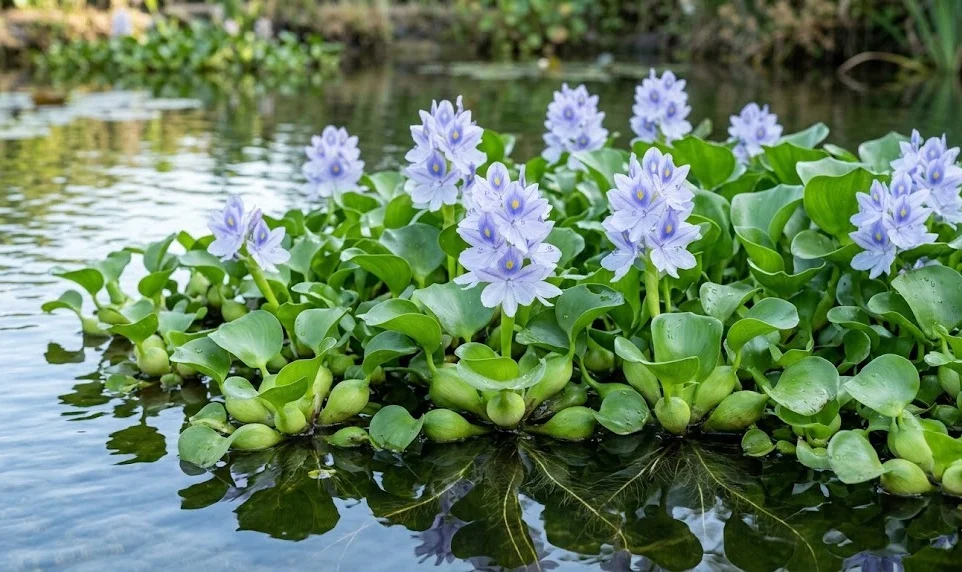

Planting water hyacinth is different from planting most garden ornamentals because the plant floats freely and feeds through roots suspended in water. Instead of preparing a soil bed, the grower prepares a suitable water surface, stable conditions, and a clear containment plan. Propagation is usually simple because healthy plants produce offsets naturally through runners. The real skill lies in starting with vigorous plants, spacing them correctly, and controlling multiplication before it becomes excessive.
Preparing the planting site
A suitable planting site begins with calm water. Water hyacinth does not need to be anchored, so a pond, tub, or water garden with a quiet surface is ideal. Strong splashing, fast circulation, or constant movement can disturb the rosettes and damage tender roots. If the water feature includes a fountain, plants should be placed away from the strongest spray.
The site should receive generous sunlight for the best results. Full sun encourages dense foliage, strong petioles, and a greater chance of flowering. Partial shade can work in hot regions, especially where afternoon sun is intense. Too much shade usually produces weak plants with stretched leaves and poor multiplication.
Before adding plants, remove floating debris and check that the water is not contaminated with harsh chemicals. Newly cleaned containers should be rinsed well if detergents or disinfectants were used. In established ponds, water hyacinth can usually be introduced directly if fish and other plants are already healthy. Sudden placement into poor-quality water often leads to yellowing or root decline.
Containment should be part of the planting plan from the start. A floating ring, enclosed tub, or isolated ornamental pond makes future maintenance easier. In regions where the plant is regulated or invasive, it should not be planted outdoors unless legally permitted. Even in cool climates, responsible containment prevents accidental spread during storms or pond overflow.
More articles on this topic
Introducing plants to the water
Choose plants with firm green leaves, intact crowns, and healthy hanging roots. Avoid specimens with mushy bases, foul-smelling roots, or extensive yellowing. A little leaf damage from transport is common, but the central crown should look active and fresh. Strong starting material establishes faster and is less likely to rot after placement.
Acclimation helps reduce shock, especially when plants come from warm greenhouse water. Float the plants in a sheltered area for a few days while they adjust to outdoor light and temperature. If sunlight is very intense, gradual exposure can prevent leaf scorch on tender greenhouse-grown foliage. Once new leaves appear, the plant has usually adapted to its new conditions.
Planting itself is simple because the plant is placed directly on the water surface. The roots should hang freely below the rosette, and the crown should remain above water. Do not bury the crown in soil or force the roots into a potting medium. Water hyacinth is naturally designed to float, and restricting the crown can cause decay.
Spacing matters even at planting time. A few rosettes can quickly become many, so avoid covering the entire surface at the beginning. Leave open water between plants to allow light penetration and oxygen exchange. Good spacing also gives daughter plants room to develop without crowding the original crowns.
More articles on this topic
Natural propagation by runners
Water hyacinth propagates mainly by producing stolons that carry daughter plants. These runners extend from the mother rosette and form new floating crowns at their tips. Once the daughter plants develop roots and several leaves, they can survive independently. This process can be extremely rapid during warm weather.
Propagation is most successful when plants have adequate light, warmth, and nutrients. Weak plants in cold or shaded water may survive but produce few offsets. Strong summer growth often creates chains of connected rosettes that can be separated by hand. The grower can use this natural habit to increase stock for containers or to replace older plants.
Separating young plants is straightforward. Lift the connected group gently from the water and identify the runner between the mother and daughter plant. Cut or pinch the runner once the young rosette has its own roots. Return the separated plant to water immediately so that the roots do not dry out.
Propagation should be managed with restraint. Producing more plants is easy, but keeping them under control is the real challenge. Only retain the number needed for ornamental coverage or water-quality goals. Excess plants should be disposed of responsibly and never released into natural water bodies.
Establishment after planting and propagation
Newly placed or newly separated plants should be watched closely for the first week. Slight yellowing of older leaves may occur as the plant adjusts. New central leaves are a better indicator of establishment than older transport-damaged foliage. If fresh growth appears, the plant is adapting well.
Water temperature strongly affects establishment speed. In cool spring water, plants may sit almost unchanged for several weeks. In warm summer water, roots and daughter plants can develop quickly. Patience is important because adding too much fertilizer too early can create algae without solving cold-related slowdown.
After propagation, avoid overcrowding young plants. Newly separated rosettes need access to light and open water around their crowns. Crowding can deform leaves, reduce root growth, and increase the risk of rotting plant material. A small number of well-spaced plants usually multiplies more effectively than a dense mass.
The best planting and propagation results come from active observation. Water hyacinth does not require complicated planting techniques, but it responds quickly to environmental conditions. Warmth, light, clean water, and moderate nutrients make establishment easy. Regular thinning keeps the process useful rather than overwhelming.