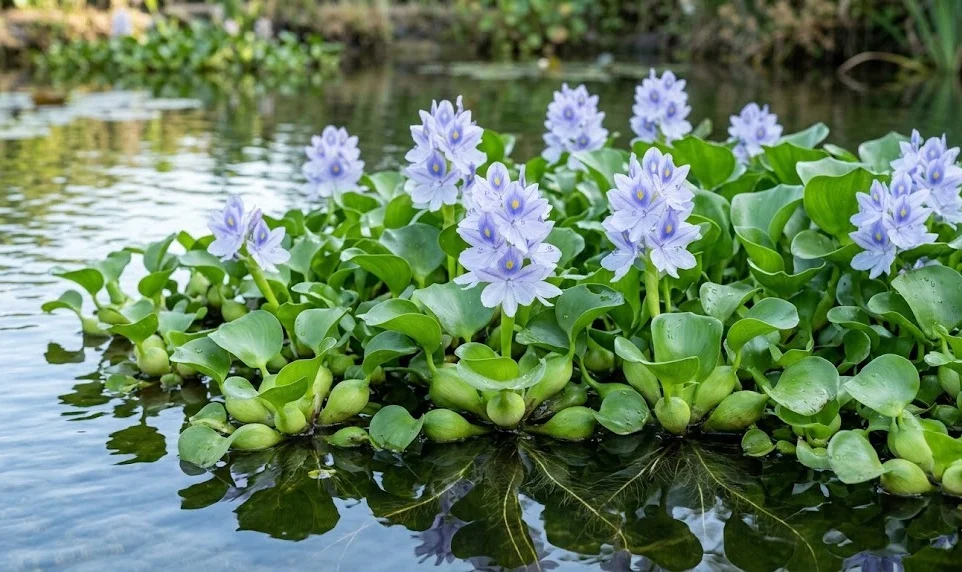

Water hyacinth is a sun-loving floating plant, and light has a direct effect on its shape, color, flowering, and rate of multiplication. Strong light supports compact rosettes and vigorous roots, while insufficient light often leads to pale, stretched, or weak growth. Because the plant floats on the surface, it is naturally positioned to capture sunlight, but shading from trees, structures, or overcrowding can still reduce performance. Managing light correctly is one of the simplest ways to improve both ornamental quality and plant health.
Full sun and plant performance
Full sun generally produces the strongest water hyacinth growth. Under bright conditions, leaves remain firm, glossy, and richly colored. The swollen petioles that help the plant float also develop more reliably. Flowering is more likely when strong light is combined with warm water and adequate nutrition.
Sunlight drives rapid multiplication through runner production. A plant receiving full sun during summer may produce daughter rosettes quickly. This can be useful when fast surface coverage is desired. It also means that thinning becomes necessary to prevent excessive spread.
In cooler climates, full sun is especially valuable because it warms the water surface. Warmer water improves root activity and nutrient uptake. Plants placed in shaded cold water may survive but often remain small. A sunny position helps extend the useful growing season.
Very hot climates may require some afternoon relief. Intense heat combined with shallow container water can stress plants if water temperatures rise excessively. Light shade during the hottest part of the day can reduce heat stress without depriving the plant of essential sun. The best exposure is bright, warm, and stable rather than scorching and stagnant.
More articles on this topic
Problems caused by insufficient light
Low light often produces weak, elongated growth. Leaves may become smaller, paler, or less upright. The plant may continue floating but fail to look lush. Runner production and flowering usually decline as light decreases.
Shade can also make plants more vulnerable to rot. Weak foliage ages quickly and contributes more decaying material to the water. Crowded plants in shade may trap damp, dying leaves beneath the canopy. Regular thinning helps, but it cannot fully compensate for a poor light position.
Indoor overwintering highlights the importance of light. A room that seems bright to people may still be too dim for water hyacinth. Without supplemental lighting, plants may slowly yellow and collapse. Strong artificial light can keep selected rosettes alive through winter.
Light should be assessed across the whole day, not only at noon. A pond may receive morning sun but spend most of the afternoon in building shade. Overhanging trees can reduce light further as leaves expand in summer. Observing the site over time gives a more accurate picture than judging from a single moment.
More articles on this topic
Balancing light with pond ecology
While water hyacinth needs strong light, the pond also needs open water. Dense plant coverage can shade submerged vegetation and reduce oxygen exchange. A moderate amount of surface cover can be attractive and useful, but complete cover creates problems. Good light management includes controlling how much of that light the floating plants intercept.
In algae-prone ponds, water hyacinth can provide helpful shade. Its roots absorb nutrients, and its foliage reduces direct sunlight on the water surface. This can lower algae pressure in some ornamental systems. However, excessive plant growth simply shifts the problem from algae to overcrowded floating vegetation.
Fish ponds require a balanced approach. Fish may appreciate shaded areas during hot weather, but they also need oxygen-rich water. Leaving open surface areas allows better gas exchange and supports healthier conditions. Aeration can be helpful when plant cover and warm weather coincide.
The ideal light strategy is practical and dynamic. Provide the plants with a sunny position, then regulate their coverage as they grow. Remove excess rosettes before they form a continuous mat. This keeps the water hyacinth attractive while preserving the ecological function of the pond.