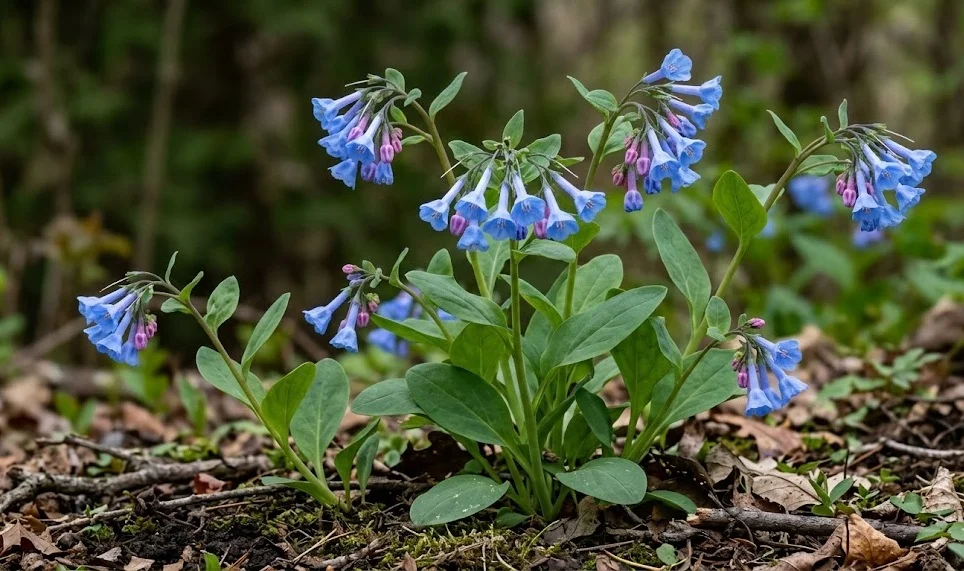

Virginia bluebells are naturally hardy perennials that are well adapted to cold winter conditions when planted in suitable soil. Their winter survival depends less on heavy protection and more on avoiding prolonged waterlogging, exposed roots and repeated disturbance. The foliage disappears long before winter arrives, leaving the underground root system to rest beneath the soil. Good overwintering care is therefore quiet, simple and focused on protecting the root zone.
Understanding winter hardiness
Virginia bluebells are built to survive a dormant season underground. Once the leaves have faded in late spring or early summer, the plant stores energy in its roots and crown. These underground structures remain inactive through the hottest months and continue resting into winter. Cold weather is not normally a problem as long as the soil drains reasonably well.
The greatest winter risk is not frost itself but waterlogged ground. Frozen, saturated soil can limit oxygen around the roots and increase the chance of rot. Low spots in heavy clay gardens may therefore be more dangerous than colder but well-drained positions. Improving drainage before winter is one of the best forms of protection.
Newly planted clumps deserve slightly more attention than mature plants. Their roots may not yet extend deeply enough to handle sudden changes in moisture and temperature. A light mulch helps buffer the soil and reduces repeated freezing and thawing near the surface. Established plants usually need much less intervention.
Do not confuse normal dormancy with winter damage. Because Virginia bluebells disappear from view months before winter, there may be no visible sign of life until the following spring. This is entirely normal. Avoid digging into the area simply because the plant appears absent.
More articles on this topic
Preparing plants in autumn
Autumn is a good time to tidy the planting area and improve the soil surface. Remove aggressive weeds that could compete with the plants in spring. Add a modest layer of leaf mould or mature compost around the dormant clumps. This enriches the soil gradually and helps maintain a woodland-like environment.
Keep mulch light enough that it does not form a thick, wet blanket. A layer of two to five centimetres is usually sufficient for most gardens. The mulch should cover the surrounding soil rather than being piled directly over the crown. This allows the plant to remain protected while reducing the risk of trapped moisture.
Mark the planting area before winter maintenance begins. Dormant Virginia bluebells can be easily damaged by digging, planting bulbs or moving soil in late autumn. Low markers, small labels or companion plants can help identify their position. This is especially useful in mixed borders where the ground looks bare after summer.
Avoid heavy feeding in autumn. The plant is dormant and will not make use of strong fertiliser at this time. Excess nutrients can encourage weed growth or alter the balance of nearby plants. A gentle organic mulch is sufficient for most established clumps.
More articles on this topic
Managing winter moisture and protection
Check drainage before long periods of winter rain. If puddles remain around the planting area for several days, consider creating shallow channels to guide surface water away. Avoid deep digging near the roots, which can cause more damage than the wet soil itself. Small adjustments to surrounding soil levels are often enough to improve runoff.
In very exposed gardens, wind can strip mulch away and dry the soil surface. A slightly heavier layer of leaf mould or shredded leaves can help stabilise conditions. Secure loose material with a few twiggy branches if necessary. The aim is not to seal the soil but to protect it from sudden weather swings.
Container-grown Virginia bluebells need more winter attention than plants in open ground. Pots freeze more quickly and can become waterlogged if drainage holes are blocked. Place containers in a sheltered spot where excess rain can drain freely. Wrap or insulate the pot if severe freezing is expected, but avoid enclosing it so tightly that moisture becomes trapped.
Snow is usually not harmful and can even act as insulation. The concern begins when snow melts into compacted soil that cannot drain. Monitor containers and low-lying beds after thawing periods. A few minutes of preventative care can reduce the chance of crown rot later in the season.
Supporting spring emergence
As winter ends, inspect the planting area before new shoots appear. Remove only dense, matted debris that could prevent stems from pushing through. A thin layer of leaf mould can remain in place because it continues to protect the soil. Work gently so emerging shoots are not accidentally broken.
Avoid uncovering the plants too early during late-winter warm spells. Temperatures can fall again quickly, and new shoots remain vulnerable to sharp frost. A light mulch provides some protection without preventing growth. It is better to remove material gradually as spring becomes more stable.
If late frost damages emerging foliage, do not panic. The plant may still produce replacement growth from the crown, especially if the roots are healthy. Water lightly during dry conditions and avoid applying strong fertiliser as a response. Recovery is usually better when the plant is allowed to rebuild naturally.
A successful winter routine is mostly about restraint. Protect the soil, prevent standing water and avoid unnecessary disturbance. Virginia bluebells are adapted to seasonal change and do not need elaborate winter treatment. With sound planting conditions, they usually return reliably each spring.