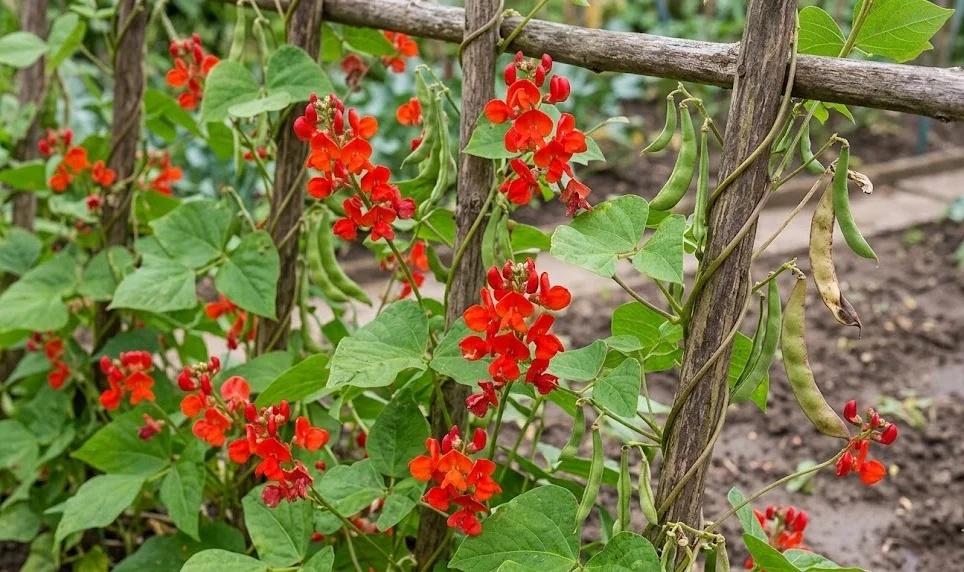

Scarlet runner beans do not need complex pruning, but thoughtful cutting back can improve airflow, manage size, reduce disease pressure, and make harvesting easier. Because the plant is naturally vigorous, the goal is not to shape it rigidly but to guide its energy and prevent overcrowding. Most pruning involves removing damaged growth, controlling excessive vines, and cutting back plants at the end of the season. Done carefully, this maintenance keeps the crop productive without weakening the plant.
The vines climb by twining, so they should not be pruned in the same way as woody shrubs or fruit trees. Excessive cutting can remove flowering sites and reduce yield. Light, selective work is usually better than severe pruning during active growth. The plant responds best when its main framework is preserved.
Pruning should always be done with clean tools. This reduces the risk of spreading disease between plants. Soft green stems can often be pinched by hand, but scissors or secateurs make cleaner cuts. Clean cuts heal more effectively than torn tissue.
Timing matters because cutting during wet weather can increase disease risk. It is better to prune when foliage is dry and the weather is settled. Morning work is useful because cut surfaces and disturbed foliage can dry during the day. Avoid handling diseased plants and then moving directly to healthy ones without cleaning hands or tools.
Training and light summer pruning
Young vines should first be trained rather than cut. Shoots growing away from the support can be redirected gently. Once the plant begins climbing correctly, it usually needs little intervention. Early training prevents the tangled growth that later requires heavier pruning.
More articles on this topic
Light pruning may be useful when growth becomes too dense. Removing a few overcrowded, weak, or damaged stems improves airflow inside the plant. This can reduce humidity around leaves and flowers. Better airflow lowers the risk of fungal problems during wet periods.
If vines outgrow their support, the tips can be pinched or cut back. This encourages some side growth and prevents stems from becoming unmanageable. However, too much tipping can create dense branching if the plant is already crowded. The support should be tall enough to match the plant’s natural vigor.
Lower leaves can be removed if they are yellowing, diseased, or touching the soil. Leaves in contact with damp ground are more exposed to slugs and pathogens. Removing them also makes the base easier to inspect and water. Healthy lower foliage should not be stripped unnecessarily, because it still contributes energy.
Pruning for harvest and plant health
Regular harvesting acts like a form of productive maintenance. Picking young pods prevents the plant from committing too much energy to seed maturity. This encourages continued flowering and pod production. Neglected mature pods can slow the formation of new harvestable pods.
More articles on this topic
Damaged pods and diseased leaves should be removed promptly. They can attract pests or provide entry points for pathogens. Discarding affected material away from the crop is safer than leaving it under the plants. Clean surroundings reduce pressure on the remaining healthy growth.
When aphids cluster on soft shoot tips, pinching out the most affected tips may reduce the infestation. This works best when colonies are small and localized. Beneficial insects should be protected, because they often control aphids naturally. Broad, unnecessary spraying can disrupt this balance.
Pruning should never compensate for poor spacing or weak support. If plants are crowded from the beginning, cutting may help but cannot fully correct the problem. Strong structure and good spacing remain the foundation of healthy growth. Pruning is a refinement, not a rescue strategy.
End-of-season cutting back
At the end of the growing season, scarlet runner beans can be cut back after frost or natural decline. The top growth usually blackens or collapses once cold weather arrives. Removing the vines keeps the garden tidy and reduces disease carryover. It also makes supports easier to clean and store.
If plants are being grown as annuals, the vines can be cut at the base and removed. Some gardeners leave the roots in the soil to decompose. This can help protect soil structure and return organic matter. Diseased roots or crowns should be removed if root problems were present.
If overwintering is being attempted in a mild climate, cutting back should be more careful. The stems can be reduced close to the crown while avoiding damage to the root base. A protective mulch can then be applied around the crown. Only healthy plants should be overwintered.
Plant debris should be handled according to its condition. Healthy vines can be composted if the composting system is active and well managed. Diseased or heavily infested material should be removed from the garden. Good cleanup prepares the next season’s crop before sowing even begins.