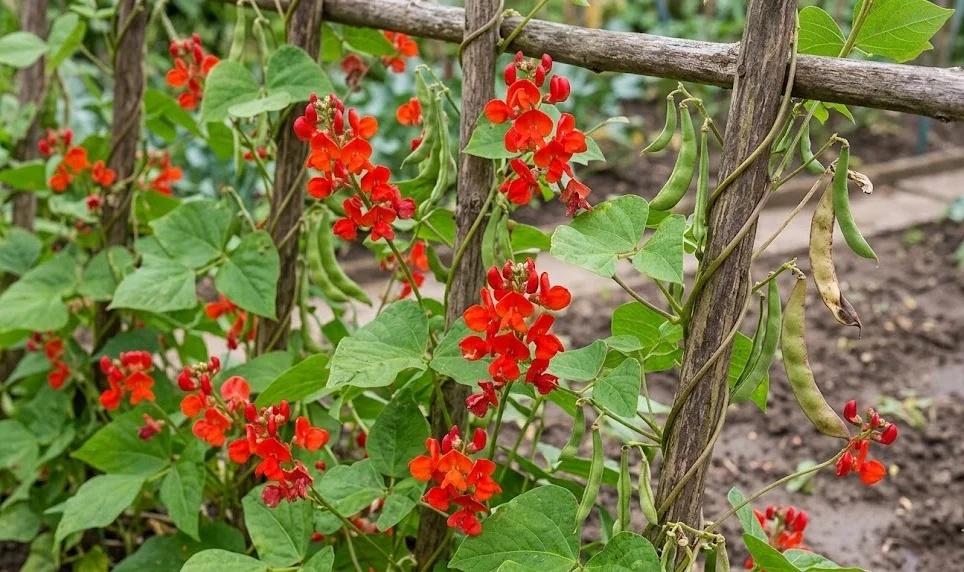

Scarlet runner beans are usually grown as annuals, but in mild climates or protected sites they can sometimes be overwintered from their perennial root system. This is possible because the plant can form thickened roots that may survive where frost is light or absent. In cold climates, however, freezing soil usually kills the crown and roots. Understanding the local winter conditions is therefore the first step in deciding whether overwintering is practical.
In most temperate vegetable gardens, scarlet runner beans are treated as a single-season crop. The vines grow, flower, produce pods, and then collapse after frost. Removing the plants and sowing fresh seed the following year is simple and reliable. This method also reduces the risk of carrying pests and diseases from one season to the next.
Overwintering becomes more relevant in sheltered coastal areas, mild urban gardens, unheated greenhouses, or frost-free regions. In these places, the root crown may remain alive even after top growth dies back. New shoots can emerge when temperatures rise again. The result may be earlier growth than seed-sown plants.
The decision to overwinter should be based on plant health. Only vigorous, disease-free plants are worth keeping. If vines were heavily affected by rust, blight, root rot, or persistent pests, overwintering may preserve problems. In that case, starting again from clean seed is the better horticultural choice.
Preparing plants before winter
Preparation begins near the end of the growing season. Harvest usable pods before severe cold damages them. Pods selected for seed can be left to mature if weather remains dry enough. Any remaining soft growth should be assessed before cutting back.
More articles on this topic
Once frost or seasonal decline damages the top growth, the vines can be cut back. The stems should be reduced close to the base, but the crown should not be hacked or torn. Clean cuts reduce the chance of rot entering damaged tissue. Diseased foliage should be removed from the site rather than composted in place.
Mulching is the main outdoor protection method. A thick layer of straw, leaf mold, compost, or dry leaves can insulate the crown and upper roots. The mulch should protect without holding constant wetness directly against the crown. In very wet climates, a breathable cover may be needed to prevent the area from becoming waterlogged.
Good drainage is just as important as insulation. Cold and wet conditions are often more damaging than cold alone. If the planting site holds winter water, overwintering is unlikely to succeed. Raised beds or sloping ground offer better odds.
Overwintering in containers and protected spaces
Container-grown scarlet runner beans can sometimes be overwintered more easily than plants in open ground. The container can be moved to a sheltered position after the top growth is cut back. An unheated greenhouse, cold frame, porch, or frost-free shed may be suitable. The goal is to keep the root system alive but not force weak winter growth.
More articles on this topic
The compost should be kept barely moist during dormancy. Too much water can rot the roots, especially when temperatures are low and growth has stopped. Completely dry compost can also kill the plant. Occasional checks are better than routine heavy watering.
Pots should be protected from freezing. Roots in containers are more exposed than roots in the ground because cold can penetrate from all sides. Wrapping the pot, grouping containers together, or plunging pots into a sheltered bed can help. Even so, severe frost may still be fatal.
Light becomes more important if the plant begins to resprout before spring. Pale, weak shoots indicate that conditions are too dark or too warm. If early shoots appear, the plant should be moved to brighter conditions while still protected from frost. Strong spring regrowth depends on balancing protection with light.
Spring recovery and aftercare
In spring, the mulch or protective covering should be adjusted gradually. Removing all protection too early can expose tender shoots to late frost. Leaving heavy mulch in place too long can trap moisture and encourage rot. A staged approach gives the crown time to respond safely.
New shoots should be inspected carefully as they emerge. Slugs and snails often attack the first tender growth. Protective barriers or regular checks may be needed. Early damage can weaken the plant before it has rebuilt its reserves.
Once growth is active, feeding and watering can resume gradually. A light compost top-dressing helps support new shoots. Strong fertilizer should be avoided until the plant is clearly growing. Overfeeding too early can stress roots that are still recovering from winter.
Supports should be ready before the shoots lengthen. Overwintered plants may grow strongly once conditions improve. Guiding the first vines onto a trellis prevents breakage and tangling. Early support also improves airflow from the start of the season.
When fresh sowing is the better option
Fresh sowing is often more reliable than overwintering in regions with hard frost. Seeds are inexpensive, easy to store, and usually germinate well under warm conditions. Young seed-grown plants are also free from many carryover problems. For many gardeners, annual sowing is the most practical method.
Overwintered plants may not always outperform seedlings. If the root crown was weakened by cold or rot, spring growth can be slow and uneven. A fresh seedling may catch up quickly in warm weather. It is sensible to sow backup seeds even when attempting overwintering.
Disease history should strongly influence the decision. Plants affected by serious foliar or root diseases should not be carried into the next year. Starting fresh allows the gardener to rotate the crop and improve hygiene. This reduces pressure on future bean plantings.
Overwintering is best viewed as an experiment rather than a guaranteed technique. It can be rewarding in mild gardens, especially where early flowering is desired. However, it should not replace good seed saving and proper spring sowing. The most resilient approach is to combine experimentation with reliable propagation.