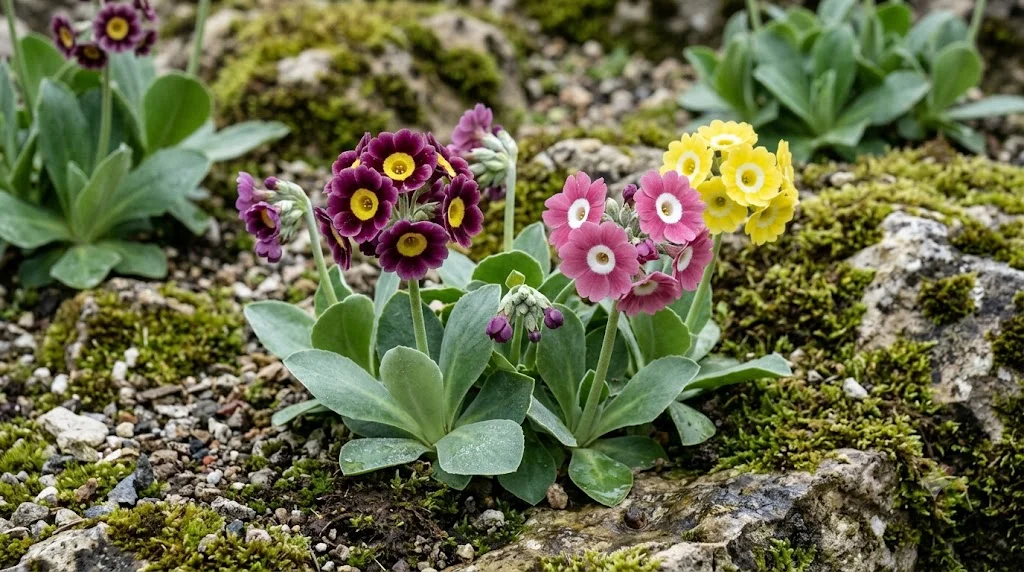

Auricula primrose remains relatively resilient when grown in cool, airy, well-drained conditions, but stress can make it vulnerable to several diseases and pests. Most serious problems begin when moisture remains around the crown, roots lose access to air, or plants become crowded. Regular inspection allows small changes to be noticed before an entire rosette collapses. Clean cultivation and appropriate environmental management are usually more effective than relying on repeated chemical treatments.
Symptoms should be assessed carefully because different problems can look similar. Yellow leaves may indicate natural ageing, excessive moisture, nutrient imbalance, or root damage. Wilt can be caused by drought, root rot, vine weevil larvae, or intense heat. Examining the crown, roots, compost, and surrounding conditions helps establish the real cause.
Quarantining newly acquired plants is a sensible precaution for valuable collections. Keep new specimens separate long enough to observe hidden pests, leaf spots, or root problems. Inspect the undersides of leaves and remove old compost debris before placing the plant among established stock. This simple habit can prevent a local problem from spreading through an entire group.
Tools, pots, and benches should be kept reasonably clean. Cutting instruments must be disinfected before and after removing diseased tissue. Fallen leaves and decaying flowers should not remain around the crowns. Hygiene reduces the amount of infectious material and eliminates hiding places used by several common pests.
Crown rot and root decay
Crown rot is among the most destructive auricula problems. Affected plants may suddenly wilt even though the compost is wet. The central leaves can become loose, soft, or brown, and the crown may develop an unpleasant smell. Once decay reaches the main growing point, recovery becomes difficult.
More articles on this topic
Excessive moisture is the main predisposing factor, especially during cool weather. Deep planting, poor ventilation, compact compost, and water collecting inside the rosette all increase risk. The plant should be positioned with its crown slightly above the compost surface. Water must drain freely and should be directed away from the centre.
At the first sign of decay, remove the plant from its pot and inspect all tissues. Cut away soft material with a sterile blade until only firm, clean tissue remains. Healthy offsets can sometimes be separated and rooted even when the parent crown is lost. Discard severely affected compost and disinfect any reusable container.
Root rot may develop without obvious crown symptoms during its early stages. The plant becomes weak, stops growing, and remains loose in the pot because functional roots have disappeared. Damaged roots are often dark, soft, or hollow instead of pale and firm. Repotting into fresh, open compost may save a mildly affected plant when all dead roots are removed.
Leaf spots, grey mould, and mildew
Leaf-spot diseases produce brown, grey, or black lesions that may enlarge in damp conditions. Spots often begin on older leaves where moisture remains longest. Severe infection reduces the plant’s decorative value and weakens its photosynthetic area. Crowded foliage and overhead watering encourage the spread of spores.
More articles on this topic
Remove affected leaves carefully and dispose of them away from the growing area. Improve spacing so moving air can dry the foliage quickly. Water in the morning and avoid wetting the leaves unnecessarily. Fungicide may be considered where permitted, but environmental correction remains essential for lasting control.
Grey mould commonly attacks ageing flowers, damaged leaves, and soft tissue in humid conditions. Fuzzy grey growth may appear on petals or at the base of fallen debris. Deadheading and removing decaying material promptly reduce the fungus’s food supply. Protected structures should be ventilated even during cool weather whenever conditions allow.
Powdery mildew may appear as a pale, dusty coating on leaves. It is often associated with poor airflow, irregular watering, and stressed plants rather than continuously wet foliage. Increase ventilation and maintain more even root moisture without saturating the compost. Heavily affected leaves can be removed if enough healthy foliage remains to support the plant.
Aphids and sap-feeding pests
Aphids gather on tender flower stalks, buds, and young leaves. They distort developing tissue and leave sticky honeydew that can support dark sooty mould. Infested buds may fail to open normally or produce misshapen flowers. Ant activity around pots can sometimes reveal hidden aphid colonies.
Small infestations can be removed by hand or dislodged with a gentle stream of water directed away from the crown. Insecticidal soap may be used according to its label, ensuring that farinose leaves are tested first for marking. Biological controls can work well in protected collections where suitable temperatures are maintained. Repeated inspection is necessary because surviving individuals reproduce rapidly.
Spider mites can become troublesome in hot, dry, sheltered conditions. Leaves may appear finely speckled, dull, or bronzed, and delicate webbing can develop between tissues. Improving humidity around the growing area and reducing heat stress can discourage population growth. The crown should still remain dry, so humidity must not be increased through careless overhead soaking.
Thrips occasionally damage flowers by feeding inside buds and between petals. Their activity can cause streaking, distorted blooms, or pale scarring. Remove badly affected flowers and inspect neighbouring plants. Blue or yellow sticky traps can help reveal adult activity, although they do not eliminate larvae hidden in plant tissue.
Vine weevils, slugs, and other chewing pests
Vine weevil larvae are a serious threat to container-grown auriculas because they feed on roots below the compost surface. A plant may wilt, loosen suddenly, or detach from its root system with little warning. The curved cream larvae have brown heads and are often found during repotting. Adults create irregular notches around leaf edges, providing an earlier sign of their presence.
Inspect roots whenever growth becomes unexpectedly weak. Remove larvae by hand and replace infested compost rather than returning it to the pot. Biological nematodes can provide effective control when compost temperatures suit the chosen species. Adult traps and regular night inspections help reduce egg laying.
Slugs and snails chew holes in leaves, flower buds, and soft new growth. They are especially active in damp, sheltered areas with abundant debris. Raise pots from the ground, clear hiding places, and inspect plants after dark. Physical barriers or approved controls can be added when cultural measures are insufficient.
Caterpillars and leaf-mining insects occur less frequently but can still damage individual plants. Chewed edges, droppings, or tunnels inside leaves help distinguish them from sap-feeding pests. Remove visible larvae and badly damaged leaves before populations increase. Avoid broad treatments when the pest can be controlled directly, because beneficial insects may also be harmed.
Building an integrated prevention strategy
Begin prevention by providing the correct growing environment. Free-draining compost, appropriate shade, moderate watering, and generous airflow reduce several problems simultaneously. Strong plants recover from minor damage more effectively than stressed specimens. Environmental management should therefore form the foundation of every control programme.
Inspect plants at least weekly during active spring growth. Look beneath leaves, around flower stalks, and at the base of each rosette. Lift suspicious pots to assess weight and stability, because root damage may alter both. Early detection usually allows local treatment instead of collection-wide intervention.
Avoid overcrowding pots on shelves or greenhouse benches. Leaves should not remain pressed tightly against neighbouring plants for long periods. Adequate space improves ventilation and makes inspection easier. It also prevents pests from moving directly between overlapping rosettes.
Keep brief records when recurring problems occur. Note the date, weather, affected cultivar, symptoms, and treatment used. Patterns may reveal that a particular shelf remains too damp or one compost mixture retains excessive water. Adjusting the system on the basis of these observations provides more reliable control than repeatedly treating symptoms.