
Pruning is a fundamental horticultural practice that plays a crucial role in maintaining the health, productivity, and aesthetic appeal of garlic chives. While these plants are naturally vigorous, they benefit significantly from a disciplined approach to removing old or unwanted growth throughout the season. Professional cutting techniques not only encourage a more abundant harvest of tender leaves but also help prevent the plant from becoming overly crowded or unkempt. By understanding when and how to prune, you can ensure that your garlic chives remain a high-quality asset in your herb garden or agricultural setting.
The primary reason for pruning garlic chives is to stimulate the production of new, flavorful growth that is prized for culinary use. When you cut back the older leaves, the plant’s internal signaling systems redirect energy toward the dormant buds in the crown, triggering a fresh flush of foliage. This prevents the clump from becoming dominated by tough, fibrous leaves that have lost their delicate garlic-like sweetness over time. A regular schedule of cutting ensures a continuous supply of the best possible material for the kitchen or market.
Beyond productivity, pruning is also a vital tool for managing the structural health and airflow within a dense colony of garlic chives. Thick, overgrown clumps can trap moisture and debris, creating a microclimate that is highly favorable for the development of fungal diseases and pests. By selectively thinning the foliage or performing a complete cut-back, you improve the circulation of air and the penetration of light into the center of the plant. This proactive management strategy is one of the most effective ways to maintain a resilient and disease-free herb garden.
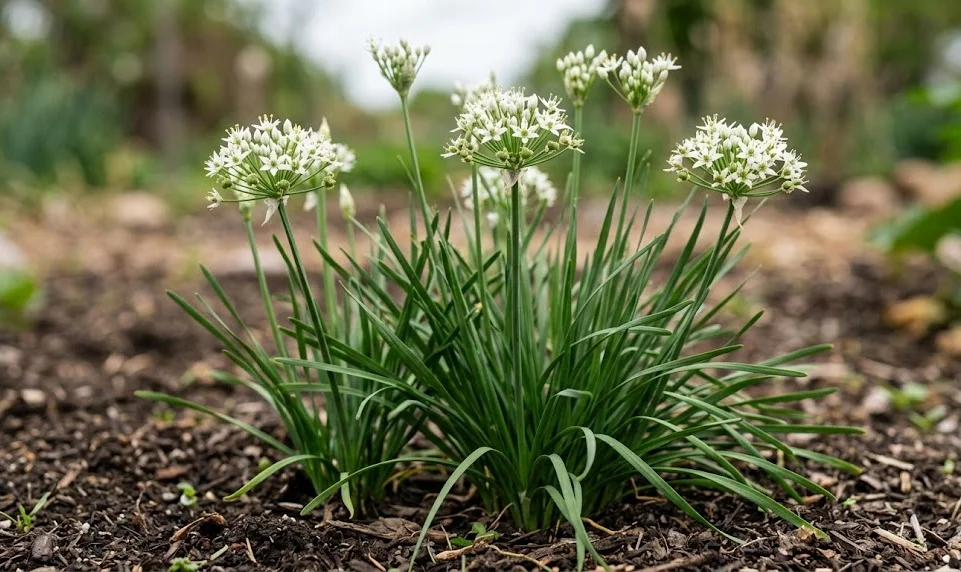
Pruning is also the main method used to control the life cycle of the plant, particularly regarding the development of its white, star-shaped flowers. If the goal is strictly leaf production, removing the flower stalks as they appear is a standard professional practice that prevents the plant from diverting energy into seed production. However, if you enjoy the ornamental value or want to collect seeds, your pruning strategy will need to be more selective and timed differently. Understanding these choices allows you to tailor your management style to your specific goals for the garden.
Routine maintenance cutting
Daily or weekly harvesting is the most common form of pruning for garlic chives and serves as a continuous renewal process for the plant. When harvesting, you should always use a sharp pair of scissors or a knife to make clean cuts about two or three centimeters above the soil level. Avoid pulling or tearing the leaves, as this can damage the delicate crown and create entry points for pathogens. Clean cuts heal more quickly and allow the plant to return to active growth with minimal stress or delay.
More articles on this topic
A professional approach to harvesting involves taking leaves from the outer edges of the clump first, allowing the younger, central shoots to continue developing. This “outside-in” method ensures that you are always using the most mature leaves while maintaining the structural integrity of the plant. If the plant is growing rapidly, you can be quite aggressive with your harvesting without fear of causing long-term harm. In fact, many experts find that the more frequently you harvest garlic chives, the more productive and healthy they become.
Periodically, you may find that the center of the clump becomes overly dense or starts to show signs of decline, which is a signal that a more thorough pruning is needed. Removing some of the oldest, yellowing leaves from the very base of the plant helps to tidy up the clump and improves the general appearance of the herb bed. This simple maintenance task also makes it easier to spot early signs of pests or diseases that might be hiding in the thick foliage. Keeping the base of the plant clean is a hallmark of a well-cared-for and professional-grade garden.
During the peak of the summer, garlic chives can sometimes grow faster than you can use them, leading to a surplus of overgrown and tough foliage. In this situation, it is often best to perform a “rejuvenation cut” where you take the entire plant down to just a few centimeters above the ground. While this might seem drastic, the plant will quickly respond with a burst of brand-new, tender leaves that are far superior in quality to the older ones. Don’t be afraid to be bold with your shears when the quality of the harvest starts to decline.
Managing the flowering process
In the late summer or early autumn, garlic chives will naturally begin to produce upright, leafless stalks topped with beautiful clusters of white flowers. While these flowers are edible and quite attractive, they represent a significant investment of the plant’s resources that could otherwise go into leaf production. For those focused on a commercial or high-volume harvest of leaves, it is standard practice to prune out these stalks as soon as they are identified. This keeps the plant’s energy focused on the foliage and extends the period of high-quality leaf production.
More articles on this topic
If you choose to allow the flowers to bloom, you must be prepared for the fact that garlic chives are prolific self-seeders and can quickly take over a garden bed if left unchecked. To prevent unwanted spreading, you should prune off the flower heads as soon as they begin to fade but before the seed pods have fully dried and opened. This “deadheading” allows you to enjoy the beauty and the pollinators that the flowers attract without the headache of hundreds of unwanted seedlings next spring. It is a perfect middle-ground strategy for the professional home gardener.
The flower stalks themselves are much tougher and more fibrous than the regular leaves, so they are generally not used in the same way in the kitchen. However, the unopened flower buds, often called “chive spikes,” are considered a delicacy in many cuisines and can be harvested as a specialty crop. If you are interested in this harvest, you should prune the stalks when the buds are still tight and green for the best flavor and texture. This adds another layer of productivity to your garlic chives and makes the pruning process even more rewarding.
Once the flowering season is over, a final thorough pruning of the remaining stalks will help the plant prepare for the approaching winter. Remove any dead or woody material to keep the clump tidy and to prevent it from harboring pests during the colder months. A clean and well-pruned plant is much less likely to suffer from rot or other issues during its period of dormancy. Strategic pruning throughout the year ensures that the transition between the seasons is as smooth and successful as possible.
Tools and safety protocols
Using the right tools is essential for professional pruning and ensures that you do not cause unnecessary damage to your garlic chives. A pair of high-quality garden snips or small bypass pruners is ideal for the delicate work of harvesting and thinning. You should always ensure that your blades are sharp, as dull tools can crush the plant tissues rather than cutting them cleanly. This simple detail can significantly impact how quickly the plant recovers from the pruning process and how much new growth it produces.
Hygiene is another critical factor when pruning, especially if you are working with multiple plants or different areas of the garden. You should regularly clean your tools with a disinfectant, such as rubbing alcohol or a mild bleach solution, to prevent the spread of diseases. This is particularly important if you have recently worked with plants that showed signs of fungal infection or other health issues. A disciplined approach to tool cleanliness is one of the easiest ways to maintain a healthy and productive garden over many years.
When performing a major cut-back or rejuvenation pruning, it is helpful to have a plan for what to do with the resulting organic material. If the leaves are healthy, they can be used in the kitchen, dried for later use, or added to a well-managed compost pile. However, if you are pruning out diseased or pest-infested material, it should be disposed of in the trash or burned to avoid contaminating the rest of your garden. Proper disposal of pruning waste is an essential part of the sanitation process for any professional gardener.
Finally, always be mindful of your own safety and comfort when spending long periods pruning in the garden. Use a kneeling pad to protect your joints and wear gloves if you have sensitive skin, as the sap from allium plants can sometimes be irritating. Taking frequent breaks and maintaining a good posture will help you stay focused and ensure that your pruning is as precise and effective as possible. A professional approach to gardening includes taking care of yourself just as much as you take care of your plants.