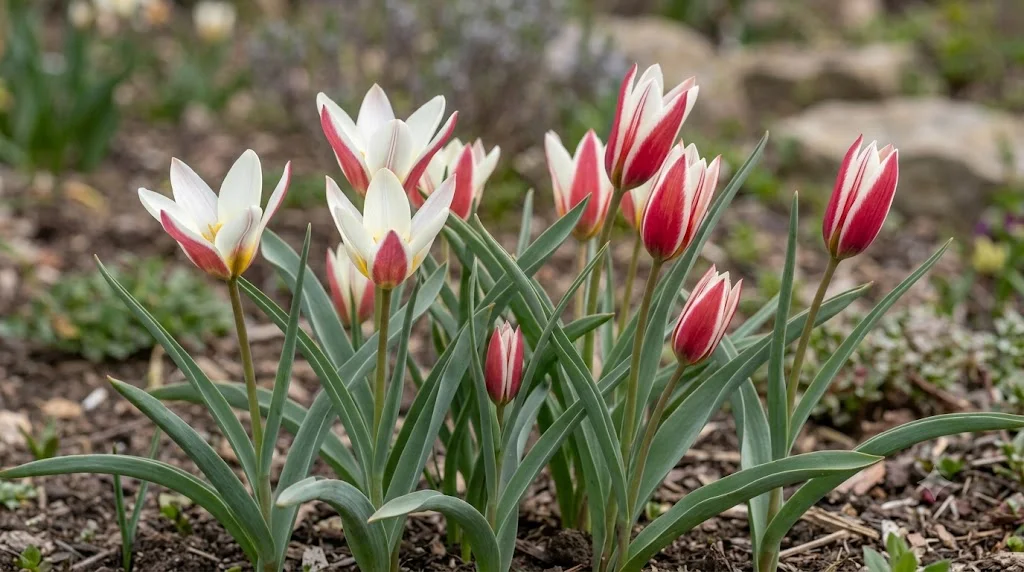

Lady tulips are naturally adapted to cold-season growth and can usually remain outdoors through winter when planted in suitable conditions. Their bulbs benefit from a prolonged cool period, which supports normal flower development and synchronises spring emergence. Winter protection should focus primarily on drainage, temperature stability, and protection from rodents rather than keeping the bulbs warm. Problems are more often caused by persistent wetness than by ordinary winter cold.
Winter hardiness and cold requirements
Established lady tulip bulbs tolerate frost well when planted at an appropriate depth. The surrounding soil acts as insulation and protects them from rapid temperature changes. Snow cover can provide additional insulation during severe weather. Brief freezing above the bulbs is usually not harmful.
A period of winter chilling is necessary for strong spring growth and flowering. Bulbs kept continuously warm may produce weak leaves or fail to flower properly. This requirement makes the species well suited to temperate gardens with cool winters. In very mild regions, pre-chilled bulbs may sometimes be needed for reliable results.
Hardiness depends partly on soil conditions and bulb health. A dry, firm bulb can withstand cold more successfully than one weakened by rot. Waterlogged soil reduces oxygen around the bulb and makes freezing conditions more damaging. Improving drainage is therefore a more useful winter preparation than applying thick insulation.
Late winter shoots may emerge before the final frost has passed. The foliage is generally capable of tolerating light freezing, especially when it has developed gradually outdoors. Severe frost after a warm spell can damage exposed tips or flower buds. Temporary protection may be helpful during unusually abrupt temperature drops.
More articles on this topic
Preparing garden beds for winter
Autumn preparation should begin with checking drainage and removing weeds. Compacted surfaces can be loosened carefully before bulbs are planted, but established bulb areas should not be deeply cultivated. Raised beds and sloping positions naturally shed excess water. Low areas where winter rain collects are unsuitable without structural improvement.
A thin layer of gravel or coarse grit can protect the soil surface from erosion and splashing. Mineral top dressings also dry quickly after rain and discourage some animals from digging. Thick organic mulch is less suitable directly over lady tulips because it can hold moisture. If mulch is needed for neighbouring plants, it should be kept light over the bulb zone.
Planting depth provides important protection during cold weather. Shallow bulbs experience greater temperature fluctuation and are more accessible to rodents. Bulbs placed too deeply, however, may struggle in dense soil. A depth of roughly two to three times the bulb’s height is usually effective.
Markers should be installed while the planting location is still known. Winter beds often appear empty, making accidental digging more likely. A discreet label prevents damage during later planting or soil maintenance. It also helps gardeners monitor whether the bulbs emerge at the expected time.
More articles on this topic
Protecting container-grown bulbs
Containers cool faster than open ground because cold air reaches the sides as well as the surface. Small pots are especially vulnerable to repeated freezing and thawing. A large, frost-resistant container offers more stable conditions. Drainage holes must remain open throughout winter.
Pots can be grouped together near a sheltered wall to reduce exposure. Wrapping the exterior with breathable insulation may protect the root zone in very cold climates. The top of the pot should remain open enough for ventilation and rainfall control. Plastic coverings that trap condensation are generally unsuitable.
Winter watering should be minimal but not completely neglected in sheltered containers. Compost under an overhang may remain dry for long periods even while the weather is cold. A small amount of water may be needed if the medium becomes entirely dry and unfrozen. Saturating the pot before a hard freeze should be avoided.
Containers should never stand in saucers filled with rainwater. Raising pots on feet allows excess moisture to escape and improves airflow beneath the base. Cracked drainage holes should be cleared before winter begins. A pot that drains freely is far more likely to protect its bulbs successfully.
Managing winter weather and spring transition
Heavy winter rain presents a greater threat than snow in many gardens. Temporary rain protection can be useful for containers and exceptionally wet beds. Clear covers should allow air movement and should not create a warm, humid enclosure. The goal is to reduce saturation rather than exclude all natural moisture.
During periods of deep snow, the planting area usually requires no intervention. Snow insulates the soil and protects emerging shoots from drying winds. Compacted piles created by shovelling paths should not be placed over the bulbs. Dense, icy snow can delay emergence and physically damage young growth.
As temperatures rise, winter protection should be removed gradually. Leaving insulation or covers in place too long may encourage pale, stretched shoots. Emerging foliage needs direct light and good air circulation. Containers moved to shelter should return to a sunny outdoor position before growth becomes advanced.
Spring care should resume according to the plant’s development rather than the calendar. Watering increases only when active growth and drying soil make it necessary. A light bulb fertiliser can be applied as shoots emerge. Sudden heavy feeding or irrigation after winter can stress bulbs that are still developing roots.