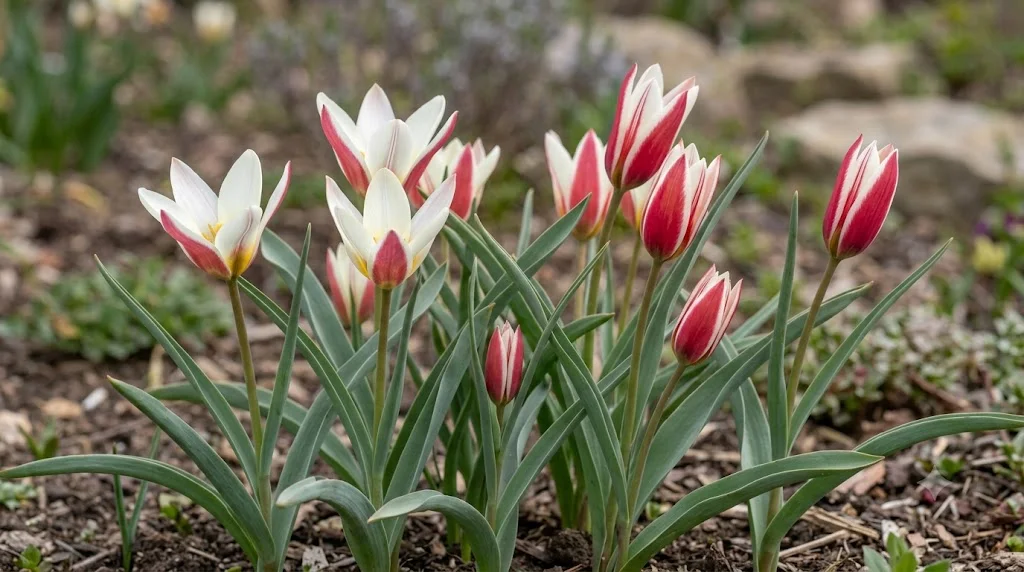

Lady tulips are generally resilient when grown in sunny, well-drained conditions, but they can still be affected by fungal diseases, viruses, bulb rots, and animal pests. Many problems begin underground and remain hidden until growth becomes distorted or the plant fails to emerge. Prevention depends on healthy planting stock, clean handling, suitable soil, and careful moisture management. Early recognition allows affected plants to be removed before a local problem spreads through an established colony.
Fungal diseases affecting leaves and flowers
Tulip fire is one of the most serious fungal diseases affecting tulips. Symptoms may include distorted shoots, brown or grey lesions, scorched-looking foliage, and flowers that fail to open normally. In damp weather, fuzzy fungal growth may appear on affected tissue. Infected plants should be removed promptly with the surrounding soil debris.
The fungus responsible for tulip fire can survive on infected material and contaminate nearby bulbs. Diseased leaves and flowers should not be placed in ordinary garden compost. Tools used around affected plants should be cleaned before they contact healthy bulbs. Replanting tulips in the same contaminated area should be avoided for several seasons.
Grey mould may develop on damaged or overcrowded plants during cool, humid weather. Soft brown patches can spread across leaves and flowers, especially where air circulation is poor. Dead petals resting on foliage create convenient infection points. Removing decaying material and avoiding overhead irrigation reduces the risk.
Leaf spots caused by other fungi may appear as small brown, tan, or purplish marks. Minor spotting does not always threaten the bulb, but rapidly expanding lesions require attention. Plants should be observed over several days to determine whether the symptoms are progressing. Persistent outbreaks often indicate excessive moisture, crowding, or contaminated stock.
More articles on this topic
Bulb rots and underground damage
Bulb rot often begins in soil that remains wet and poorly aerated. Affected bulbs may become soft, discoloured, hollow, or unpleasantly scented. Above-ground symptoms include weak emergence, yellowing, sudden collapse, or complete failure to sprout. Once extensive decay develops, the bulb is rarely recoverable.
Basal rot commonly attacks the base of the bulb where roots emerge. Infected tissue may turn brown and become separated from healthy scales. Warm conditions combined with moisture can accelerate the disease. Bulbs showing basal damage should be discarded rather than replanted.
Storage rot can develop when lifted bulbs are packed away while damp. Poor ventilation allows fungal spores to spread rapidly between bulbs. Stored material should be checked periodically for soft spots, mould, and unusual odours. Diseased bulbs must be removed immediately before they infect neighbouring stock.
Prevention begins with purchasing firm, undamaged bulbs from reliable suppliers. The planting soil should drain freely, and watering should be reduced as dormancy approaches. Bulbs should not be wounded during planting or division because injuries provide entry points for pathogens. Clean, dry handling is particularly important when offsets are separated.
More articles on this topic
Viral symptoms and their implications
Tulip viruses can cause streaking, colour breaking, mottled leaves, distorted growth, and reduced vigour. Some flower patterns may appear attractive, but viral colour changes usually indicate infection rather than a desirable genetic trait. Symptoms can vary with temperature and cultivar, making diagnosis difficult. Suspicious plants should be isolated from healthy tulips.
Viruses cannot be cured with fungicides or fertilisers. Infected bulbs remain carriers and may decline over time. The safest approach is to remove the entire plant, including the bulb and attached offsets. Leaving infected material in the ground allows insect vectors to spread the virus.
Aphids are important virus carriers because they move sap from one plant to another. Even a small aphid population can transmit disease before visible feeding damage becomes severe. Controlling aphids reduces risk but cannot restore an already infected bulb. Regular inspection during active growth is therefore valuable.
Clean planting stock is the strongest defence against viral disease. Bulbs from unknown or poorly maintained sources may carry infections without obvious external symptoms. Propagation material should be taken only from vigorous, normal-looking plants. Tools should be cleaned between clumps when disease is suspected.
Insect and mite pests
Aphids may gather on young shoots, flower stems, and the undersides of leaves. They remove sap, produce sticky honeydew, and can distort tender growth. Small colonies can often be washed away with a controlled stream of water. Severe infestations may require an appropriate insecticidal soap applied according to the label.
Bulb mites are tiny pests that attack weakened or damaged bulbs. Their feeding can create rough, soft, or powdery areas and may encourage secondary fungal infection. Infested bulbs often decline gradually rather than collapsing immediately. Healthy, dry storage and careful sanitation reduce their spread.
Thrips can damage flowers and leaves by scraping surface cells and feeding on released sap. Affected tissue may appear silvery, streaked, or scarred. The insects are small and easily concealed within developing flowers. Blue or yellow sticky traps can assist with monitoring, although traps alone rarely eliminate an infestation.
Narcissus bulb fly and related larvae may occasionally attack tulip bulbs. The larva enters the bulb and consumes internal tissue, often leaving the outer scales apparently intact. Affected plants produce weak leaves or fail to emerge. Soft bulbs containing internal cavities should be destroyed.
Slugs, rodents, and larger garden pests
Slugs and snails may chew emerging leaves and flower stems during damp spring weather. Damage appears as irregular holes, shredded edges, or missing shoots. Young growth is particularly vulnerable because it is soft and close to the soil surface. Night inspections can reveal pests that remain hidden during the day.
Reducing damp hiding places around the planting area can lower slug pressure. Thick organic mulch, boards, overturned pots, and dense weeds provide daytime shelter. Hand removal is effective in small plantings when carried out repeatedly. Approved slug-control products should be selected with consideration for pets, wildlife, and local regulations.
Mice, voles, squirrels, and other rodents may dig up or eat bulbs. Damage is often recognised by small holes, disturbed soil, missing bulbs, or empty papery skins. Wire mesh placed around or over newly planted bulbs can provide physical protection. The mesh openings must still allow shoots and roots to pass freely.
Deer and rabbits may browse leaves and flowers in exposed gardens. Repellents can offer temporary protection but often require repeated application. Fencing is more dependable where animal pressure is high. Mixed planting among less palatable species may reduce visibility but does not guarantee safety.
Integrated prevention and garden hygiene
Healthy plants are less likely to suffer severe disease and pest damage. Full sun, free-draining soil, moderate nutrition, and proper spacing create firm growth and improve air movement. Excessive irrigation and nitrogen-rich feeding should be avoided. Stressed bulbs are more vulnerable to both pathogens and insects.
Routine inspection should begin when shoots first emerge. Look for distorted growth, unusual spotting, missing tissue, sticky residue, or plants that develop more slowly than their neighbours. Problems detected early are easier to contain. Marking suspicious plants helps with later examination during dormancy.
Dead foliage should be removed only after it has yellowed naturally, unless disease is present. Diseased tissue should be cleared promptly and disposed of away from the planting area. Healthy dry foliage can be removed gently once it separates easily. Garden tools and storage containers should be kept clean.
A preventive approach is more effective than repeated emergency treatments. Chemical control should not replace drainage improvement, sanitation, and careful stock selection. Accurate identification is essential because similar symptoms can arise from drought, frost, nutrient imbalance, or disease. When the underlying cause is corrected, lady tulips usually remain dependable and relatively trouble-free.