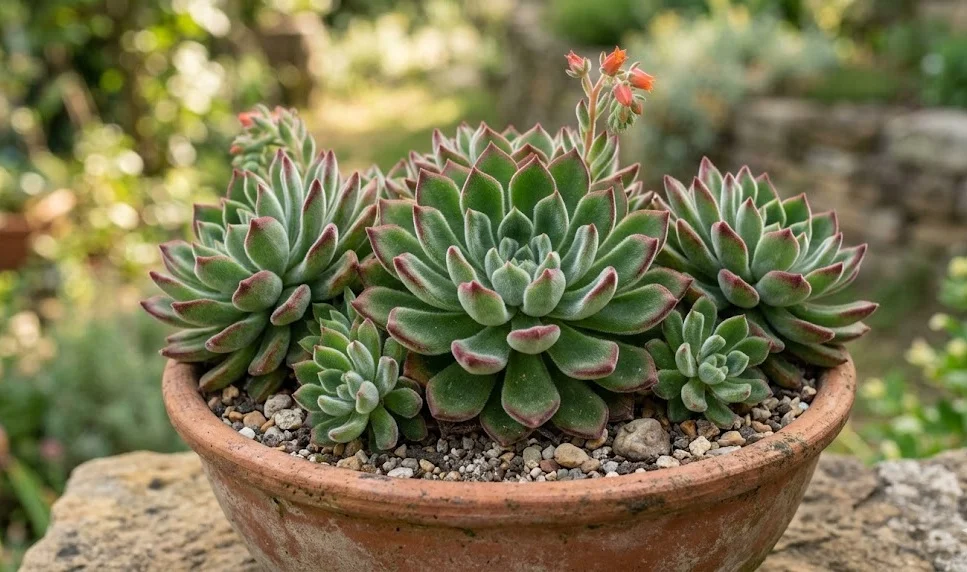

The plush plant is a sun-loving succulent that relies on high light levels to maintain its compact shape and vibrant leaf colors. You should aim to provide several hours of bright, direct sunlight every day, preferably in the morning when the rays are less intense. If the plant does not receive enough light, it will begin to stretch toward the nearest light source, a process known as etiolation. This results in a weak, leggy stem and leaves that are spaced far apart, which permanently ruins the aesthetic appeal of the rosette.
When you are choosing a location for your plant, a south or west-facing window is usually the best option for indoor cultivation. You will find that the intense afternoon sun in a west-facing window can sometimes be a bit too much during the height of summer, so you might need to provide some light shading. A sheer curtain can diffuse the light just enough to prevent damage while still giving the plant the energy it needs. Observing how the plant reacts to its position is the best way to find the “sweet spot” in your home.
Outdoor light is much more powerful than anything found indoors, which is why succulents often look so much better when grown outside. You can place your plush plant in a spot that gets full sun for most of the day, provided it has been properly acclimated to the conditions. In its natural environment, this species often grows in rocky areas where it is exposed to harsh sunlight and wind. Replicating this intensity will result in a robust plant with thick leaves and a dense covering of protective velvet hairs.
During the winter months, the challenge is to provide as much light as possible when the days are short and often cloudy. You should move the plant to the brightest window in the house and keep the glass clean to allow every possible photon to reach the leaves. If you notice the plant starting to lose its color or stretch, it is a clear sign that the available light is insufficient. In these cases, your only professional option is to use artificial grow lights to supplement the natural light until spring returns.
Signs of light deficiency and how to fix them
Etiolation is the most common sign that your succulent is struggling with low light levels, and it is easily recognizable by the elongated stem. You will see the center of the rosette starting to rise and the new leaves becoming pale and smaller than the older ones. Once a plant has stretched, it cannot shrink back, even if you move it to a brighter location immediately. The only way to fix the appearance of an etiolated plant is to cut off the top and propagate it as a new, compact cutting.
More articles on this topic
Another subtle sign of light deficiency is when the leaves begin to flatten out or even point downward instead of standing upright. The plant does this to increase the surface area available to catch whatever light is present in the environment. You might also notice that the vibrant red or gray tips of the leaves begin to fade into a dull, uniform green. These visual changes are the plant’s way of telling you that its metabolic needs are not being met by the current light exposure.
If you see these signs, you should move the plant to a brighter location immediately, but you must do it gradually to avoid further stress. You can start by giving it an hour or two of extra sun each day and monitoring how the foliage responds. If the plant has been in deep shade, a sudden move to full sun will almost certainly cause severe leaf burn. Patience is required to help a light-deprived plant recover its strength without causing new problems.
Artificial lighting is a fantastic tool for gardeners who live in regions with long, dark winters or have limited natural light. You should look for full-spectrum LED grow lights that mimic the wavelength of natural sunlight to keep your succulents healthy. Position the lights about six to twelve inches above the plants and keep them on for twelve to fourteen hours a day. This consistent light source can prevent etiolation and keep your plush plants looking their best all year round.
Preventing sunburn and managing intense heat
While these plants love the sun, it is possible for them to get “too much of a good thing” during extreme heatwaves or sudden moves. Sunburn appears as permanent brown or white scorched patches on the leaves, which can look like dry, papery scars. These marks will never go away, so prevention is the only real strategy when it comes to managing intense light exposure. You should always be cautious when moving a plant from a dark store or house directly into the bright outdoor sun.
More articles on this topic
Acclimatization, also known as hardening off, is the professional process of slowly introducing a plant to more intense conditions over several days. You should start by placing the plant in a shaded outdoor area for a few hours and then bringing it back inside. Each day, you can increase the amount of time the plant spends outside and gradually move it into brighter light. This allows the plant to build up its internal defenses and thicken its protective hair layer to handle the increased UV radiation.
During the hottest part of the summer, even an acclimated plant might benefit from some protection during the peak afternoon hours. You can use a 30% shade cloth or place the plant under a taller, leafier neighbor to provide some dappled sunlight. If the temperature rises above 35 degrees Celsius, many succulents will stop growing and go into a protective state to conserve moisture. Providing a bit of relief from the heat ensures the plant doesn’t get stressed or burnt during these extreme periods.
The color changes that occur in response to high light are often beautiful and highly prized by collectors. These “stress colors” are not a sign of ill health, but rather a natural reaction that protects the plant’s sensitive tissues from the sun. You should aim for a balance where the plant shows vibrant colors without developing any actual burn marks on the foliage. Finding this balance is what separates a beginner from a professional succulent gardener and results in truly stunning specimens.