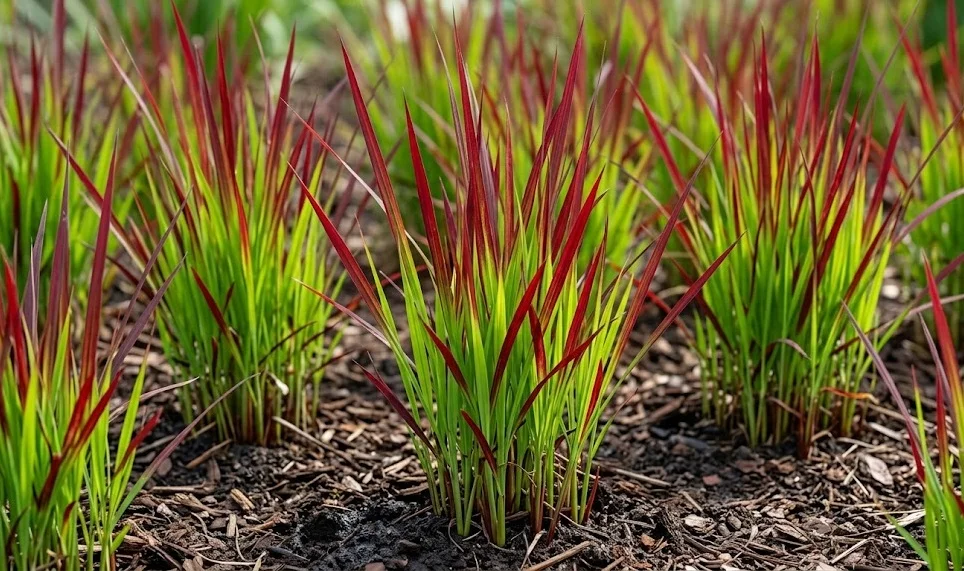

Light has a direct influence on the colour, strength and overall appearance of Japanese blood grass. Strong sunlight encourages the blades to develop their characteristic red tips and increasingly crimson surfaces. Shade produces a softer, greener plant that may lose much of its ornamental impact. The ideal exposure still depends on climate, soil moisture and the amount of heat reflected from surrounding surfaces.
Full sun and the development of red colour
In temperate climates, full sun is usually the best position for Japanese blood grass. At least six hours of direct light supports compact growth and strong pigmentation. Plants may receive even longer exposure when the soil retains moderate moisture. The leaves generally colour most intensely from midsummer into autumn.
Sunlight promotes the pigments responsible for the red appearance. Young shoots often emerge green and gradually develop colour from the tips downward. This transition is normal and should not immediately be mistaken for reversion. A reverted shoot remains green while surrounding leaves of a similar age become red.
Plants in full sun tend to stand more upright because the leaves do not need to stretch towards a light source. Their growth is often denser and more evenly coloured around the clump. Good exposure also helps wet foliage dry after rain. This can lower the risk of persistent spotting in humid weather.
Full sun increases water demand, particularly in sandy soil and containers. Colour quality declines if the leaves repeatedly scorch or dry at the tips. Adequate moisture allows the plant to benefit from bright light without suffering excessive stress. Mulching the soil and watering deeply can help maintain this balance.
More articles on this topic
Growing in partial shade
Japanese blood grass can grow in partial shade, but its colour usually becomes less intense. Morning sun followed by light afternoon shade may work well in very hot climates. The plant often remains greener for longer and develops red tones later in the season. Its final height may also increase as the leaves reach towards brighter conditions.
Shade cast by deciduous trees changes through the season. A site that is sunny in spring may become considerably darker once the canopy fills. Observe the area during summer rather than judging it only when the plant is dormant. Reduced colour developing over several years may result from expanding trees or shrubs.
Dense shade can lead to thin, floppy foliage and an open clump. Leaves may lean across neighbouring plants and lose the clean vertical form for which the grass is valued. Fertiliser will not compensate for insufficient light and may make the growth even softer. Moving the plant is usually the most effective remedy.
Partial shade also keeps soil moist for longer. Watering practices should therefore be adjusted rather than copied from a plant growing in full sun. Check the root zone and allow some surface drying between thorough waterings. Shade combined with excessive irrigation can create conditions favourable to crown and root decay.
More articles on this topic
Matching exposure to climate and garden design
In cool coastal or northern climates, the brightest available position is generally preferable. Lower light intensity and shorter summers reduce the risk of severe heat scorch. A south-facing border can provide the warmth needed for strong colour development. Avoid sites where taller plants shade the grass during most of the day.
In hot continental or subtropical climates, afternoon protection may preserve foliage quality. Strong reflected heat from paving, metal fencing or pale walls can raise leaf and root temperatures considerably. A position with morning sun and filtered late-day light may provide a useful compromise. The plant should still receive enough direct sun to develop red pigmentation.
Container plants can be moved to test different light conditions. Rotate the pot periodically so all sides of the clump receive similar exposure. Without rotation, leaves may lean and colour more strongly on one side. Avoid moving a shade-grown plant suddenly into intense midday sun because the existing foliage may scorch.
Use the plant’s appearance as a practical indicator. Strong upright leaves with expanding red colour suggest that light levels are suitable. Weak, green, leaning growth indicates that the position is probably too dark. Bleached patches and crisp edges may signal that intense light is interacting with heat or drought stress.