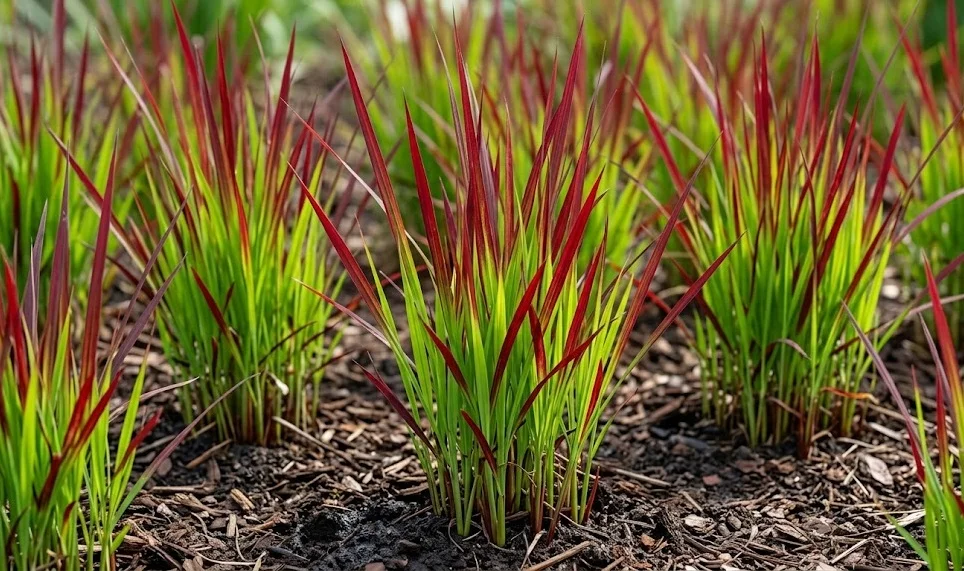

Japanese blood grass is generally resilient when grown in sunlight, well-drained soil and moderate fertility. Most serious problems arise after prolonged waterlogging, poor airflow, physical damage or excessive feeding. Pests are usually occasional rather than persistent, but stressed plants can become more attractive to sap-feeding insects and slugs. Early diagnosis is important because several environmental disorders closely resemble infectious disease.
Why healthy plants rarely suffer serious damage
Strong light encourages firm foliage that is less likely to collapse and remain damp. Adequate spacing allows rain and dew to dry from the leaves more quickly. Balanced watering keeps roots functional without creating the oxygen-poor conditions favoured by decay organisms. These simple cultural conditions form the plant’s most effective disease prevention system.
Overfed plants often produce soft tissues that bend, split and become more vulnerable to damage. Dense growth also traps moisture within the clump and reduces air circulation around the crown. Applying more fertiliser to a struggling plant can therefore make the situation worse. Diagnose the cause of weak growth before adding nutrients.
Old leaves naturally fade and die as winter approaches. This seasonal change should not be confused with a spreading disease. Normal senescence affects mature foliage gradually and usually occurs throughout the clump. Disease tends to create irregular lesions, premature collapse or localised areas of damaged tissue.
Mechanical injury can also imitate disease symptoms. Wind, hail, careless handling and contact with sharp tools may split the narrow blades. Damaged areas often dry into tan or brown marks. When no new lesions appear after the damaging event, treatment is usually unnecessary.
More articles on this topic
Root and crown rots
Root rot is most likely in soil that remains wet for long periods. Affected plants may lose vigour, develop yellowing leaves and fail to produce normal new shoots. The crown may feel soft, and roots can become dark, brittle or unpleasantly odorous. These symptoms indicate that the underground tissues are no longer functioning properly.
The first response is to reduce irrigation and determine why water is collecting. Compacted soil, blocked container drainage holes and low planting positions are common causes. Improving surface drainage alone may not be enough if the deeper soil remains saturated. Severely affected plants may need to be lifted and replanted in a raised, better-drained site.
When lifting a damaged clump, remove soft or discoloured tissue with a clean tool. Retain only firm divisions that have healthy pale roots and sound rhizomes. Replanting rotten material spreads the problem into fresh soil. Clean tools after use so that contaminated soil and plant sap are not transferred to other plants.
Crown rot can develop when mulch, fallen leaves or wet debris remains packed around the base. Keep the crown visible and allow air to move between emerging shoots. Water the soil rather than repeatedly flooding the centre of the clump. In containers, ensure the plant is not sitting below the surrounding rim where water can collect.
More articles on this topic
Leaf spots and foliage disorders
Fungal or bacterial leaf spots may appear as brown, tan or dark lesions on the blades. They are more likely during humid weather when leaves remain wet for extended periods. Spots can merge and cause larger sections of foliage to die prematurely. However, isolated marks do not always justify chemical treatment.
Remove heavily affected leaves when conditions are dry and dispose of them away from healthy ornamental grasses. Avoid cutting through wet foliage because moisture can spread contaminated plant material across the clump. Improve spacing and reduce overhead irrigation where possible. Clean fallen debris at the end of the season to lower the amount of infected material remaining nearby.
Leaf-tip browning is frequently environmental rather than infectious. Drought, hot wind, fertiliser salts and root injury can all produce dry tips. The damage is usually distributed fairly evenly and does not form expanding spots with distinct margins. Correcting moisture or feeding practices is more effective than applying a fungicide.
Scorching may occur when container plants move suddenly from shade into intense sun. The exposed areas become bleached, pale brown or papery. Acclimatise plants gradually by increasing their sunlight over several days. New growth should emerge normally once the plant adjusts, although damaged leaf tissue will not turn green again.
Common pests and their symptoms
Slugs and snails may feed on tender emerging shoots in spring. Their damage appears as irregular holes, shredded leaf edges or missing young growth near the soil surface. Silvery trails and feeding that occurs mainly overnight help confirm the cause. Keep dense debris away from the crown and use locally appropriate control methods when damage becomes significant.
Aphids occasionally gather on young leaves or stems, particularly on soft growth produced by heavy feeding. These insects remove sap and may cause curling, distortion or sticky honeydew. Small populations can often be removed with a firm stream of water. Encouraging predatory insects helps prevent minor infestations from becoming persistent.
Spider mites can become troublesome in hot, dry and sheltered conditions, especially on container plants. Fine stippling, dull foliage and delicate webbing are typical signs. Increase general plant hydration without leaving the soil waterlogged and wash the foliage thoroughly. Repeated inspection is necessary because mites reproduce quickly during warm weather.
Root-feeding larvae are less common but should be considered when a container plant declines despite apparently correct watering. The root ball may contain chewed roots, larvae or loose compost that no longer holds together. Remove visible pests and damaged root material during repotting. Replace the old growing medium and clean the container before replanting healthy divisions.
Prevention and accurate diagnosis
Inspect plants regularly rather than waiting for the entire clump to decline. Look beneath the leaves, inside the crown and around the container drainage holes. Early symptoms are easier to interpret before drought, rot and secondary pests begin interacting. Regular inspection is also essential for finding unwanted green reversions.
Use clean cutting tools whenever dead or diseased foliage is removed. Soil and plant residue should be wiped away before the tool is used on another clump. Disinfection is particularly valuable after cutting rotten crowns or suspicious lesions. Sharp blades create cleaner wounds that dry more rapidly than crushed tissue.
Chemical treatment should not be the first response to every mark or discoloured leaf. Many symptoms are caused by incorrect light, water, drainage or fertiliser levels. Applying a pesticide to an environmental disorder wastes material and may harm beneficial organisms. Confirm the likely cause and choose the least disruptive effective response.
A plant that declines repeatedly in the same position is signalling that the site may be unsuitable. Improving drainage, increasing sunlight or moving the clump can provide a more permanent solution than repeated treatments. Where local rules restrict Japanese blood grass, removal may also be the responsible choice. Healthy cultivation includes knowing when a different ornamental species would perform more safely and reliably.