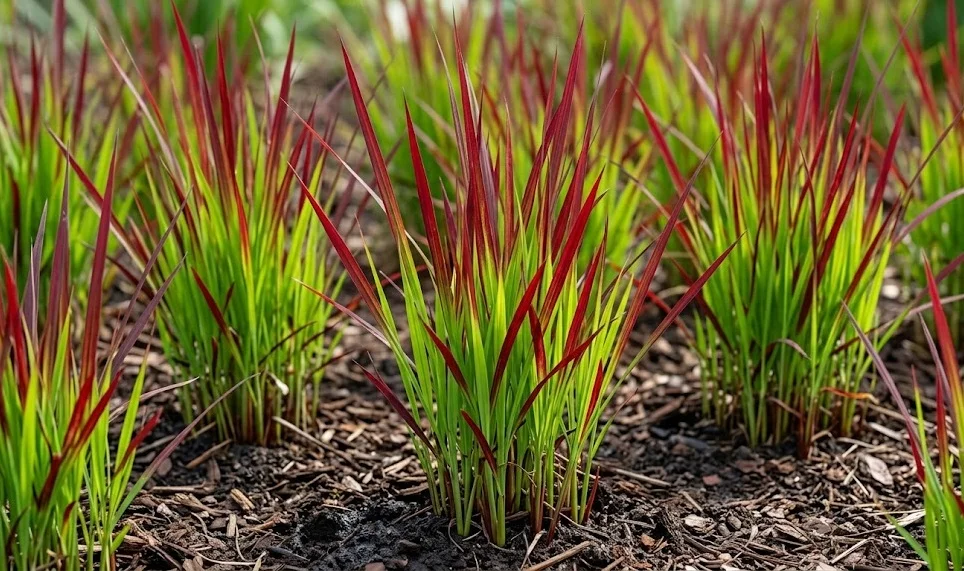

Japanese blood grass needs relatively little pruning, but the timing and method of cutting have a strong effect on spring appearance. The old foliage protects the crown through winter and should usually remain in place until the dormant season is nearly over. Cutting too late can damage emerging shoots, while cutting too early removes useful winter structure. Clean tools, protective gloves and careful inspection make the task safer and more effective.
Choosing the right time to cut back
Late winter or early spring is generally the best time for the main annual cut. The dry foliage has already provided winter interest and some insulation around the crown. New shoots may be visible at soil level but should not yet be tall. This timing allows the old material to be removed without sacrificing fresh growth.
In mild climates, new shoots may appear earlier than expected. Check inside the clump before cutting rather than relying only on the calendar. If young leaves are already several centimetres tall, work slowly and leave a slightly higher stump. Damaged new blades develop blunt brown tips that remain visible throughout the season.
Autumn cutting is usually unnecessary unless the foliage has collapsed, become diseased or created a practical hazard. Standing leaves continue to add texture after their red colour fades. They also catch frost and move attractively in winter wind. Leaving them intact reduces the amount of bare soil exposed around the crown.
A diseased clump may require earlier removal of affected foliage. Cut only when the leaves are dry and collect the material carefully. Do not leave infected debris packed around the plant. Clean the cutting tool before using it on healthy ornamental grasses.
More articles on this topic
Cutting the clump safely and cleanly
Wear sturdy gloves, long sleeves and eye protection when working with a large clump. The narrow leaves have sharp edges that can cut exposed skin. Gather the foliage into a bundle with soft twine before cutting. Bundling keeps the dry leaves under control and makes cleanup much easier.
Use sharp secateurs, hedge shears or a suitable powered trimmer, depending on the size of the clump. Cut the foliage to approximately ten to fifteen centimetres above the ground. The exact height should reflect the position of new growth. Never cut deeply into the crown or scrape across visible buds.
For a small plant, cut the bundle in several sections rather than forcing thick material through an unsuitable tool. Crushing the crown can damage rhizomes and create wounds that remain wet. A clean, level cut allows air and light to reach the base evenly. Remove loose fragments by hand after the main cutting is complete.
Dispose of the old foliage responsibly. Inspect the base for seed heads, rhizome fragments or green reverted shoots before composting any material. Where Japanese blood grass is regulated, follow local disposal requirements. Do not dump cut material beside roads, streams, fields or uncultivated ground.
More articles on this topic
Maintenance pruning and rejuvenation
During the growing season, remove individual broken or dead leaves at their base. Avoid shearing the entire clump to correct a few brown tips. Broad trimming creates a line of blunt, discoloured ends and spoils the natural shape. Correct the underlying moisture or wind problem instead.
Completely green shoots require more than ordinary pruning. Trace each green section into the crown and remove the attached rhizome. Cutting only the leaf blades allows the reverted growth to return. Continue checking the clump because additional green shoots may emerge later.
Older plants may become crowded, sparse in the centre or difficult to cut cleanly. Spring division is the best form of rejuvenation in this situation. Lift the clump and retain vigorous outer sections with healthy roots and reliable red colouring. Replanting smaller divisions restores airflow and produces a neater, denser display.
After cutting or division, clear mulch and debris away from emerging shoots. Water when the soil is dry, but do not keep the recently exposed crown saturated. Wait until active growth is visible before applying any modest spring feed. The plant should respond with clean upright foliage and progressively stronger red colour.