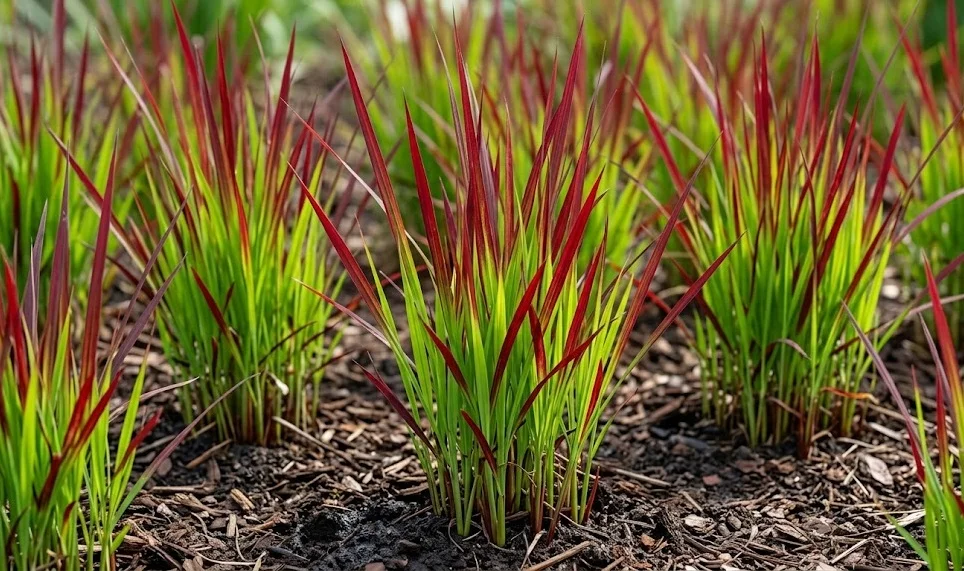

Japanese blood grass survives winter most successfully when its crown remains well drained and its roots are protected from repeated freezing and thawing. Cold tolerance varies with cultivar quality, plant maturity, exposure and soil conditions. In-ground plants are generally more stable than those growing in containers because garden soil changes temperature more slowly. Thoughtful autumn preparation reduces winter losses without forcing the plant into premature growth.
Understanding winter hardiness and exposure
The plant enters dormancy as temperatures fall and daylight decreases. Its foliage gradually loses red pigmentation, turns brown and stops producing new growth. This is a normal seasonal response rather than evidence that the plant has died. Viable rhizomes remain below the surface and produce fresh shoots when spring conditions improve.
Cold alone is not the only winter threat. Waterlogged soil can damage dormant roots even at temperatures that the plant would otherwise tolerate. Alternating frost and thaw may lift shallow crowns and break fine roots. Exposed wind can dry foliage, containers and surface soil more rapidly than expected.
A sheltered site near a building or evergreen screen may provide slightly warmer and more stable conditions. However, shelter should not create a permanently shaded, damp pocket. Good winter protection combines reduced wind with reliable drainage and some exposure to seasonal light. Low areas where cold air and water collect are generally unsuitable.
Recently planted divisions are more vulnerable than established clumps. Their root systems are smaller and may not yet anchor the crown securely. In cold regions, spring planting gives them the longest possible establishment period. Late autumn planting should be avoided where severe frost is likely soon after installation.
More articles on this topic
Preparing plants growing in the ground
Reduce fertiliser applications well before the end of the growing season. Late nitrogen encourages tender leaves that are easily damaged by frost and do not contribute to root hardiness. Continue watering during dry autumn weather so the plant does not enter winter severely dehydrated. Stop routine irrigation once rainfall and cool temperatures keep the soil naturally moist.
Leave the standing foliage in place through most of winter. The dry leaves catch snow, reduce sudden temperature changes around the crown and provide visual structure. They also help mark the plant’s position when no green growth is visible. Cutting everything to ground level in autumn can expose the crown unnecessarily.
Apply a light layer of loose mulch after the soil begins cooling. Shredded leaves, fine bark or similar material can reduce frost heaving and moderate moisture loss. Do not bury the crown beneath a dense, wet mound. Heavy mulch packed against the shoots may encourage rot and shelter slugs.
In very windy gardens, gather the dry leaves loosely and secure them with soft twine. This prevents them from whipping across neighbouring plants or breaking at the crown. The bundle should remain open enough for air to circulate. Remove the tie before spring growth begins so new shoots are not trapped.
More articles on this topic
Protecting container-grown plants
Roots in pots experience lower temperatures than roots protected by a broad mass of garden soil. Small containers are particularly vulnerable because they freeze quickly and thaw rapidly in winter sun. Move pots to a sheltered position beside a wall, inside an unheated structure or among other containers. The location should remain cool enough to preserve dormancy.
Raise the container slightly so drainage holes cannot become blocked by soil, leaves or ice. Pot feet, wooden strips or a stable gravel surface can improve drainage. Do not leave the pot standing in a water-filled saucer. Saturated compost followed by hard freezing can cause extensive root damage.
Insulate the outside of the container with horticultural fleece, breathable wrapping or another suitable protective material. Wrapping the pot is more important than wrapping the dormant foliage because the roots are the vulnerable part. Avoid non-breathable coverings that trap water around the drainage area. Large containers can also be grouped and packed around with dry insulating material.
Check the growing medium occasionally during mild weather. Dormant plants use little water, but the root ball should not remain completely dry for months. Water sparingly when the mixture is dry below the surface and when excess water can drain before severe frost returns. Frequent winter watering is unnecessary and increases the risk of root rot.
Spring recovery after winter
Do not assume the plant is dead simply because new shoots appear later than those of nearby perennials. Warm-season grasses often remain dormant until soil temperatures rise consistently. Wait for clear signs of growth before disturbing the crown unnecessarily. A firm crown and sound rhizomes usually indicate that recovery is still possible.
Cut old foliage back in late winter or early spring before the new blades grow tall. Use gloves because the leaf edges can be sharp. Remove the dry material a short distance above the crown rather than cutting into emerging buds. Clearing the old leaves allows sunlight and air to reach new shoots.
Inspect the crown for soft tissue, dead sections and unwanted green reversion. Damaged areas can be divided away once growth begins and healthy shoots are easy to identify. If frost has lifted the plant, firm the soil gently around exposed roots. Add fresh soil only as needed to restore the original planting depth.
Resume watering gradually as active growth increases. Apply fertiliser only after the plant is clearly producing new leaves and the soil is warming. A weak plant should not be forced with a heavy dose of nutrients. Steady moisture, sunlight and time are usually the most effective spring recovery treatment.