
Light is the primary fuel that drives the growth and determines the form of your dwarf mountain pine. These evergreens are naturally adapted to open, sun-drenched environments, and replicating these conditions is essential for their long-term health. You must carefully consider the light patterns in your garden throughout the day and across the changing seasons. A well-lit pine will maintain its characteristic dense growth and rich color, while one in deep shade will struggle to survive.
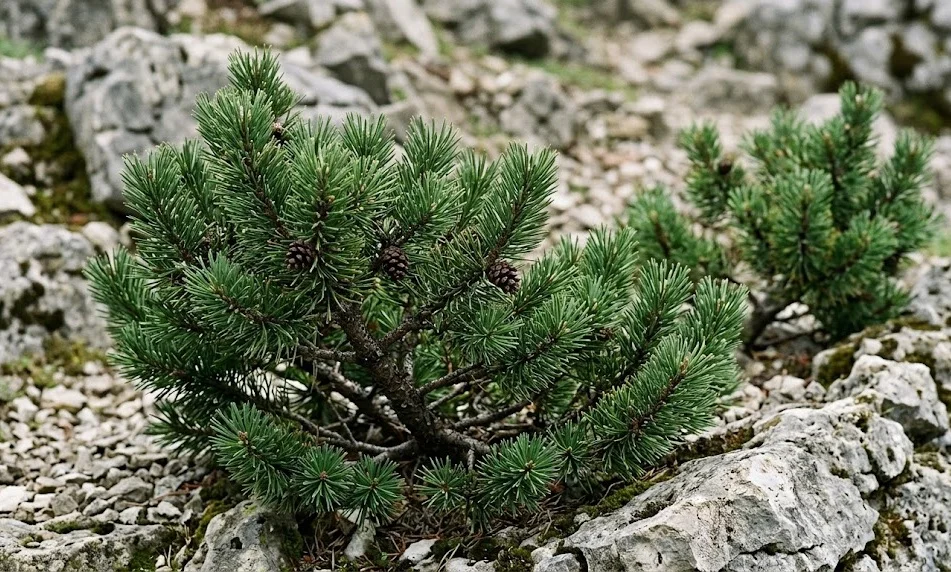
In their native habitats, dwarf mountain pines often grow above the timberline where they are exposed to intense, unfiltered sunlight. This history has made them highly efficient at processing light but also dependent on it for maintaining their compact structural integrity. You should aim for a location that provides at least six to eight hours of direct sun each day. Understanding how light interacts with your landscape is a professional skill that will greatly benefit all your gardening projects.
While they are sunlight enthusiasts, these pines do show some degree of flexibility depending on the local climate. In extremely hot regions, a bit of light afternoon shade can actually be beneficial in preventing heat stress and needle scorch. However, you must be careful not to tip the balance too far toward the shade, as this can lead to a host of problems. This article will guide you through the nuances of light management for this specific evergreen species.
We will explore the benefits of full sun, the consequences of excessive shade, and how to manage light in various landscape settings. You will learn how to identify if your pine is getting too much or too little light and how to make the necessary adjustments. By mastering the light requirements of the dwarf mountain pine, you ensure that it remains a stunning and structural centerpiece of your garden. Let’s look at the science and art of light exposure.
The benefits of full sun exposure
Full sun exposure is the ideal state for a dwarf mountain pine, as it encourages the shortest internodes and the densest needle growth. When the plant receives ample light, it can produce all the energy it needs through photosynthesis to build strong, woody stems. This results in the classic “mounded” or “cushion” shape that makes these pines so desirable in landscaping. You will find that sun-grown pines are much more resistant to the weight of snow and the force of wind.
More articles on this topic
Sunlight also plays a critical role in the color and health of the needles. In full sun, the foliage tends to be a deeper, more vibrant green, and the plant is better at resisting fungal diseases. The heat from the sun helps to quickly dry the needles after a rain or heavy dew, which is a key preventive measure against needle blight. A sunny location is fundamentally a healthier environment for this mountain-dwelling species.
During the spring, the intensity of the light is what triggers the expansion of the “candles” or new growth tips. If the light is strong and consistent, these candles will develop into sturdy new branches that add to the plant’s overall density. In lower light, the candles may become “leggy” as they stretch toward the sun, resulting in a more open and less attractive appearance. Maximizing sun exposure during the growing season is the best way to maintain the plant’s professional look.
Even in the winter, sunlight is important for the plant’s physiological processes, although the risk of desiccation is higher. The dark needles are very efficient at absorbing solar energy even when temperatures are low. This helps the plant maintain a baseline of activity that supports its winter resilience. Providing a sunny spot that is also protected from the wind is the “gold standard” for positioning a dwarf mountain pine.
Consequences of excessive shade
When a dwarf mountain pine is planted in too much shade, its growth habit begins to change in undesirable ways. You will notice that the branches become longer and thinner as the plant attempts to reach for more light. This “etiolation” destroys the compact, dwarf nature of the plant and makes it look sparse and weak. A shaded pine often loses its structural integrity and can easily be damaged by snow or wind.
More articles on this topic
The color of the needles will also suffer in a low-light environment, often turning a dull, yellowish-green. This is because the plant cannot produce enough chlorophyll to maintain its rich, dark color without sufficient light energy. Furthermore, the inner part of the plant may begin to die back completely as it is shaded out by the outer growth. A shaded pine is a stressed pine, and it will never look as healthy as one in the sun.
Shade also creates a more humid and stagnant environment around the needles, which is an open invitation for fungal diseases. Without the sun to dry the foliage, spores can easily germinate and spread throughout the canopy. You may find yourself constantly battling needle cast or blights in a shaded location, even if you follow all other care instructions perfectly. Light is one of the best natural fungicides you have at your disposal.
If you have a pine that is currently in too much shade, you should consider moving it to a sunnier location or thinning out the overhanging canopy. While the plant may take some time to recover and fill back in, the increase in light will immediately improve its long-term prospects. You must be careful to acclimate a shade-grown plant to the full sun gradually to avoid sunscald. Understanding the limits of the plant’s tolerance for shade is vital for successful garden planning.
Impact on growth habits and variety
Different cultivars of dwarf mountain pine may have slightly different light preferences, so it is always a good idea to research your specific variety. Some smaller, more compact selections are even more demanding of full sun to maintain their tiny proportions. Larger, more robust varieties might tolerate a bit more dappled shade, but they will still perform best in the sun. Always match the light levels of your site to the specific needs of the plant you have chosen.
The orientation of your house and other structures will create different light zones that change throughout the year. South-facing locations are generally the sunniest and warmest, making them excellent spots for these evergreens. North-facing sites, on the other hand, may be in shadow for much of the winter and early spring. You should observe how the shadows move across your garden during the different seasons before finalizing your planting plan.
If you are using dwarf mountain pines in a mixed border, you must ensure that they are not eventually “swallowed” by faster-growing neighbors. You should place them in the front or middle of the bed where they will have a clear view of the sky. Periodically pruning back any nearby plants that are beginning to cast too much shade on your pine is a necessary maintenance task. Keeping the light path clear is just as important as the initial planting location.
In very hot climates, “full sun” can be quite intense, and you might see some needle browning in the middle of a scorching summer. In these specific cases, providing a location that has full morning sun and some light afternoon shade is a smart professional move. This allows the plant to get its necessary light energy during the cooler part of the day while avoiding the peak heat. Adapting your understanding of light to your local climate is the mark of a truly expert gardener.