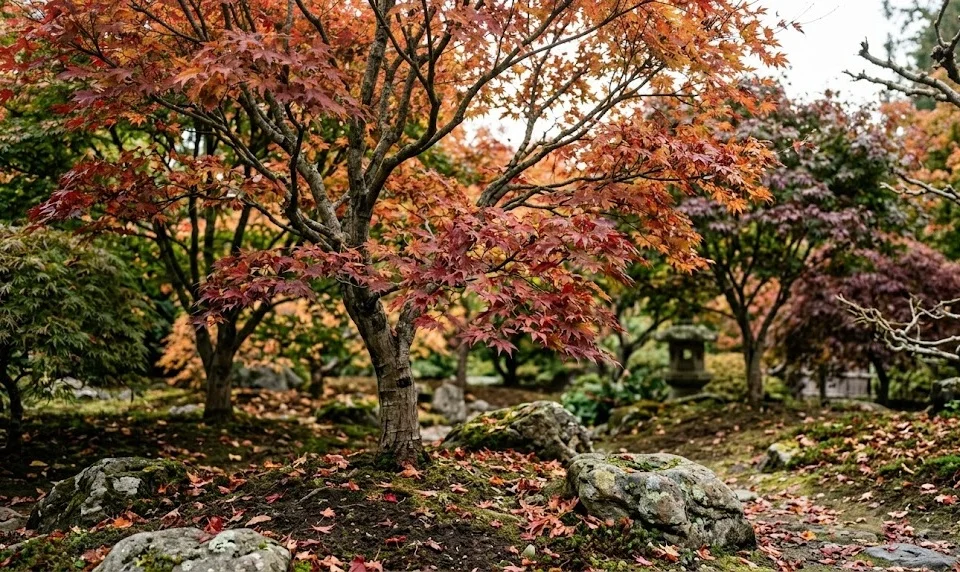

Understanding the light requirements of a Japanese maple is perhaps the most critical factor in ensuring the vibrant color and long-term health of your tree. While these plants are often categorized as shade-loving, the reality is a bit more complex and depends heavily on your specific climate and the variety you are growing. You will find that finding the “sweet spot” of illumination allows the tree to display its full aesthetic potential without suffering from environmental stress. A professional gardener knows how to read the leaves of the tree to determine if it is receiving the correct amount of light.
Ideal light conditions
Most Japanese maples perform best in a location that offers dappled sunlight or a combination of morning sun and afternoon shade. The gentle light of the morning allows the tree to photosynthesize efficiently without the risk of the intense heat that comes later in the day. In their natural habitat, these trees often grow in the understory of larger forests, where they are protected from the direct overhead sun. Mimicking this environment in your landscape is the surest way to achieve a healthy and beautiful specimen.
The specific color of the foliage often dictates the tree’s light preferences, with red and purple varieties generally needing more sun to maintain their deep hues. If a red-leafed maple is planted in too much shade, it may “revert” to a muddy green color as it tries to maximize its light absorption. Conversely, variegated and lime-green varieties are often much more sensitive and can be easily scorched by even a few hours of direct afternoon sun. Understanding the genetic heritage of your cultivar will help you make the best placement decision.
In cooler, northern climates, many maples can handle much more direct sun than they could in the south. The intensity of the UV rays and the ambient air temperature are just as important as the actual duration of the sunlight. You should observe how the light moves across your garden at different times of the year, as a spot that is shady in the spring might be in full sun during the summer solstice. A professional site assessment takes these seasonal shifts into account to ensure long-term success.
Air temperature also plays a significant role in how well a tree can tolerate bright light. Even a sun-tolerant variety can suffer if it is planted near a heat-reflecting wall or over a light-colored stone mulch. In these high-heat microclimates, the tree may lose moisture faster than its roots can supply it, leading to leaf stress. Providing a cool, well-ventilated environment allows the tree to handle higher light levels more effectively.
More articles on this topic
Managing sun scorch
Sun scorch is a common problem that occurs when the leaves are exposed to more intense light or heat than they are equipped to handle. The symptoms usually appear as brown, crispy edges on the leaves, or in severe cases, the entire leaf may turn brittle and fall off. This is most common during the first few heatwaves of the summer when the tree is still adjusting to the rising temperatures. While scorch is often an aesthetic issue, repeated occurrences can weaken the tree over time.
To prevent sun scorch, you can implement temporary shading measures during the hottest months of the year. Using a 30% to 50% shade cloth draped over a simple frame can provide the relief the tree needs during the peak afternoon hours. This is especially useful for young trees or newly planted specimens that haven’t yet established a deep enough root system to cope with high transpiration rates. Once the tree matures and its root system expands, it will naturally become more resilient to these environmental stresses.
Maintaining consistent soil moisture is another key strategy for helping your tree withstand bright light. A well-hydrated tree can use transpiration to cool its leaves, much like how humans sweat to stay cool. If the soil is dry, the tree loses this cooling mechanism, and the leaf temperatures can quickly rise to damaging levels. Mulching the root zone heavily is essential for keeping the soil cool and moist, which directly translates to better leaf health.
If your tree is already suffering from scorch, you should avoid the temptation to prune off the damaged leaves immediately. The brown edges actually provide a small amount of shade for the healthy tissue underneath and for the inner part of the canopy. You should focus on providing extra water and perhaps temporary shade to prevent the damage from progressing further. Most trees will recover and produce healthy new leaves the following spring, provided the underlying issues are addressed.
More articles on this topic
Dealing with deep shade
While many people think of Japanese maples as shade plants, placing them in deep, heavy shade can lead to a different set of problems. In very low light, the tree may become “leggy,” with long, spindly branches that are reaching toward any available light source. The foliage will often be sparse, and the tree may lose its characteristic dense, architectural form. Furthermore, the beautiful autumn colors are often much less intense in a tree that has been starved of light all season.
Air circulation is often poorer in deeply shaded areas, which can increase the risk of fungal diseases like powdery mildew. Without the sun to dry the leaves after rain or dew, the foliage stays wet for longer periods, providing a perfect nursery for spores. If you must plant in a shady spot, ensure the tree has plenty of space and that you are not over-watering the area. Keeping the interior of the canopy thin through careful pruning can also help improve light penetration and air movement.
You can improve the light levels in a shady spot by selectively pruning the overhanging branches of larger trees nearby. This “limbing up” allows more filtered light to reach the understory where your maple is growing. Using light-colored mulches or stones in the surrounding landscape can also help reflect a bit of extra light back onto the tree. Small adjustments to the environment can make a big difference in the vigor and appearance of a shade-grown specimen.
If you find that your tree is truly struggling in its current location, you may need to consider moving it to a brighter spot. Japanese maples can be transplanted relatively easily when they are young, provided the work is done during the dormant season. Moving a struggling tree to a location with better light can often result in a dramatic improvement in its health and beauty within a single growing season. Professional gardening involves the willingness to make these kinds of corrections for the long-term benefit of the plant.