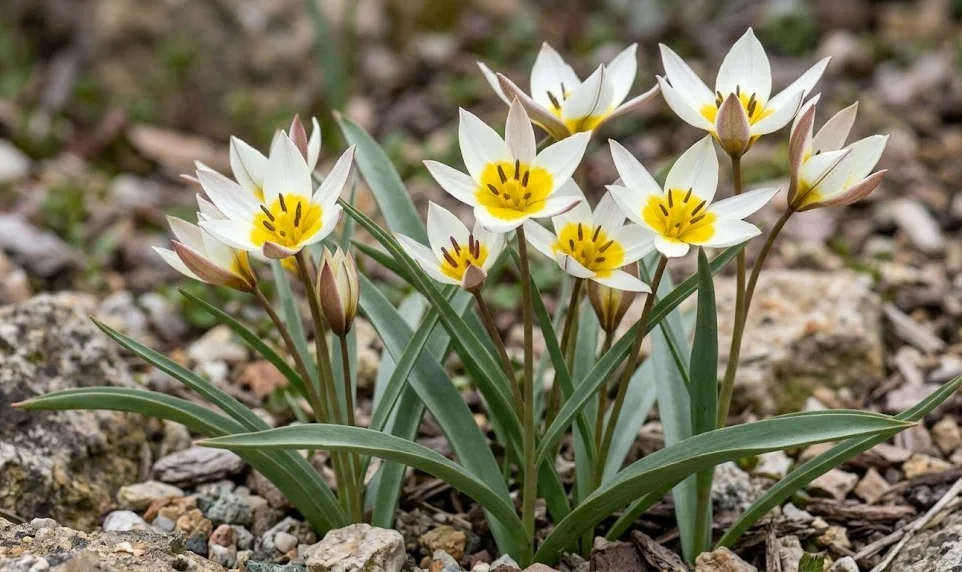

The Turkestan tulip is one of the most graceful species tulips, valued for its star-shaped flowers, early spring display, and naturally elegant habit. It is a small bulbous perennial that performs best when its seasonal rhythm is respected rather than forced. In the garden, it rewards careful placement, sharp drainage, and a light touch with water and nutrients. Its charm comes from its wildflower character, so successful care begins with creating conditions that feel close to its native, open, stony habitats.
Understanding the plant’s natural character
The Turkestan tulip grows differently from many large hybrid tulips bred mainly for dramatic flower size. It usually produces several delicate blooms on each stem, creating a soft, natural cluster rather than a single oversized flower. This makes it especially useful in rock gardens, gravel borders, naturalistic plantings, and sunny spring beds. Its refined appearance works best when it is allowed to spread gently and appear informal.
This tulip follows a clear seasonal cycle, and good care depends on recognizing each stage. In autumn, the bulb develops roots while the soil is cool and moist. In late winter or early spring, shoots emerge quickly and the plant moves toward flowering. After bloom, the leaves remain essential because they rebuild the bulb for the following year.
Unlike bedding tulips that may decline after one spectacular season, this species can settle into a garden for many years. It is often more persistent than heavily bred tulip varieties when the soil suits it. The key is to avoid conditions that keep the bulb wet during dormancy. A dry summer rest is just as important as moisture during active growth.
Gardeners sometimes lose species tulips by treating them like thirsty border perennials. The Turkestan tulip does not want rich, constantly damp soil or heavy feeding. It prefers lean, open ground where water drains away rapidly. Once this basic requirement is met, the plant is usually easy, reliable, and surprisingly resilient.
More articles on this topic
Choosing the right garden position
A sunny position is the foundation of healthy growth. The Turkestan tulip flowers best where it receives strong light during late winter and spring. Full sun encourages compact stems, well-colored flowers, and sturdy foliage. In too much shade, the plant may stretch, bloom weakly, or gradually lose vigor.
A site beneath deciduous shrubs or small trees can also work if spring light reaches the bulbs before the canopy closes. This is useful in gardens where open sunny spaces are limited. The bulb completes most of its visible growth before many woody plants cast dense shade. However, the soil under trees must not be overly dry in early spring or too root-bound.
Raised beds, slopes, and rock garden pockets are particularly suitable. These positions naturally shed excess water and warm earlier in the season. Gravelly planting areas also help protect bulbs from rot during wet weather. When the tulip is planted in low, compacted soil, the risk of decline increases sharply.
Air movement should not be overlooked. Open, airy sites allow foliage to dry quickly after rain and reduce fungal pressure. At the same time, the plant is small and can be overwhelmed by aggressive neighbors. It should be placed where it can receive light and space without being crowded by dense groundcovers.
More articles on this topic
Preparing soil for long-term success
The best soil for the Turkestan tulip is well drained, moderately fertile, and not excessively rich. A sandy loam or gritty garden soil is ideal. Heavy clay can be improved, but it must be amended deeply enough to change drainage around the bulb zone. Simply adding a handful of sand to a planting hole is rarely enough.
If the soil is compact, loosen it thoroughly before planting. Incorporating fine gravel, horticultural grit, or coarse mineral material can improve structure. Compost may be added sparingly, but it should not dominate the mix. Too much organic matter can hold moisture around the bulbs and encourage decay.
Soil reaction is usually less important than drainage, although neutral to slightly alkaline conditions are often suitable. The plant generally tolerates ordinary garden soil if water does not stagnate. In containers, a gritty bulb compost or a free-draining mix is better than standard moisture-retentive potting soil. The aim is to give roots enough moisture in growth but prevent wetness during dormancy.
A prepared planting area should settle before bulbs are installed if major soil improvement has been done. This prevents bulbs from sinking too deeply into loose ground. It also helps create a stable root zone. In perennial borders, mark the planting area so the bulbs are not accidentally disturbed later.
Watering through the growing season
Watering should follow the plant’s active growth rather than a fixed routine. After autumn planting, natural rainfall is often enough to initiate rooting. If the autumn is unusually dry, a single deep watering can help the bulbs establish. Frequent shallow watering is less useful and can create damp surface conditions.
During spring growth, the Turkestan tulip appreciates moderate moisture. This is especially true when shoots are extending and flower buds are developing. Dry soil at this stage can shorten stems and reduce flowering quality. However, the soil should never remain saturated.
Once flowering has finished, watering should gradually decrease. The foliage still needs enough moisture to photosynthesize and recharge the bulb. At the same time, excessive watering after bloom can delay ripening and raise the risk of bulb disease. The best approach is balanced moisture while leaves are green, followed by drier conditions as they yellow.
Summer watering is usually unnecessary and may be harmful. The bulb naturally expects a dormant period in relatively dry soil. In mixed borders that receive regular irrigation for summer plants, this can become a problem. Planting the Turkestan tulip with drought-tolerant companions helps protect its summer rest.
Feeding and maintaining bulb strength
This tulip does not need heavy fertilization. A light application of a balanced, low-nitrogen bulb fertilizer in early spring can support healthy growth. The goal is to strengthen the bulb rather than force lush leaves. Excess nitrogen can produce soft tissue that is more vulnerable to disease.
Feeding is most useful in poor soils or where the bulbs have been growing for several years. Apply fertilizer when shoots appear, then allow rainfall or light watering to move nutrients into the root zone. Avoid placing concentrated fertilizer directly against bulbs. Direct contact can damage roots or young growth.
After flowering, the leaves must be left in place until they yellow naturally. This is one of the most important care practices for all tulips, and it is especially important for species tulips intended to persist. Cutting foliage too early weakens the bulb and reduces future flowering. The plant may look untidy for a short time, but this stage determines next year’s display.
Spent flowers may be removed if seed production is not desired. This prevents energy from being diverted into seed capsules. However, some gardeners allow a few seed heads to mature in naturalistic plantings. Where conditions are favorable, the plant may self-sow lightly and create a more spontaneous colony.
Managing growth in beds and containers
In garden beds, the Turkestan tulip is best treated as a permanent bulb rather than a seasonal decoration. It should be planted where it can remain undisturbed for several years. Repeated lifting is usually unnecessary unless the bulbs become crowded or the site becomes too wet. The plant often performs better once settled.
Companion planting should be chosen with care. Low-growing early perennials, small grasses, and drought-tolerant groundcovers can frame the tulips without smothering them. Avoid vigorous plants that create dense shade just as the tulip foliage is ripening. The leaves need light after flowering, even when the flowers are gone.
Container growing is possible and can be very effective. Use deep pots with drainage holes and a gritty compost. Containers should be kept cool and outdoors during winter because the bulbs need cold conditions to root and develop properly. After flowering, pots should be moved to a sheltered place where the compost can dry gradually.
In containers, bulbs are more exposed to temperature swings and drying than they are in the ground. This means watering must be checked carefully during active growth. At the same time, container bulbs can rot quickly if kept wet in summer. A dry, shaded rest after the foliage dies back is often the safest method.
Encouraging reliable flowering year after year
Reliable flowering depends on strong bulbs, good light, and a dry enough dormant period. If plants bloom poorly, the first causes to check are shade, wet soil, premature leaf removal, and overcrowding. These problems are more common than true nutrient deficiency. Correcting the growing conditions usually restores performance.
Bulbs that have multiplied into dense clusters may eventually produce fewer flowers. When this happens, they can be lifted after the foliage has died down. Separate the offsets gently and replant the healthiest bulbs at proper spacing. Smaller offsets may take a year or more to reach flowering size.
Pests such as rodents can sometimes damage bulbs, especially in loose soil. Planting in mesh baskets may help where this is a regular problem. Good site hygiene also matters because rotting bulbs can attract further trouble. Remove any soft or diseased bulbs as soon as they are noticed.
The Turkestan tulip is at its best when the gardener works with its natural rhythm. Give it sun in spring, drainage throughout the year, modest feeding, and a dry summer pause. Avoid overhandling, overwatering, and overfertilizing. Under these conditions, it can become one of the most dependable and poetic early tulips in the garden.