
Providing the correct amount and quality of light is perhaps the most technical aspect of caring for these iconic tropical plants. While they are often associated with the dimly lit corners of living rooms during the holidays, their true nature is that of a sun-loving shrub. You must understand that light serves two distinct purposes for this species: basic survival through photosynthesis and the complex timing of its blooming cycle. Balancing these two needs is the secret to keeping your plant healthy and vibrant throughout its entire life cycle.
During the winter months when the plant is in full bloom, it requires bright, indirect light to maintain the health of its foliage. A south-facing window with a thin curtain is often the ideal location for these plants in the northern hemisphere. You should avoid placing the plant in a dark corner far from windows, as this will lead to rapid leaf drop and a loss of color intensity. While the plant can tolerate lower light for a few days during a party or event, it must be returned to a bright spot for its long-term health.
The intensity of the light is just as important as the duration, especially during the short days of winter. You should ensure that the leaves are not touching the cold glass of a window, as the temperature difference can be damaging. If your home does not have many bright windows, you might consider using a full-spectrum grow light to supplement the natural light. Providing at least six hours of bright light daily will help keep the plant looking fresh and prevent it from becoming “leggy” or weak.
You should also be aware that direct, harsh afternoon sun can be too much for the delicate bracts and may cause them to fade or burn. This is particularly true if the plant is placed in a window that acts like a magnifying glass. Finding that “sweet spot” where the light is abundant but filtered is the mark of an experienced grower. Observing the plant’s reaction to its placement will help you make small adjustments that can lead to much better results over time.
Managing light during the growing season
When the blooming phase ends and the plant begins its vegetative growth in the spring and summer, its light requirements increase significantly. To grow a strong, bushy plant with many branches, you must provide as much bright light as possible. This is the time when the plant is building up the energy reserves it will need for the next winter season. If the light levels are too low during the summer, the plant will grow thin, weak stems that cannot support the weight of future blooms.
More articles on this topic
If you choose to keep your plant indoors during the summer, a sunny windowsill is essential for its development. You should rotate the plant by 90 degrees every week to ensure that all sides receive equal light and the plant grows symmetrically. This simple habit prevents the plant from leaning toward the window and creating an unattractive, one-sided shape. High light levels also encourage the production of smaller, tougher leaves that are more resistant to pests and diseases.
For those who move their plants outdoors in the summer, the transition must be handled with great care to avoid light shock. You should start the plant in a fully shaded area and gradually move it into a spot with dappled sunlight over a period of two weeks. Direct outdoor sun is many times more intense than indoor light, and even a “sun-loving” plant can be scorched by sudden exposure. Once acclimated, the plant will benefit from the high-intensity light and the natural UV rays found outside.
The goal of summer lighting is to produce a plant that is compact, dark green, and structurally sound. You will notice that the internodes, or the space between the leaves on the stem, are much shorter when the light is abundant. This creates a much more attractive and “professional” looking plant than the lanky specimens often seen in neglected collections. By maximizing light during the summer, you are setting the stage for a spectacular display in the coming winter.
Photoperiodism and the science of color
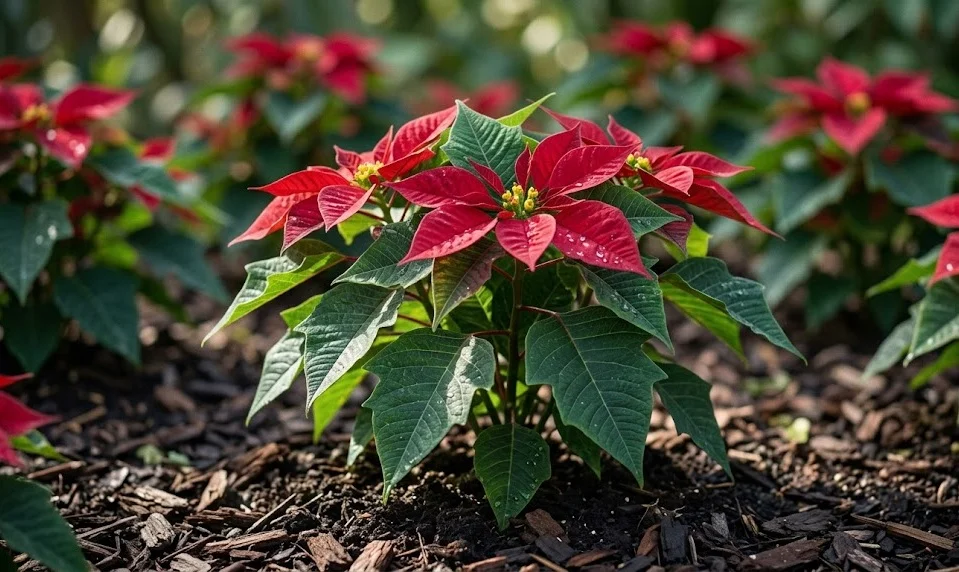
The most fascinating aspect of this plant’s light requirement is its sensitivity to the length of the night, a phenomenon known as photoperiodism. To trigger the change from green leaves to colorful bracts, the plant must experience long, uninterrupted periods of darkness. In nature, this happens as the days shorten in autumn, but in a modern home with artificial lights, you must manually control this environment. You should understand that even a few seconds of light during the dark period can reset the plant’s internal clock and delay blooming.
More articles on this topic
Starting in late September, you must provide the plant with at least 14 hours of total darkness every single night for about eight to ten weeks. This usually means placing the plant in a completely dark closet or covering it with a light-proof box from 6 PM to 8 AM. During the remaining 10 hours of the day, the plant must receive the brightest light possible to fuel the production of pigments. This strict “short day” routine is what triggers the hormonal changes that lead to the beautiful holiday colors.
Consistency is the most important factor during this transition phase, as any break in the routine can ruin the entire process. You should set a timer or a daily reminder to ensure the plant is moved or covered at the exact same time every day. Many people fail at this stage because they forget just one night or leave a small gap in the covering that allows light to leak in. It is a demanding process, but it is the only way to achieve professional-grade results with a carry-over plant.
Once the bracts have fully colored up and you can see the small yellow flowers in the center, the light-sensitive phase is over. You can then stop the darkness treatment and keep the plant in its normal winter display location. The plant will remain colorful for several months, provided it continues to get enough daytime light to stay healthy. Understanding this complex relationship between light and the plant’s biology is what separates the casual hobbyist from the expert gardener.