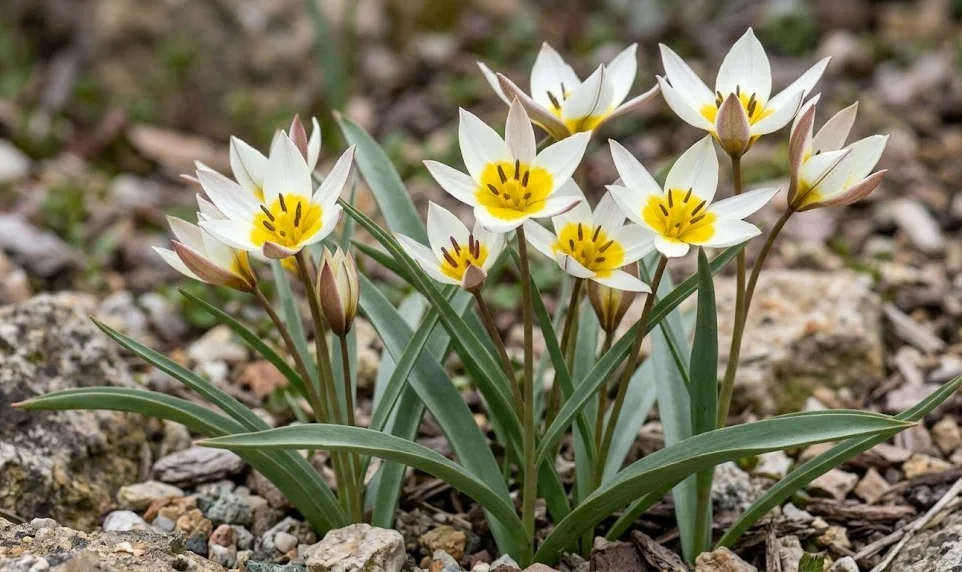

The Turkestan tulip needs very little pruning, but the timing of cutting back is extremely important. Its leaves are not just decorative spring growth; they are the bulb’s energy factory for the following year. Removing them too early weakens the plant and can reduce future flowering. Good maintenance means removing only what is no longer useful while allowing the bulb to complete its natural cycle.
Deadheading after flowering
Deadheading is optional but often beneficial. Once the flowers fade, the plant may begin forming seed capsules. If seed is not needed, removing spent flowers helps redirect energy into the bulb. This is especially useful when the goal is reliable flowering from established clumps.
The correct method is simple. Remove only the faded flower head or developing seed capsule. Leave the stem and all leaves in place. These green parts continue photosynthesizing after the petals fall.
Deadheading should be done gently because species tulips are small and delicate. Pulling roughly can loosen the bulb in the soil. Use clean fingers or small scissors if the stem is tough. Avoid damaging nearby leaves or emerging offsets.
Some gardeners choose not to deadhead in naturalistic plantings. Allowing seed to ripen can encourage a more spontaneous colony over time. This approach works best where the plant is already strong and growing in suitable conditions. If bulbs are weak, deadheading is usually the better choice.
More articles on this topic
Leaving foliage to ripen naturally
The leaves should remain until they turn yellow or brown naturally. This ripening process allows nutrients to move back into the bulb. Cutting green foliage interrupts storage and weakens future growth. Even a small species tulip depends heavily on this short period of photosynthesis.
Do not tie or braid the leaves. Although this may look tidier, it reduces light exposure and limits the plant’s ability to feed itself. The foliage should be allowed to spread naturally. Surrounding plants can help disguise it without covering it completely.
Wait until the leaves detach easily or have clearly dried before removing them. At that stage, they have done their job. They can be lifted away by hand or clipped close to the soil surface. Avoid digging around the bulb unless division is planned.
In formal beds, the fading foliage may feel untidy. The best solution is thoughtful companion planting rather than early cutting. Low, late-emerging perennials can hide yellowing leaves while still allowing light through. This keeps the border attractive without harming the bulbs.
More articles on this topic
Cutting back, dividing, and seasonal cleanup
Seasonal cleanup should happen after dormancy begins. Remove dry stems and leaves to reduce debris around the planting area. Clean ground also makes it easier to monitor pests and mark bulb positions. However, excessive soil disturbance should be avoided.
If the clump has become crowded, cutting back can be combined with lifting and dividing. Wait until all top growth has died down. Lift bulbs carefully with a fork, keeping enough distance to avoid slicing them. Separate firm offsets and discard any soft or diseased bulbs.
Replanting does not always need to happen immediately, but bulbs should not be stored carelessly. If stored, they require a dry, cool, airy place. Label them clearly so they are not forgotten before autumn planting. Small bulbs can dry out faster than larger tulip bulbs, so storage should not be prolonged unnecessarily.
The best pruning approach is restraint. Remove faded flowers if seed is not wanted, leave green foliage alone, and clear dry growth only after ripening. This simple rhythm protects the bulb’s energy cycle. With careful timing, the Turkestan tulip remains healthy, persistent, and floriferous for many springs.