
Coral bells are among the most adaptable foliage perennials for modern gardens, valued as much for their colorful leaves as for their airy flower spikes. They fit naturally into borders, shaded courtyards, woodland plantings, containers, and mixed perennial beds where texture matters throughout the season. Their care is not difficult, but the best results come from understanding how soil, light, moisture, and seasonal maintenance work together. When grown in the right place, coral bells can remain attractive for many years with only moderate attention.
Choosing the right growing position
Coral bells perform best in a position that offers bright but gentle light. Morning sun with afternoon shade is often ideal, especially in regions with hot summers. In cooler climates, many varieties tolerate more direct sun, particularly those with darker or thicker foliage. The aim is to provide enough light for strong leaf color without exposing the plant to scorching heat.
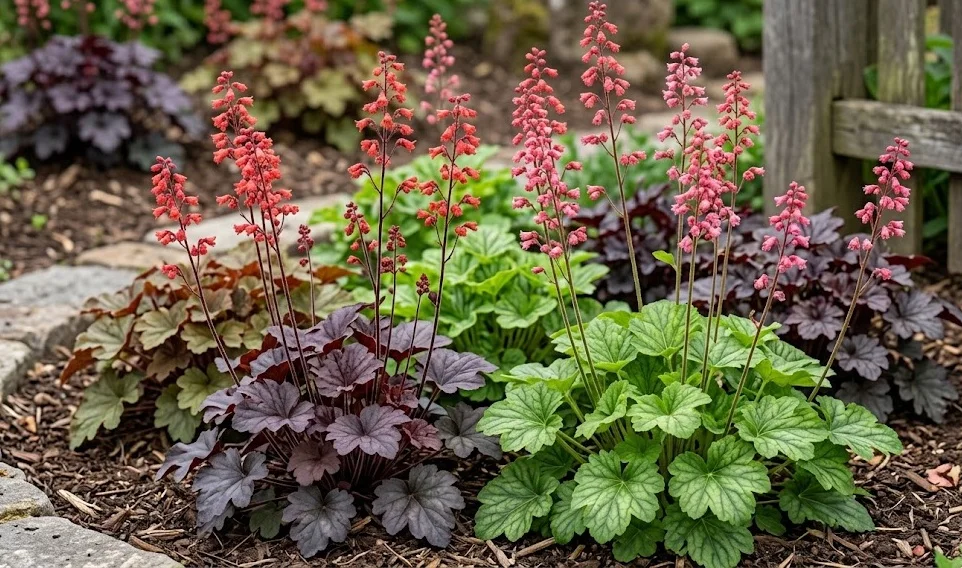
The leaf color of coral bells often gives a useful clue about light tolerance. Deep purple, bronze, and burgundy varieties usually cope better with sun than lime-green or yellow-leaved selections. Pale foliage can look spectacular in shade, but it may scorch if exposed to intense midday sun. Observing the leaves during the first growing season helps determine whether the plant needs a slightly brighter or more protected spot.
Air movement is also important, although coral bells should not be placed in a harsh, drying wind. A sheltered border with good ventilation reduces the risk of fungal problems and keeps the foliage fresh. Dense, stagnant shade can lead to weak growth and fewer flowers. A balanced site allows the crown to stay healthy while the leaves develop their full ornamental value.
In containers, position matters even more because the root zone warms and dries faster than garden soil. Pots placed against south-facing walls may become too hot for many varieties during summer. A lightly shaded patio, balcony corner, or entrance area often suits them well. Moving containers slightly during heatwaves can prevent leaf scorch and unnecessary stress.
More articles on this topic
Soil structure and planting conditions
Coral bells prefer humus-rich, loose, well-drained soil that remains moderately moist without becoming waterlogged. Their roots dislike compacted ground, especially in winter when stagnant moisture can damage the crown. Before planting, it is useful to improve heavy soil with compost, leaf mold, fine bark, or grit. This creates a more open structure and supports steady root growth.
The crown of the plant should sit at soil level rather than being buried deeply. If planted too low, moisture can collect around the growing point and encourage rot. If planted too high, the roots may dry out or become exposed after frost movement. Careful planting depth is one of the simplest ways to improve long-term success.
Soil fertility should be moderate rather than excessive. Very rich soil can produce lush, soft foliage that is more vulnerable to pests, disease, and weather damage. A compost-enriched planting area is usually enough for the first season. Overfeeding often does more harm than good, especially with varieties grown primarily for their leaf color.
Mulching helps protect the shallow root system and keeps the soil evenly cool. A thin layer of composted bark, leaf mold, or mature compost works well around the plant. The mulch should not be piled against the crown, because trapped moisture can cause problems. Leaving a small open ring around the base keeps the growing point healthy.
More articles on this topic
Watering for steady growth
Coral bells need consistent moisture, especially during establishment and dry periods. Newly planted specimens should be watered deeply rather than sprinkled lightly. Deep watering encourages roots to move down into the soil instead of remaining near the surface. Once established, the plant can tolerate short dry spells, but prolonged drought reduces leaf quality.
The best watering rhythm depends on soil type, weather, and exposure. Sandy soils dry quickly and may require more frequent attention in summer. Clay soils hold water longer, but they must not remain saturated around the crown. Checking the soil by touch is often more reliable than following a fixed calendar.
Watering in the morning is generally the safest approach. It allows foliage and soil surfaces to dry gradually during the day. Evening watering can be useful in extreme heat, but wet leaves overnight may increase disease pressure in humid conditions. Directing water to the soil rather than the foliage keeps the plant cleaner and healthier.
Container-grown coral bells need closer monitoring than plants in open ground. Pots can dry out quickly during warm or windy weather, even when the garden soil remains moist. A high-quality potting mix with good drainage and moisture retention is essential. Containers should always have drainage holes, because standing water is one of the fastest ways to damage the roots.
Feeding and maintaining leaf color
Coral bells are not heavy feeders, but they benefit from gentle nutrition during active growth. A spring application of mature compost is often enough in garden beds. Slow-release organic fertilizer can also be used in modest quantities. The goal is to support steady growth rather than force rapid expansion.
Excess nitrogen should be avoided because it can soften the foliage and reduce the intensity of some leaf colors. Varieties with silver, caramel, purple, or lime foliage often look best when growth is balanced. Too much fertilizer may also encourage large leaves that are less resistant to heat and drought. A restrained feeding program usually produces stronger, more attractive plants.
In poor soils, a light second feeding after flowering can help the plant rebuild energy. This is especially useful if the foliage has been trimmed or damaged during summer. However, feeding late in the season should be avoided in cold climates. Late soft growth may not harden properly before winter.
Container plants need slightly more regular feeding because nutrients wash out with watering. A diluted liquid feed or slow-release fertilizer can be applied during spring and early summer. Feeding should be reduced during intense heat if the plant is not actively growing. Stressed plants should be watered and stabilized before any fertilizer is added.
Seasonal grooming and pruning
Coral bells remain attractive for much of the year if old leaves are removed regularly. Damaged, faded, or winter-burned foliage can be cut away in early spring. This makes room for fresh leaves and improves air circulation around the crown. Clean pruning also reduces hiding places for pests and disease spores.
Flower stalks can be left in place while they are attractive and beneficial to pollinators. Once the flowers fade, spent stems may be cut back to the base. Removing old stalks keeps the plant tidy and redirects energy into foliage and root strength. Some gardeners leave a few dry stems for a natural look, but this is mainly a design choice.
Avoid cutting the entire plant hard during hot, dry weather unless it is severely damaged. Sudden removal of foliage can expose the crown to sun and stress the roots. A gradual tidy-up is safer and maintains the plant’s ornamental role in the border. Heavy renewal pruning is best done in spring, when recovery is strongest.
Tools should be clean and sharp, especially when working near the crown. Ragged cuts can invite infection and leave the plant looking untidy. Removing debris from around the base is just as important as cutting the leaves. A clean crown area helps coral bells enter each season in better condition.
Long-term rejuvenation
After several years, coral bells may lift from the soil or develop a woody-looking crown. This is common because the plant grows gradually upward with age. When the crown becomes exposed, the plant may dry out more easily and lose vigor. Replanting or dividing restores stability and encourages fresh growth.
Division is usually needed every three to five years, depending on the variety and growing conditions. Vigorous plants may require attention sooner, while slower varieties can remain compact longer. The best divisions are taken from healthy outer sections with strong roots and fresh shoots. Old, woody central pieces are usually less useful and may be discarded.
Spring is often the safest time for rejuvenation in colder climates. The plant then has a full growing season to rebuild roots before winter. In milder regions, early autumn division can also work well if soil remains warm and moist. The key is to avoid dividing during drought, frost, or extreme heat.
Rejuvenated plants should be watered carefully and shaded lightly if conditions are bright. They may look modest at first, but healthy divisions usually recover quickly. A thin compost mulch helps stabilize soil moisture while roots re-establish. With this periodic renewal, coral bells can remain valuable garden plants for many seasons.
Designing with coral bells
Coral bells are especially useful because they provide color even when not in flower. Their foliage can connect different planting groups, soften hard edges, and brighten shaded spaces. Purple and bronze varieties add depth, while lime and amber types create contrast. Silver-veined leaves are excellent near paths where their detail can be appreciated closely.
They combine well with ferns, hostas, sedges, foamflowers, lungworts, hellebores, and shade-tolerant grasses. In sunnier beds, they can partner with ornamental sages, low grasses, hardy geraniums, and compact asters. Their rounded leaves contrast beautifully with fine, upright, or arching foliage. This makes them valuable not only as colorful plants but also as structural elements.
In containers, coral bells can act as the main foliage feature or as a companion plant. They work well with trailing ivy, violas, small grasses, and seasonal bulbs. Their leaves remain decorative long after many flowering plants have finished. A container built around coral bells can look refined from spring into late autumn.
For professional-looking plantings, repeat the same variety in small groups rather than scattering single plants randomly. Repetition creates rhythm and makes the foliage color feel intentional. Mixing too many strongly colored varieties can look restless unless the design is carefully controlled. A restrained palette usually gives coral bells their greatest visual impact.