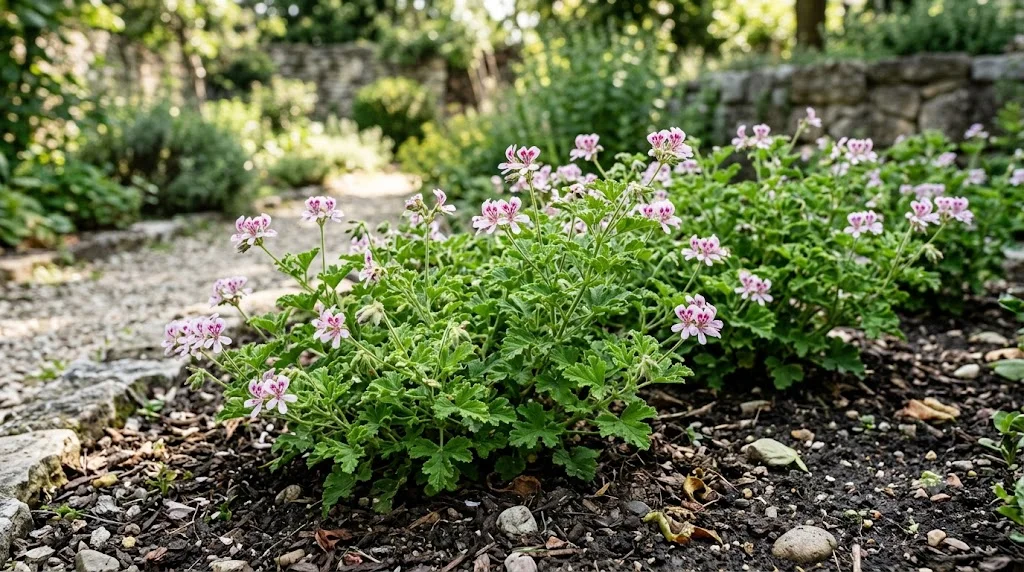

Lemon-scented geraniums are generally resilient, yet poor drainage, stagnant air and weakened growth can make them susceptible to disease and pest attack. Most serious problems begin when environmental conditions remain unsuitable for an extended period. Early symptoms should be investigated before damaged leaves and stems are removed without understanding the cause. Prevention, accurate diagnosis and measured treatment provide better results than repeated indiscriminate spraying.
Healthy plants possess stronger natural resistance than stressed specimens. Bright light, moderate feeding and correct watering produce firm tissues that are less attractive to many pests. Clean tools and fresh compost reduce the chance of introducing disease. Regular inspection makes it possible to respond while infestations remain small.
Indoor plants are particularly vulnerable during winter because natural predators are absent and ventilation is limited. Warm, dry rooms favour spider mites, while soft growth can attract aphids and whiteflies. Outdoor plants may encounter caterpillars, slugs or fungal spores carried by rain. Different environments therefore create different risks.
Not every damaged leaf indicates infection. Sun scorch, cold injury, fertilizer burn and irregular watering can resemble disease symptoms. A careful assessment should include the compost, roots, stems and recent growing conditions. Treating an environmental problem with pesticide wastes time and may further stress the plant.
Preventing problems through good cultivation
Start with clean containers and a fresh, well-drained growing medium. Old compost may contain pest eggs, fungal structures or decaying roots. Pots reused from unhealthy plants should be scrubbed and disinfected. Drainage holes must remain open throughout the season.
More articles on this topic
Space plants so that air can move between their leaves. Crowded foliage stays damp longer after watering or rain. Removing dead leaves and weak inner shoots improves ventilation. This simple maintenance reduces the conditions in which many fungi become established.
Avoid excessive nitrogen fertilizer because it produces tender, lush shoots. Soft tissues are readily colonized by aphids and other sap-feeding insects. Balanced nutrition creates slower, sturdier growth. Plants should never be forced into constant rapid growth when light levels are poor.
Inspect new plants before placing them near an established collection. Check leaf undersides, shoot tips and stem joints for insects or webbing. Keeping new arrivals separate for a short period can prevent an unnoticed infestation from spreading. Cuttings should be taken only from healthy parent plants.
Fungal and bacterial leaf problems
Grey mould may develop on ageing flowers, damaged stems or dead foliage under humid conditions. Affected tissue becomes brown and may develop a fuzzy grey coating. Remove infected material promptly and improve air circulation. Water the compost directly so that leaves remain dry.
More articles on this topic
Leaf spots can appear as brown, tan or dark lesions, sometimes surrounded by yellow tissue. Several fungi and bacteria can produce similar symptoms. Remove severely affected leaves and avoid splashing water between plants. Persistent cases may require an appropriate treatment labelled for ornamental geraniums.
Rust diseases may produce pale spots on upper leaf surfaces and rusty or brown pustules underneath. Infected leaves often yellow and fall prematurely. Isolate the plant because spores spread through moving air and water droplets. Dispose of badly affected foliage rather than adding it to household compost.
Accurate identification is important before using a fungicide. Some products prevent new infections but cannot repair damaged tissue. Environmental correction should accompany any chemical treatment. Without improved ventilation and watering practices, symptoms are likely to return.
Root and stem diseases
Root rot is most commonly associated with saturated compost and inadequate drainage. Early symptoms include slow growth, yellow leaves and wilting despite wet soil. Damaged roots become brown or black and lose their firm texture. Affected plants should be removed from the pot and examined immediately.
Trim away soft roots with a disinfected tool and repot the remaining healthy tissue in fresh, airy compost. Use a clean container with reliable drainage. Water sparingly until new growth indicates recovery. If most roots and the lower stem have rotted, taking healthy upper cuttings may be the safest option.
Stem rot may begin near the soil line where tissues remain damp. The base becomes dark, soft or constricted, and upper growth may collapse. Burying stems too deeply and allowing fallen leaves to collect around the crown increase the risk. Healthy stem sections above the damage can sometimes be propagated.
Blackleg-like symptoms in young cuttings often result from excessive humidity and contaminated propagation media. The cutting base darkens and fails before roots form. Discard affected material and replace the medium. Better ventilation and lighter watering usually prevent recurrence.
Common insect and mite pests
Aphids gather on young shoots, flower stalks and leaf undersides. They remove sap, distort new growth and produce sticky honeydew. Small colonies can be removed by hand or washed off with a gentle stream of water. Larger infestations may require repeated applications of insecticidal soap or another suitable product.
Whiteflies are small pale insects that rise from the plant when disturbed. Their immature stages remain attached to leaf undersides and feed on sap. Yellowing, weakness and sticky deposits may accompany an infestation. Treatment must be repeated because different life stages are present at the same time.
Spider mites thrive in warm, dry indoor conditions. Fine webbing, pale stippling and a dusty appearance are typical warning signs. Increasing local humidity slightly and washing the foliage can slow their development. Severe infestations require a miticide or another product specifically effective against mites.
Mealybugs appear as white, cotton-like clusters in leaf joints, around stems or near the root crown. They reproduce in protected crevices and can be difficult to eliminate with a single treatment. Individual insects can be removed carefully, followed by repeated inspection. Heavily infested plants should be isolated to protect nearby specimens.
Building an effective control strategy
Begin by separating the affected plant from healthy ones. This reduces the risk of insects moving through touching foliage or air currents. Remove heavily damaged material with clean tools. Dispose of infested leaves in a sealed bag.
Mechanical control is often sufficient for a small outbreak. Washing leaves, wiping stems and pruning crowded areas reduce pest numbers without leaving residues. These methods should be repeated because eggs and hidden insects may remain. Consistency is more important than one aggressive intervention.
When treatment products are necessary, choose one labelled for the specific pest and plant type. Follow the stated concentration, application interval and safety precautions. Test sensitive foliage on a small area before spraying the entire plant. Avoid applying treatments in intense sunlight or extreme heat.
Continue monitoring for several weeks after visible pests disappear. Many insects have life cycles that allow new individuals to emerge after the first treatment. Clean the windowsill, pot exterior and surrounding area as well as the plant. A combination of hygiene, environmental improvement and targeted treatment offers the most dependable control.