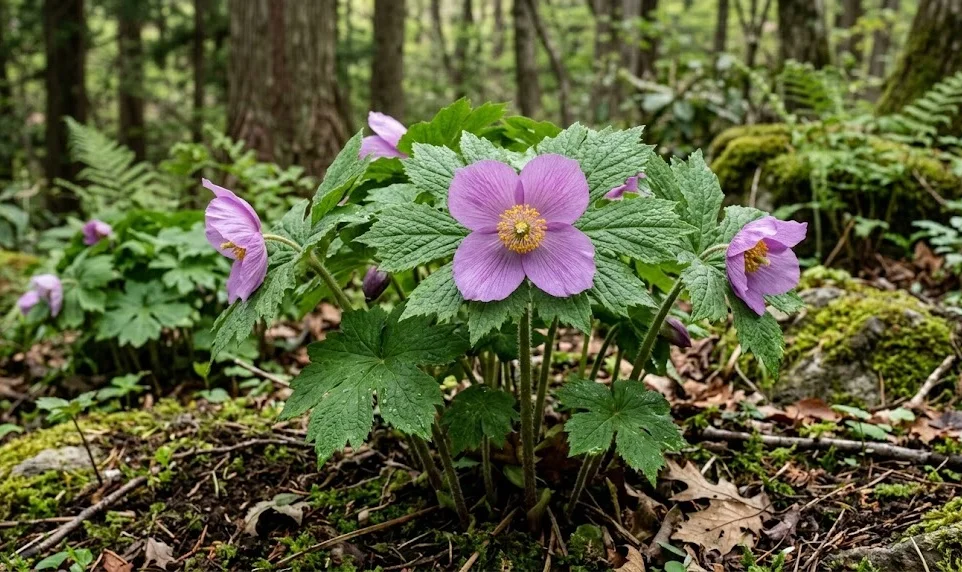

Precision in hydration and nutrient delivery is the cornerstone of maintaining a healthy and vibrant Japanese wood poppy throughout its life. These plants have evolved in high-rainfall environments where the soil is constantly refreshed by moving water and decomposing organic matter. In a garden setting, the goal is to replicate this consistent availability without creating the stagnant conditions that lead to root decay. Understanding the seasonal shifts in the plant’s metabolic demands allows the gardener to adjust their watering and feeding schedules for maximum efficiency. A professional approach treats watering and fertilization not as chores, but as vital biological support systems.
The moisture requirements of the Japanese wood poppy change significantly as it moves from its spring growth spurt into summer dormancy. During the peak of spring, the expanding leaves act like large solar panels, requiring a steady stream of water to maintain their structural turgidity. If the soil is allowed to dry out even once during this phase, the leaf edges can suffer permanent damage that lasts the entire season. Consistent monitoring of the soil’s moisture level at a depth of five centimeters is the most reliable way to prevent such stress.
Fertilization strategy must be equally nuanced, focusing on supporting the plant’s natural rhythm rather than overwhelming it with chemicals. A soil that is already rich in organic matter provides a slow and steady supply of nutrients that mimics the forest floor. Supplementing this with targeted applications of organic fertilizers can help boost the plant’s vigor and improve the quality of its blooms. However, over-fertilization is a common mistake that can lead to excessive foliage growth at the expense of the plant’s overall health and longevity.
The interaction between water and fertilizer is also a critical consideration, as nutrients can only be absorbed by the roots when they are dissolved in soil moisture. Applying fertilizer to dry soil can lead to root burn, as the concentrated salts draw water out of the plant tissue. Always ensure the ground is thoroughly moist before applying any supplemental nutrients to the garden. This integrated approach to watering and feeding ensures that the Japanese wood poppy remains resilient in the face of environmental challenges.
Irrigation fundamentals and timing
Effective irrigation for woodland perennials involves more than just keeping the surface of the soil wet. The goal is to provide deep, thorough watering that encourages the roots to grow downward into the cooler, more stable layers of the earth. Shallow watering can lead to a weak root system that is highly susceptible to drought and temperature fluctuations. Using a soaker hose or a drip irrigation system is often more effective than overhead watering, as it delivers water directly to the soil where it is needed.
More articles on this topic
The best time of day to water is in the early morning, allowing the foliage to dry before the sun becomes too intense. This timing also ensures that the plant has a full reservoir of moisture to draw upon as temperatures rise throughout the day. Watering in the evening is also possible, but it can increase the risk of fungal diseases if the leaves remain wet overnight. Consistency is the most important factor, as the Japanese wood poppy does not tolerate cycles of extreme wet and dry.
During periods of high heat, it may be necessary to increase the frequency of irrigation to compensate for the higher rate of evaporation. Even in a shaded location, the ambient air temperature can strip moisture from the soil and leaves surprisingly quickly. A simple finger test in the soil can determine if the plant needs a drink before visible signs of wilting appear. Proactive irrigation is always better than reactive watering, as it prevents the plant from entering a state of physiological stress.
In late summer and early autumn, as the plant begins to wind down its growth, the demand for water naturally decreases. While the soil should still not be allowed to become bone dry, the frequency of irrigation can be scaled back. This transition helps the plant prepare for dormancy and prevents the rhizomes from becoming too soft before the winter. Adjusting the irrigation schedule according to the weather and the plant’s lifecycle is a hallmark of an expert horticulturist.
Managing humidity and transpiration
Transpiration is the process by which water moves through a plant and evaporates from aerial parts, such as leaves and stems. For a large-leaved plant like the Japanese wood poppy, the rate of transpiration can be very high, especially in dry air. Maintaining a high level of ambient humidity around the plant can help reduce this water loss and keep the foliage looking fresh. Planting in groups or near other moisture-releasing vegetation creates a collective microclimate that benefits all the inhabitants.
More articles on this topic
In very dry climates, a fine misting system can be used during the hottest part of the day to temporarily raise the humidity. This technique mimics the misty mountain air of the plant’s native habitat and can significantly improve its performance. However, care must be taken not to keep the foliage constantly saturated, which could invite unwanted fungal issues. The goal is to provide a refreshing mist that evaporates quickly rather than a soaking that lingers on the leaves.
The use of organic mulches also plays a role in managing humidity by slowly releasing moisture into the air immediately above the soil surface. This layer of moisture acts as a buffer, protecting the lower leaves from the drying effects of wind and low humidity. Selecting mulch materials that hold some water, such as compost or leaf mold, is particularly effective for this purpose. A well-mulched garden bed is essentially a self-regulating humidity chamber for sensitive woodland species.
Wind also accelerates transpiration by stripping the boundary layer of moist air away from the leaf surface. Providing physical windbreaks is therefore an indirect but highly effective way of managing the plant’s water balance. A calm, sheltered spot allows the poppy to maintain its internal hydration with much less effort. By addressing both soil moisture and atmospheric humidity, a gardener creates an environment where the Japanese wood poppy can truly flourish.
Nutrient selection and application
Choosing the right fertilizer for a Japanese wood poppy involves looking for a product that provides a balanced ratio of nitrogen, phosphorus, and potassium. Nitrogen is essential for the development of the large, lush leaves, while phosphorus supports a strong root system and healthy blooms. Potassium improves the plant’s overall resilience and its ability to handle environmental stress. Organic options, such as fish emulsion or seaweed extract, are excellent choices because they also provide a range of beneficial micronutrients.
The application of fertilizer should be timed to coincide with the plant’s natural periods of high nutrient demand. A light feeding in early spring, just as the new growth emerges, provides the resources needed for the initial surge of development. A second, even lighter application can be made after flowering to help the plant rebuild its energy reserves in the rhizome. Avoid fertilizing late in the season, as this can stimulate new growth that will not have time to harden off before the winter.
Granular organic fertilizers should be spread evenly around the base of the plant and gently scratched into the surface of the soil. This prevents the nutrients from being washed away by heavy rain and ensures they are available to the roots over an extended period. Liquid fertilizers provide a more immediate boost but need to be applied more frequently and at lower concentrations. Regardless of the form, it is always better to under-fertilize than to risk damaging the plant with an overdose of nutrients.
Monitoring the plant’s growth is the best way to determine if the current fertilization program is working effectively. Healthy, deep green leaves and strong stems indicate that the nutrient levels in the soil are adequate for the plant’s needs. If the growth seems stunted or the leaves are unusually pale, a soil test may be necessary to identify any specific deficiencies. Professional gardeners use these visual cues and scientific data to fine-tune their approach and ensure long-term health.
Avoiding common feeding mistakes
One of the most frequent errors in caring for woodland plants is the use of fast-acting synthetic fertilizers that can disrupt the soil’s natural balance. These products often provide a quick burst of growth that is weak and susceptible to both pests and diseases. Furthermore, the salts in synthetic fertilizers can accumulate in the soil over time, eventually reaching levels that are toxic to sensitive rhizomes. Sticking to organic amendments is a safer and more sustainable long-term strategy for these high-value perennials.
Another common mistake is applying fertilizer too close to the crown of the plant, which can lead to localized tissue damage or rot. Nutrients should be distributed over the entire root zone, which typically extends at least as far as the leaf canopy. This encourages the roots to spread out and explore a larger volume of soil, improving the plant’s stability and access to water. Proper placement of fertilizer is just as important as the choice of the product itself.
Over-reliance on a single nutrient, such as nitrogen, can lead to an unbalanced plant that looks impressive but is internally weak. Excessive nitrogen can also delay flowering and make the plant more attractive to sap-sucking insects like aphids. A professional approach always favors a balanced nutrient profile that supports all aspects of the plant’s physiology. Regular additions of organic matter, such as compost, are the best way to maintain this balance naturally.
Ignoring the pH of the soil can also render even the best fertilization program ineffective, as many nutrients become “locked” and unavailable to the plant in improper pH conditions. The Japanese wood poppy prefers slightly acidic to neutral soil, so it is important to monitor this periodically. If the soil becomes too alkaline, it may be necessary to add sulfur or use acidifying organic matter like pine needles. Ensuring the soil chemistry is correct is a fundamental step that should never be overlooked.
Long-term soil fertility strategies
Maintaining the health of a Japanese wood poppy over many years requires a long-term vision for soil fertility. This involves more than just an annual application of fertilizer; it requires building a self-sustaining ecosystem within the soil. Regularly adding high-quality compost and leaf mold improves the soil’s structure and its ability to hold and cycle nutrients. Over time, this creates a rich, “living” soil that provides everything the plant needs with minimal external input.
Encouraging a diverse population of soil organisms, from earthworms to beneficial fungi, is a key part of this strategy. These organisms break down organic matter into forms that the plant’s roots can easily absorb. They also help to create the aerated, porous soil structure that is so important for the health of the rhizomes. Avoiding the use of harsh chemical pesticides and fungicides helps to protect these valuable allies in the garden.
Crop rotation is not possible with a permanent perennial, so the focus must remain on the continuous improvement of the existing site. Mulching is the primary tool for this, as it provides a constant source of new organic material for the soil food web. As the mulch disappears into the soil, it should be replaced with fresh material to keep the cycle going. This natural approach to fertility is not only better for the plant but is also more environmentally friendly.
By viewing watering and fertilization as parts of a single, integrated system, a gardener can ensure the Japanese wood poppy reaches its full potential. The reward for this careful management is a plant that grows more beautiful and robust with each passing year. It becomes a testament to the skill and dedication of the gardener who understands the complex needs of this mountain forest dweller. Consistent, thoughtful care is the secret to success with one of the most magnificent plants in the woodland garden.