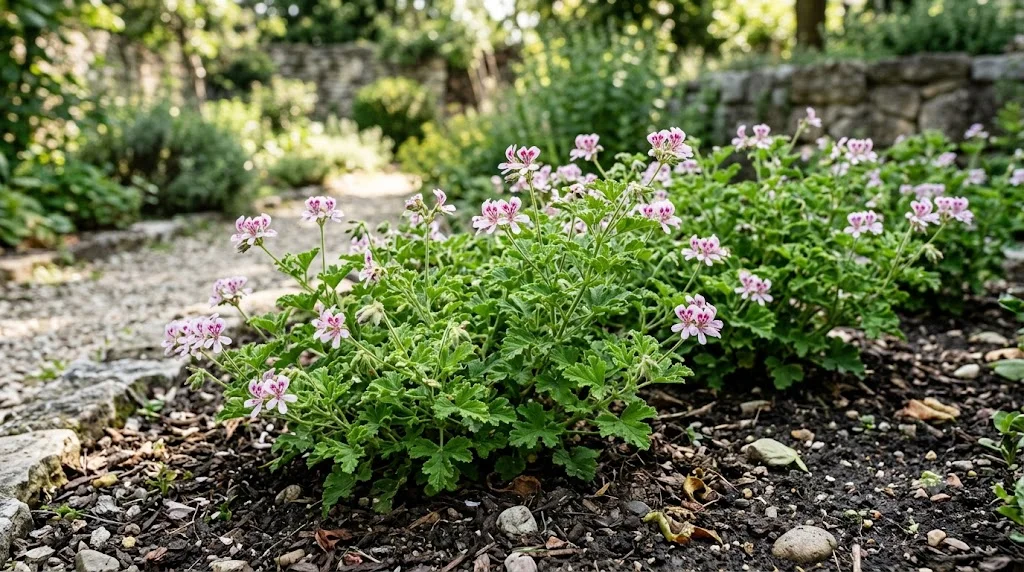

The lemon-scented geranium is valued as much for its fragrant foliage as for its delicate flowers and compact, decorative growth. When the leaves are touched or brushed, their oil glands release a fresh citrus aroma that makes the plant especially attractive for patios, windowsills and herb gardens. Although it is generally easy to grow, it responds noticeably to the quality of light, drainage, watering and pruning it receives. Consistent care produces a dense, healthy plant with strongly scented leaves and a balanced shape.
Lemon-scented geraniums originate from regions where winters are mild, sunlight is plentiful and soils drain quickly. This background explains why the plant tolerates brief dry periods better than waterlogged compost. It also explains its sensitivity to frost and prolonged cold. Gardeners in cooler climates usually grow it in containers so that it can be moved indoors before autumn temperatures fall too low.
The plant develops woody lower stems as it matures, while younger shoots remain green and flexible. Without regular trimming, these shoots may become long, sparse and uneven. A well-maintained specimen is usually bushy, branched and covered with small, crinkled leaves. Its modest flowers add seasonal interest, but the scented foliage remains the main ornamental feature.
Successful cultivation depends on understanding that this plant is neither a moisture-loving bedding geranium nor a desert succulent. It needs regular attention during active growth, but its roots must never remain constantly wet. Warmth, good ventilation and controlled feeding are more valuable than excessive watering or heavy fertilization. Once these principles are established, the plant becomes dependable and relatively undemanding.
Understanding its natural growth pattern
Lemon-scented geraniums grow most vigorously from spring until early autumn, when temperatures and daylight levels are favourable. New stems emerge from active buds near the tips and along recently pruned branches. The youngest leaves usually possess the freshest colour and strongest fragrance. Growth slows significantly as days shorten and temperatures fall.
More articles on this topic
A healthy plant naturally directs much of its energy toward producing stems and foliage. Flowering can occur during the warmer months, especially when the plant receives abundant light. However, the flowers are generally smaller and less prominent than those of traditional ornamental geraniums. The plant should therefore be judged primarily by the condition, density and aroma of its leaves.
Older stems gradually become firm and woody, which is a normal part of maturity. These stems can support a substantial crown, but they may become bare if the plant is not pruned. New shoots do not always emerge readily from very old, leafless wood. Regular light trimming is therefore more effective than waiting until the plant becomes severely overgrown.
Growth may also change according to whether the plant is kept indoors or outdoors. Outdoor plants usually develop stronger stems, shorter internodes and more intense fragrance because of brighter light and air movement. Indoor specimens often grow more slowly and may stretch toward a window. Rotating indoor pots and providing the brightest practical position helps maintain a symmetrical form.
Choosing the right position
A warm, bright location is essential for compact growth and aromatic foliage. Outdoors, the plant performs well in morning sun or several hours of direct sunlight followed by light afternoon shade. In regions with moderate summers, it can often tolerate full sun throughout the day. Where midday heat is extreme, temporary shade protects the leaves from scorching and excessive moisture loss.
More articles on this topic
Good air circulation reduces humidity around the foliage and lowers the risk of fungal problems. The plant should not be crowded tightly between dense shrubs or placed in a stagnant corner. A sheltered position is still useful because strong winds can snap soft shoots and dry container compost rapidly. The ideal site combines sunlight, ventilation and protection from severe weather.
Indoors, a south-facing or west-facing window is usually the most suitable location in the Northern Hemisphere. The leaves should receive abundant daylight without being pressed against hot glass during summer. A small gap between the plant and the window improves air circulation. Curtains, deep shelves and nearby buildings can reduce usable light more than expected.
Temperature also influences plant performance. Active growth is strongest in warm conditions, generally between approximately 18 and 26 degrees Celsius. Prolonged temperatures below 10 degrees can slow growth and weaken the plant, while frost may kill soft tissues. During heatwaves, watering frequency and afternoon protection may need to be adjusted.
Providing suitable soil and containers
The root system needs a loose growing medium that holds some moisture while allowing excess water to escape quickly. A high-quality multipurpose potting compost can be improved with coarse perlite, fine horticultural grit or another well-aerated mineral component. Heavy garden soil is unsuitable for containers because it compacts easily and drains poorly. The finished mixture should feel open rather than sticky when moist.
Drainage holes are essential in every container used for this plant. Decorative pots without outlets can trap water around the roots even when the surface appears dry. A practical solution is to keep the plant in a drained nursery pot placed inside a decorative cover pot. Any collected water should be emptied soon after irrigation.
Container size should match the root ball rather than the height of the foliage. A pot that is only slightly wider than the existing root system encourages controlled moisture use. Oversized containers remain wet for too long and increase the risk of root deterioration. Repotting is normally needed when roots circle the inner wall, emerge from drainage holes or cause the compost to dry unusually quickly.
Terracotta pots allow more evaporation through their porous walls and are useful for gardeners who tend to overwater. Plastic or glazed containers retain moisture longer and may suit hot balconies where compost dries rapidly. Neither material is automatically superior in every situation. Watering habits, local climate and pot size should guide the choice.
Managing routine seasonal care
During spring, the plant begins producing fresh shoots and requires gradually increasing amounts of water. This is a suitable time for repotting, formative pruning and the introduction of light feeding. Plants moved outdoors should be acclimatized over several days rather than exposed suddenly to strong sun. Gradual adjustment prevents leaf scorch and stress.
Summer care focuses on maintaining even growth without keeping the compost continuously wet. Containers may need frequent inspection because warm weather and wind accelerate moisture loss. Faded leaves and weak shoots should be removed promptly. Regular pinching encourages branching and prevents a loose, top-heavy shape.
In early autumn, growth begins to slow as light levels decline. Feeding should be reduced or stopped so that soft, vulnerable growth is not encouraged before winter. Watering intervals become longer, particularly for plants moved indoors. This transition period is also the time to inspect carefully for insects before bringing the plant into the house.
Winter care should be restrained rather than intensive. The plant needs a bright, cool and frost-free position with reduced watering. Wet compost combined with low light is one of the most common causes of winter decline. A slightly drier root zone helps the plant remain stable until spring growth resumes.
Supporting fragrant foliage and flowering
The citrus fragrance comes from essential oils stored in glandular hairs on the leaves. Strong light, healthy growth and moderate water availability generally support the most noticeable aroma. Leaves grown in very dim conditions may be larger, softer and less strongly scented. Excessive nitrogen can also produce lush growth with reduced structural strength.
Gentle handling releases the scent without damaging the plant. Repeatedly crushing the same leaves can cause bruising and brown patches. Positioning the plant near a path, seating area or doorway allows natural contact to release its fragrance occasionally. Clean leaves also express their aroma more effectively than foliage covered in dust.
Flowering is promoted by good light and balanced nutrition. A plant kept in deep shade may produce foliage but few flower buds. Excessively rich fertilizer can further delay flowering by directing energy toward stems and leaves. A moderate feeding programme is more effective than frequent high-strength applications.
Spent flowers may be removed to maintain a tidy appearance, although flowering is not the main purpose of the plant. Cutting the flower stalk near its base prevents unnecessary seed development. This small task redirects resources toward fresh vegetative growth. It also improves ventilation within the crown.
Growing it indoors and outdoors
Outdoor cultivation usually gives the strongest growth during late spring and summer. Natural sunlight, rainfall and air movement support sturdy stems, but containers still require close monitoring. Heavy rain can saturate compost, especially when saucers are left beneath the pot. Moving the plant under cover during prolonged wet weather can prevent root problems.
A balcony or terrace offers an excellent seasonal environment if the plant is sheltered from damaging wind. Pots should be stable and heavy enough to resist tipping. In exposed locations, stems may need light support until they become woody. Regular rotation helps all sides receive similar light.
Indoor cultivation is possible throughout the year, but reduced light is often the main limitation. The plant should be positioned as close as practical to a bright window. Leaves should not touch cold glass during winter because chilled tissue may become discoloured. Ventilation is beneficial, but icy drafts should be avoided.
Artificial grow lighting can support plants in dark rooms or during northern winters. The light should be positioned close enough to prevent stretching without overheating the leaves. A regular daily schedule provides more consistent growth than occasional illumination. Even with supplemental light, winter watering should remain conservative.
Maintaining long-term plant health
Regular observation is the most effective form of preventive care. Changes in leaf colour, stem firmness, soil moisture and growth rate often reveal problems before serious damage develops. A plant inspected weekly is easier to manage than one ignored until leaves begin falling. Early correction usually requires only a small adjustment.
Cleanliness also contributes to long-term health. Fallen leaves should be removed from the compost surface because they can harbour fungi and insects. Pruning tools should be sharp and clean before use. Pots reused from diseased plants should be washed thoroughly.
Mature specimens benefit from periodic renewal through cuttings. A young rooted cutting often develops a more attractive shape than a severely woody plant. Keeping one or two replacement plants also protects against accidental winter loss. This approach is especially useful when a particular specimen has exceptionally strong fragrance.
The most successful care routine remains simple and balanced. Provide bright light, free-draining compost, measured watering and regular pruning. Protect the plant from frost, standing water and prolonged darkness. With these conditions in place, a lemon-scented geranium can remain productive, fragrant and visually appealing for several years.