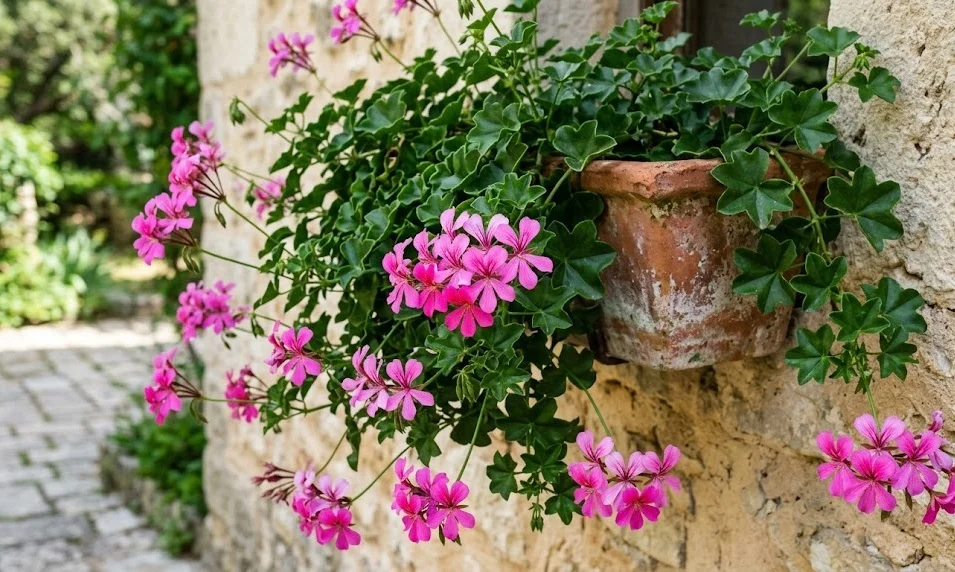

Light is the primary source of energy for trailing geraniums and the most important factor in determining how many flowers they will produce. These plants have evolved in sunny environments, and their biological processes are finely tuned to high levels of solar radiation. You must carefully assess the light conditions in your garden or on your balcony to ensure your plants are positioned for success. Understanding the nuances of light intensity and duration will allow you to maximize the beauty of your floral displays.
Most professional growers recommend at least six to eight hours of direct sunlight per day for trailing geraniums to thrive. Without sufficient light, the plants will become “leggy,” meaning the stems grow long and thin as they stretch toward the sun. You will also notice a significant decrease in the number of flower clusters and a fading of the leaf color. If your balcony is shaded for most of the day, you may need to choose a different plant or use supplemental lighting.
The quality of the light is just as important as the quantity, with morning sun being generally more beneficial than intense afternoon sun. Morning light provides the energy needed for photosynthesis without the extreme heat that can stress the plant’s tissues. In very hot climates, providing some light shade during the peak afternoon hours can prevent the flowers from wilting prematurely. You should observe how the shadows move across your growing area throughout the day to find the “sweet spot” for your containers.
Reflected light from light-colored walls or glass surfaces can also contribute to the total energy the plant receives. While this can be a benefit in cooler regions, it can lead to overheating in southern exposures during the height of summer. You should be aware of these microclimates and adjust your watering and placement accordingly to prevent heat damage. Managing light is a dynamic task that requires you to be responsive to the changing seasons and weather patterns.
Optimizing placement for solar exposure
Choosing the right orientation for your window boxes and hanging baskets is the first step in managing light exposure. South-facing locations usually receive the most intense and consistent sunlight throughout the growing season. East-facing spots are excellent for trailing geraniums because they provide bright morning light followed by cooler afternoon shade. West-facing areas can be challenging due to the intense heat that often accompanies the late afternoon sun.
More articles on this topic
If you find that your plants are growing more vigorously on one side, it is a clear sign that the light distribution is uneven. You should rotate your hanging baskets by ninety degrees every few days to ensure that all sides of the plant receive equal exposure. This simple practice results in a much more balanced and symmetrical display that looks professional from every angle. It also prevents the inner parts of the foliage from becoming yellow and sparse due to a lack of light.
Hanging baskets placed under deep eaves or porches may struggle to receive enough direct light even in a sunny location. You should consider using adjustable hangers that allow you to lower the plants during the day to catch more sun. Alternatively, you can move the containers to a more exposed position for a few days each week to “recharge” their energy levels. Being proactive about light management ensures that your plants never enter a state of decline due to shade.
The height at which you hang your plants also affects the amount of light they receive and the ambient temperature around them. Plants placed higher up are often exposed to more wind and intense light, which can lead to faster evaporation and heat stress. Lowering your displays can sometimes provide a more stable environment with slightly less intense solar radiation. You must find the right balance between the aesthetic goals of your display and the physiological needs of the geraniums.
Effects of light on flowering and color
The intensity of the light has a direct impact on the chemical pigments that give geranium flowers their vibrant hues. In very bright conditions, some flower colors may become more intense, while others might appear slightly bleached or faded. You might notice that a variety that looks deep red in the nursery turns a brighter scarlet when placed in full sun. Understanding these color shifts helps you design more effective color combinations for your balcony or garden.
More articles on this topic
Light also regulates the transition from vegetative growth to reproductive growth, which is when the plant starts producing buds. Trailing geraniums are day-neutral plants, meaning they don’t require specific day lengths to bloom, but high light intensity triggers more prolific flowering. If your plant is all green leaves and no flowers, it is almost certainly a sign that it needs more direct sunlight. Moving the container just a few meters to a sunnier spot can often result in a burst of new buds within two weeks.
The density of the foliage is another indicator of how well the plant is utilizing the available light energy. Under optimal conditions, the leaves will grow close together, creating a thick and lush canopy that covers the stems completely. In low-light environments, the internodes (the space between the leaves) will lengthen, making the plant look thin and straggly. This “stretching” is the plant’s natural survival mechanism to reach higher into the canopy for more light.
Finally, light plays a role in the plant’s ability to resist pests and diseases by strengthening the cellular structure of the leaves. A well-lit plant produces thicker cuticles on its leaves, making it harder for insects to penetrate and feed on the sap. The UV rays from the sun also act as a natural disinfectant, reducing the population of fungal spores on the surface of the foliage. In this way, providing enough light is one of the best forms of preventative medicine for your trailing geraniums.